
AT&T Inc (NYSE:T) shares are trading lower Thursday afternoon as competitive concerns resurface following an analyst downgrade.
- AT&T stock is testing key support levels. Why did T hit a new low?
What Is Driving AT&T’s Stock Decline?
Oppenheimer downgraded AT&T to Perform from Outperform, flagging rising competitive risk from low Earth orbit satellite providers that could pressure broadband subscriber growth and, over time, mobile services. Separately, AT&T said it’s simplifying home internet pricing starting June 7, rolling out four fiber tiers (300 Mbps, 500 Mbps, 1 GIG and 5 GIG) and advertising bundle savings of up to $420 per year, with bundled fiber starting at $35 per month.
With markets open, the broader backdrop is still supportive: 10 of 11 sectors are advancing and the advance/decline ratio sits at 10.0, while the Dow Jones is up 1.75% and the Russell 2000 is up 1.27%. That makes AT&T’s drop stand out, especially with Communication Services currently a mid-tier performer (ranked 5 of 11) and still green on the day.
Critical Levels To Watch For AT&T Stock
AT&T is leaning heavily bearish on the longer-term trend: it’s trading 8.4% below the 20-day SMA and 13.8% below both the 100-day and 200-day SMAs, keeping rallies prone to selling pressure. The death cross that formed in May (50-day SMA below the 200-day SMA) reinforces that the primary trend has been down, which fits the stock’s 12-month slide of 16.79%.
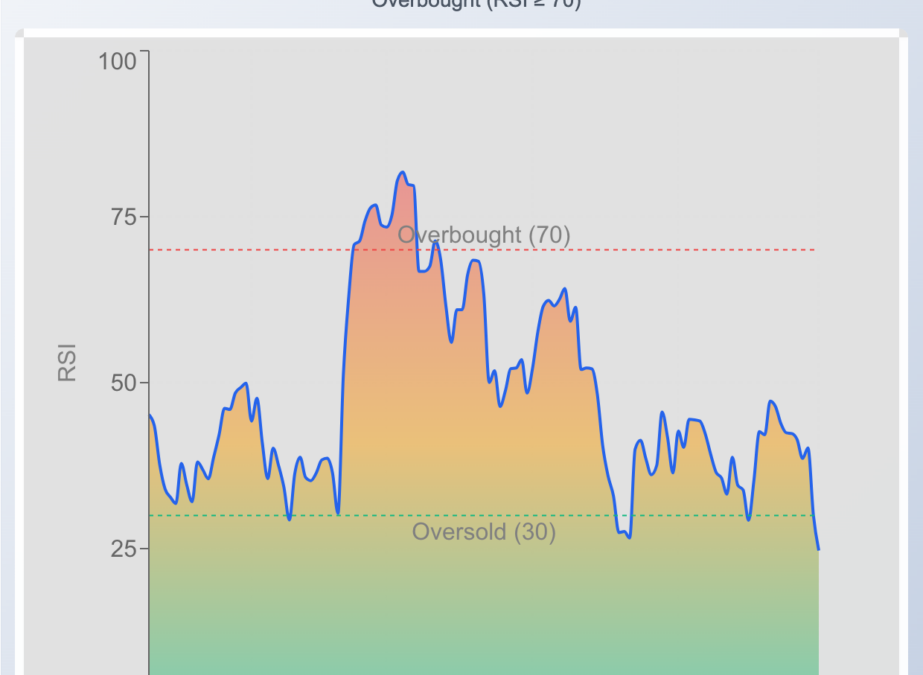
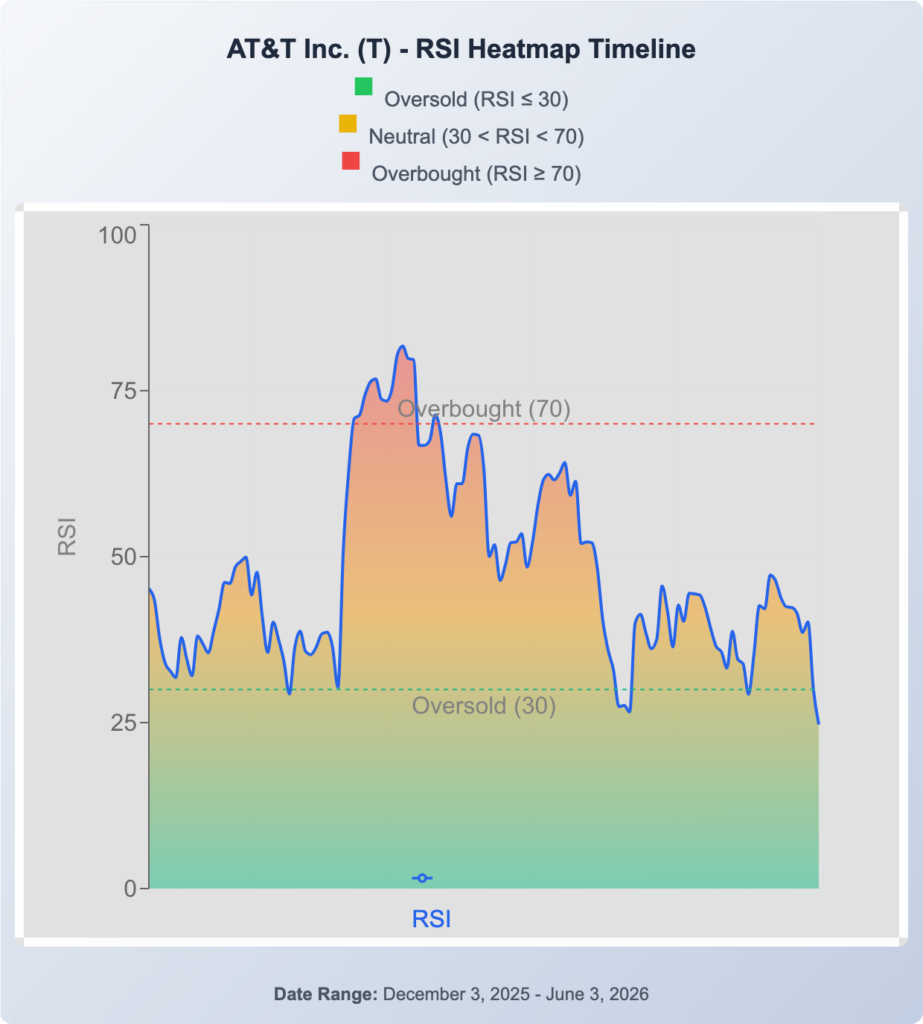
Momentum is stretched: RSI is 29.19, which signals the selling has become extended and the stock is in oversold territory (RSI measures how “stretched” a move is after persistent buying or selling). Oversold doesn’t guarantee a bounce, but it often raises the odds of a pause or a reflex rally—especially if price can reclaim near-term moving averages.
- Key Resistance: $26.00 — a round-number area that also lines up closely with the longer moving-average cluster overhead, where rebounds can stall
How AT&T Generates Revenue And Its Market Position
The wireless business contributes nearly 70% of AT&T’s revenue, and the company is the third-largest US wireless carrier, connecting 74 million postpaid and 17 million prepaid phone customers. That scale matters because any shift in competitive dynamics, whether in broadband access or mobile, can ripple quickly through subscriber trends and pricing power.
Beyond wireless, fixed-line enterprise services account for about 14% of revenue and include internet access, private networking, security, voice, and wholesale network capacity, while residential services (about 11% of revenue) are mainly in-home broadband for roughly 15 million customers. That mix helps explain why concerns about satellite broadband competition and fiber penetration rates are landing at the same time AT&T is trying to simplify and sharpen its fiber offering.
AT&T also has a sizable presence in Mexico with 25 million wireless customers (about 3% of revenue), and it recently sold its 70% equity stake in satellite TV provider DirecTV to partner TPG. With the business more focused, investors tend to react quickly to any narrative that questions the durability of fiber growth and the longer-run competitive moat.
AT&T Benzinga Edge Scorecard Analysis
Below is the Benzinga Edge scorecard for AT&T, highlighting its strengths and weaknesses compared to the broader market:
- Momentum: Weak (Score: 13.65) — The stock’s trend has been lagging, which lines up with price staying below key moving averages.
- Quality: Neutral (Score: 52.92) — The fundamentals screen as middle-of-the-pack, so the tape is doing more of the talking right now.
- Value: Neutral (Score: 42.75) — Valuation looks reasonable, but not so extreme that it automatically offsets weak momentum.
- Growth: Strong (Score: 81.03) — The growth score suggests the market still sees a path to improvement, even as near-term sentiment wobbles.
The Verdict: AT&T’s Benzinga Edge signal reveals a mixed setup where weak momentum is the main headwind despite supportive growth and mid-range value/quality scores. For longer-term investors, the key question is whether the stock can stabilize and reclaim overhead resistance levels before the next earnings cycle becomes the dominant catalyst.
AT&T Stock Price Movement Today
T Stock Price Activity: At&t shares were down 3.82% at $22.65 at the time of publication on Thursday, according to Benzinga Pro data.
Image: Shutterstock
Recent Comments