
A clash over European Union defense funding has plunged Poland into a political crisis that threatens its EU membership and the economic momentum of one of Europe’s fastest‑growing economies.
President Karol Nawrocki blocked a bill that would allow Warsaw to access up to €43.7 billion in low-interest loans under the EU’s Security Action for Europe (SAFE). The €150 billion spending package aims to strengthen Europe’s defense capabilities following Russia’s 2022 invasion of Ukraine.
“I would never sign a law that strikes at our sovereignty, independence, economic and military security,” Nawrocki said. “Any attempts to increase our country’s foreign debt in an illegal manner, through the back door, will sooner or later be met with responsibility, both political and legal.”
Prime Minister Donald Tusk stated that the move could weaken Poland’s position within the bloc. “The next elections will decide whether Poland stays in Europe,” he said.
The president’s veto has triggered a crisis in the country, reviving a political debate over a potential “Polexit.” Poland could weaken the EU’s economic integration, strategic cohesion, and military capabilities if Warsaw cuts its ties with the bloc.
“A hypothetical exit from the EU would leave Poland not only poorer, but also less safe,” Deputy Prime Minister Radosław Sikorski told parliament last month.
Tusk Blames Nationalist Forces for Tilt Away from EU
The political confrontation has quickly widened beyond the SAFE dispute, tapping into deeper ideological divides inside Poland.
Tusk warned that an exit from the EU had become “a real threat today.” He accused nationalist forces and right-wing opposition parties, with ties to Russia, of wanting to “destroy the EU.”
“For Poland, it would be a catastrophe,” Tusk wrote on X. “I will do everything to stop them.”
EU membership has underpinned economic growth and security in Poland. The European Commission unblocked around €137 billion in combined funding from the Cohesion Policy and the National Recovery Plan in 2024. Warsaw and Brussels have framed this as a major boost for investment and economic growth.
After the presidential veto, Tusk’s cabinet defied the president by passing a resolution allowing the defense and finance ministers to sign the SAFE agreement directly with the European Commission. Officials said the deal could still be concluded as early as April.
Warsaw would receive the SAFE funds to invest in the modernization of its arms production.
Defense Loan Dispute Sparks Political Clash
The funding fight has also exposed long‑running tensions over sovereignty and the role of Brussels in Poland’s security policy.
Opposition politicians from the nationalist Law and Justice (PiS) party have argued that EU loans risk undermining the country’s sovereignty. The defense financing could increase Warsaw’s dependence on the EU, they argued.
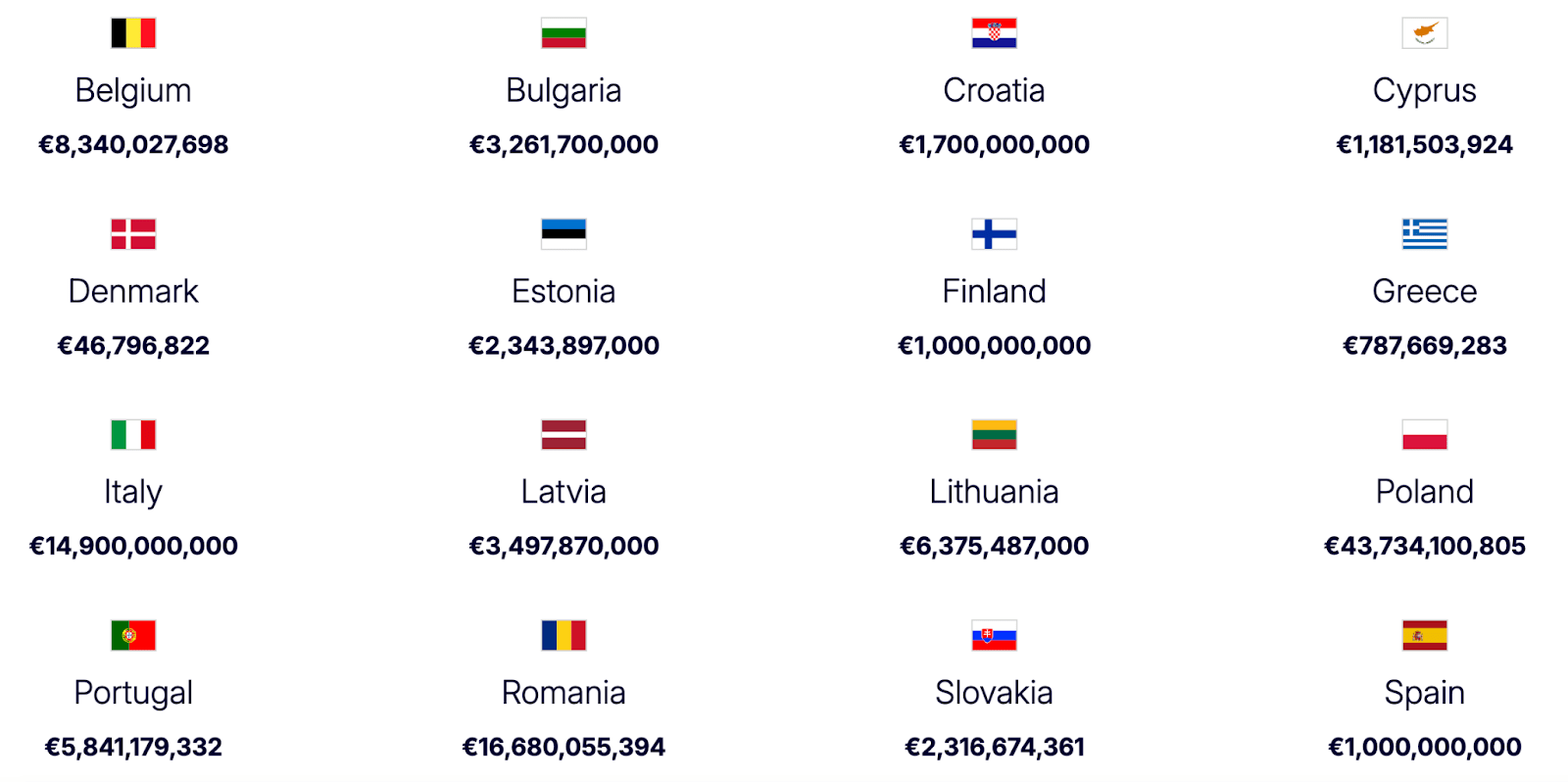
“Poles will therefore have to pay back as much as the value of the loan granted, and Western banks and financial institutions will profit from this,” the Polish president said. The interest costs could eventually reach €42.1 billion over the course of the 45-year loan, Nawrocki said.
Polish Defense Minister Władysław Kosiniak-Kamysz disagreed with the backlash.
“SAFE is a project written not in Brussels, but in Warsaw,” he said. Polish generals drafted the military modernization plans tied to the program, he added.
Poland Sees Rising Euroskepticism
The dispute is unfolding against a backdrop of shifting public attitudes toward the EU, which have become more polarized in recent years. The dispute reflects broader tensions in Polish politics.
The public has historically overwhelmingly supported EU membership. Nationalist forces have increasingly contested this, citing concerns over sovereignty, EU regulatory overreach, fiscal burden-sharing, and energy policy constraints.
Polling has shown that the pro-EU majority position has lost ground. A Eurobazooka survey found that as of November 2025, about 69% of Poles want to remain in the EU, down from 92% support recorded in 2022. Around 25% of respondents said Poland should leave the bloc.
Other polling indicates similar trends. A United Surveys poll found roughly 24.7% of respondents favor leaving the EU. Support is strongest among voters for PiS and the far-right Confederation alliance.
PiS leaders typically frame their position as defending sovereignty rather than exiting the bloc, although some far-right groups explicitly call for “Polexit.” This shift reflects a broader political repositioning on the right, where Euroskeptic rhetoric is used to reframe sovereignty debates and mobilize electoral support ahead of upcoming elections.
Opposition parties have argued that EU membership erodes national sovereignty and limits policy options.
Opposition Wants Out of EU’s ETS
Power prices have emerged as another flashpoint, further intensifying the debate over Poland’s place in the EU.
PiS politicians have proposed withdrawing Poland from the EU’s Emissions Trading System (ETS), arguing that the carbon pricing scheme disproportionately burdens coal-dependent economies. Przemysław Czarnek, PiS’s prime ministerial candidate, called the EU’s ETS a “Brussels scam.”
Poland’s heavy reliance on coal has amplified the political backlash. The country burns more coal than any other EU member, and its mining sector has surged, with shares of major producer Jastrzębska Spółka Węglowa (WSE: JSW), up sharply this year.
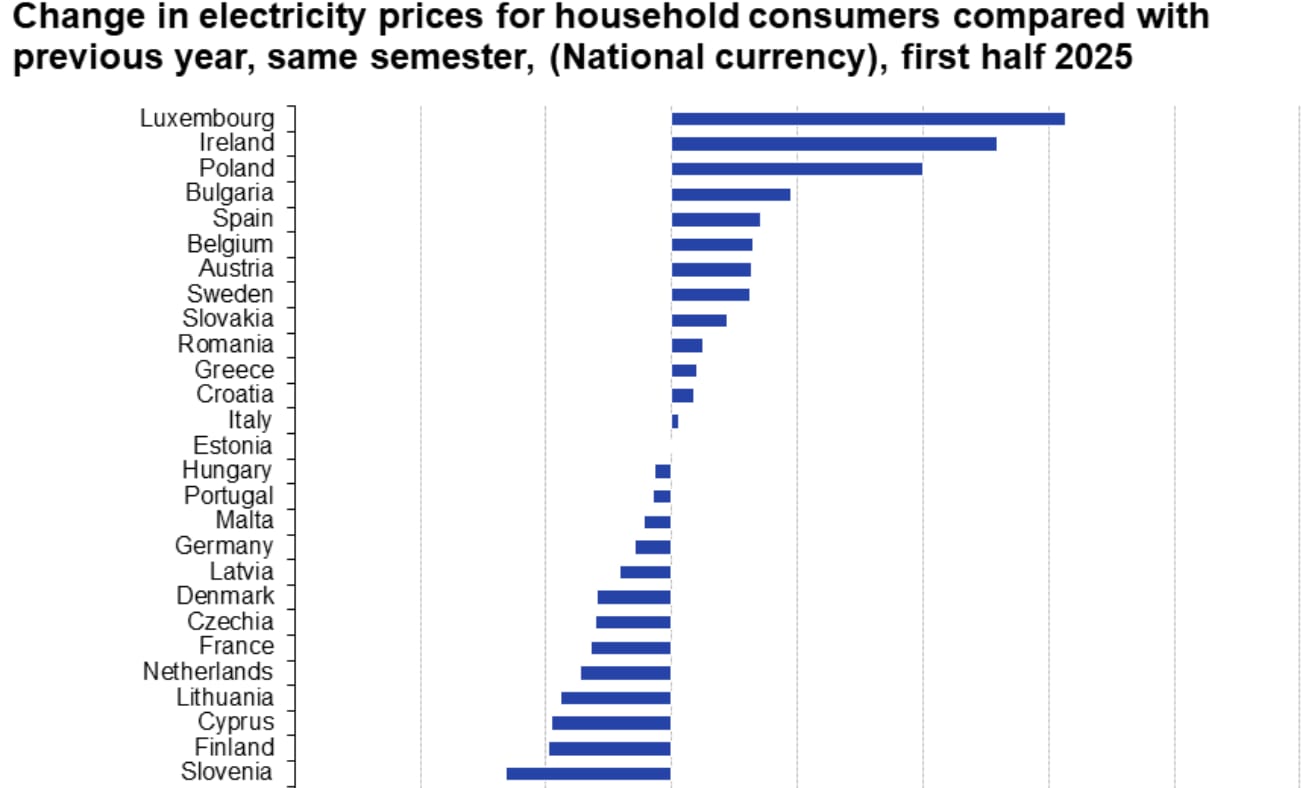
This has provided PiS a powerful economic constituency to defend. Czarnek highlighted that Polish electricity prices increased 20% year-over-year in 2025. Poland had among the fastest-growing power prices in the EU due to regulations from Brussels.
“Poland’s exit from ETS means Poland’s exit from the EU,” Deputy Climate Minister Krzysztof Bolesta said.
Poland’s Economy Outperforms in Europe
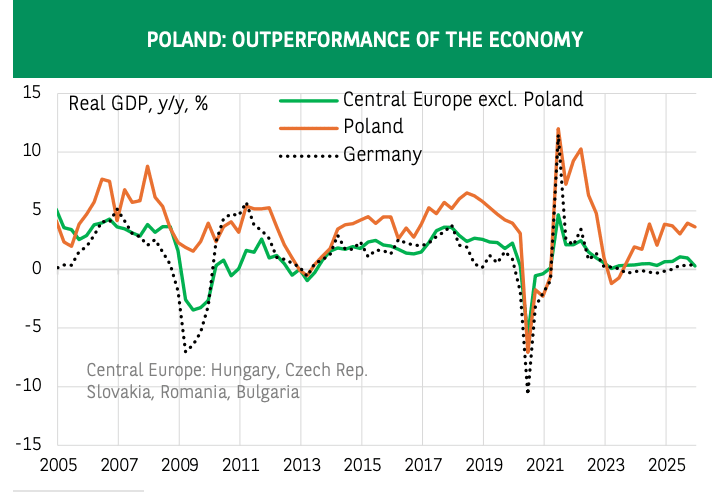
Despite the political turmoil, Poland’s economic performance has remained one of the strongest in the EU, underscoring what is at stake for Warsaw. While unlikely, a Polish break from the EU would impact one of the bloc’s fastest‑growing economies.
Poland’s gross domestic product (GDP) is projected to grow by around 3.6% to 4% in 2026. Last year, the country’s economy advanced by 4% year-on-year in the final quarter of 2025. In comparison, Germany’s economy expanded by 0.4% for the same period.
Poland has steadily narrowed the income gap with Western Europe. Per-capita income in purchasing power parity reached roughly €49,650 last year, slightly exceeding that of Spain, according to IMF data.
Finance Minister Andrzej Domański has said the country aims to reach UK-level income per capita within the next five to six years. Polish economist at WSB Academy, Marek Zuber, said the figures indicate that “Poles are getting rich faster than Spaniards.”
However, consumer sentiment has declined. The sentiment index fell to -12.2 in March from -9.1 in February. Assessments of both the current and future economic situation worsened.
Poland’s National Debt Increases
Yet the country’s fiscal outlook is becoming more fragile, adding another layer of risk to the political standoff. The country’s public debt has ballooned.
The European Commission’s Debt Sustainability Monitor has warned that if current fiscal trends persist, Poland’s debt could exceed 100% of GDP by 2036. Moody’s in September lowered to negative the outlook on Poland’s A2 investment-grade credit score. It cited the country’s swelling fiscal deficit and the political struggles complicating any quick fixes to the budget.
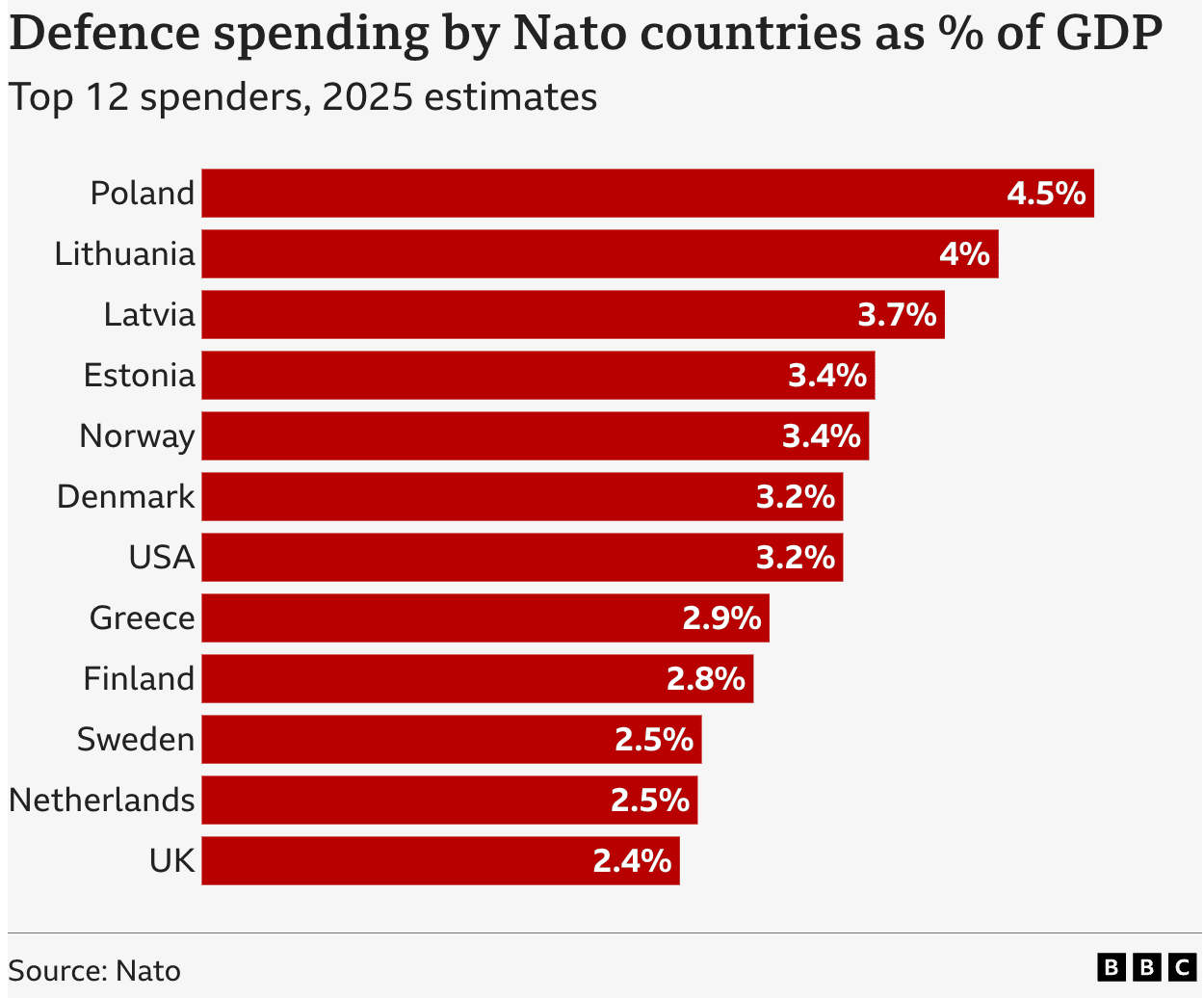
Without EU funds, the country’s economic growth may falter.
“The continued increase in private consumption should be accompanied by a further rebound in investment,” ING’s senior economists, Leszek Kąsek and Mateusz Sutowicz, wrote on January 30. This is “largely thanks to funds flowing into the economy from the Resilience and Recovery Plan and the gradually rising absorption of cohesion funds from the 2021-27 financial perspective.”
For now, Poland remains firmly embedded in European institutions.
Former PiS Minister of European Affairs Konrad Szymański warned that nationalist politics in Poland risk putting the country on a “road toward Polexit.”
He drew parallels with the political dynamics in the UK, where sustained sovereignty-focused rhetoric and anti-EU messaging had normalized the idea of exit before the 2016 Brexit referendum.
Disclaimer: Any opinions expressed in this article are not to be considered investment advice and are solely those of the authors. European Capital Insights is not responsible for any financial decisions made based on the contents of this article. Readers may use this article for information and educational purposes only.
Benzinga Disclaimer: This article is from an unpaid external contributor. It does not represent Benzinga’s reporting and has not been edited for content or accuracy.
Recent Comments