
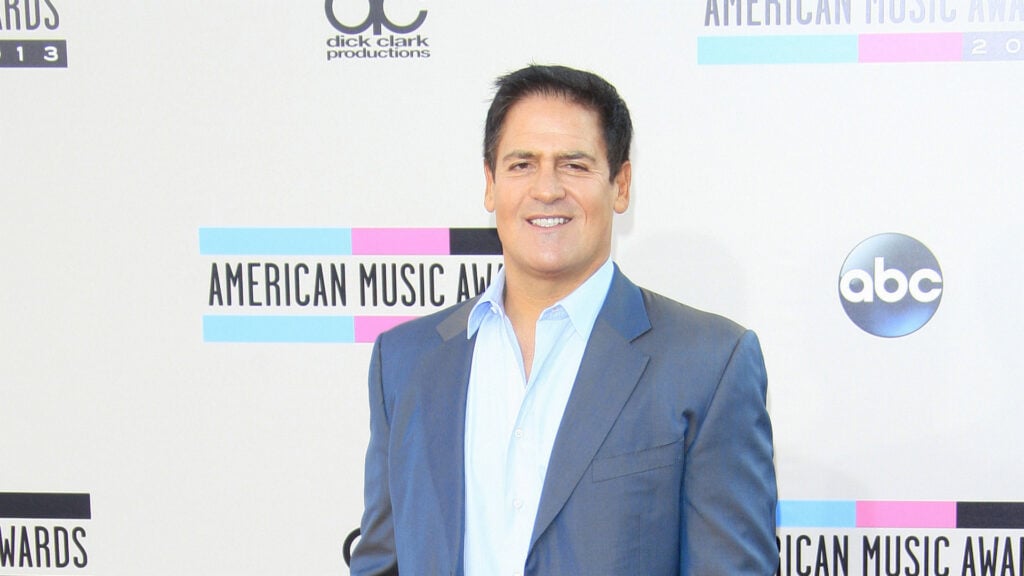
Mark Cuban on Saturday fired back at Rep. Ro Khanna (D-Calif.), saying that governments should treat AI as a public investment aimed at cutting operating costs and improving services, while creating pathways for new graduates to modernize agencies.
Debate Intensifies Following SpaceX’s IPO
The pitch landed as Space Exploration Technologies Corp.’s (NASDAQ:SPCX) public debut boosted Elon Musk’s wealth to more than $1 trillion, reigniting a political fight over whether taxing fortunes is the best way to fund public priorities.
Cuban said in a post on X that AI could help states and Washington run leaner and redirect more collected revenue to people who need support.
“Ask your GenZ and neediest constituents, if AI could reduce spending in your state and improve the quality of services offered, with some percent of those savings being deposited in their bank accounts annually, would they approve of the government using AI?” Cuban asked.
He framed the idea as a practical test: if AI lowered spending and raised service quality, asking if voters would accept a model where a portion of their savings shows up in residents’ bank accounts each year.
Can AI Transform Government Efficiency?
Cuban said AI is difficult to roll out, which is why he wants public programs that hire or train recent graduates to work alongside existing staff on efficiency projects.
He described spending as an “investment” designed to pay for itself through reduced costs and better delivery.
“I’ll tell you the same thing I tell Republicans who think removing government and regulation from any market will make that market bigger and more efficient … Ideology is not a strategy,” he added.
Why Wealth Tax Proposals Fall Short
Cuban argued that even extreme confiscation of billionaire and trillionaire wealth would not cover a single year of the kinds of subsidies he said his counterpart was discussing, listing areas such as housing, childcare and healthcare. He also pushed back on what he described as ideology-driven policymaking.
Cuban singled out Medicare for All as a test case, pointing to bill language he said would put administration choices “at the discretion of the Sec of HHS.” Cuban added that the same warning he gives deregulation advocates applies here: politics and slogans do not substitute for execution details.
In the inequality debate stirred by Musk’s milestone, California Gov. Gavin Newsom said that Americans are getting squeezed by everyday costs and added that “the system is rigged.”
Sen. Bernie Sanders (I-VT) also pointed to Social Security financing and said, “Today, Elon Musk, a trillionaire, pays the same amount into Social Security as someone making $184,500,” while backing legislation to lift the taxable earnings cap.
Rep. Alexandria Ocasio-Cortez (D-N.Y.) criticized resistance to higher taxes on the wealthy as many households face rising healthcare expenses. Sen. Elizabeth Warren (D-Mass.) renewed her call for a wealth tax and said a typical household would need more than 11 million years to reach Musk’s level of wealth.
Elon Musk’s Wealth Sparks Economic Debate
New York City Mayor Zohran Mamdani added his own message on X, saying, “Reason #1,000,000,000,000 why we should tax the rich.”
In the exchange that prompted Cuban’s remarks, Khanna said he is “an AI democratist” and argued AI will not automatically close economic gaps. Cuban’s response focused on using AI to lower the cost of running the government so more resources can reach constituents directly, rather than relying primarily on higher taxes to fund new programs.
Disclaimer: This content was partially produced with the help of AI tools and was reviewed and published by Benzinga editors.
Photo courtesy: Shutterstock
Recent Comments