
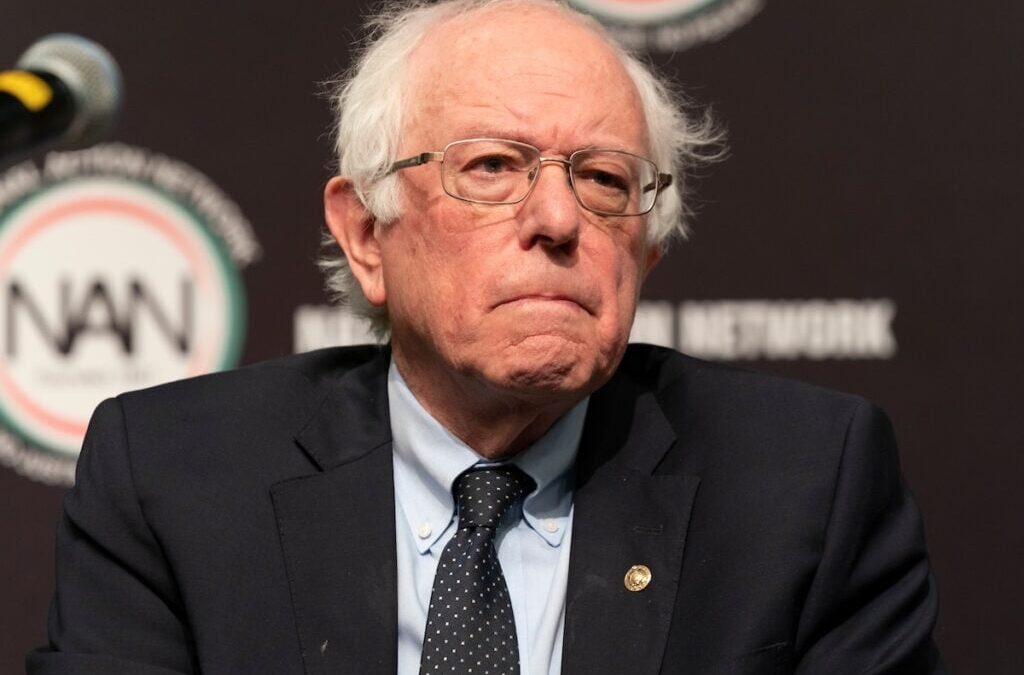
Sen. Bernie Sanders (I-Vt.) said Wednesday that President Donald Trump’s chief economist was “right” that credit card spending is “through the roof,” but argued the remark shows Americans are leaning on debt to cover higher prices, not enjoying a stronger economy.
Sanders Says Debt Masks Economic Pain
Kevin Hassett, director of the National Economic Council, told Fox Business host Maria Bartiromo that a “big five” bank executive had described credit card spending as “through the roof.” Hassett said consumers were spending more on gasoline and other essentials, framing it as evidence of a “very, very strong” job market and resilient households.
Sanders shared a clip of the interview on X and wrote, “Trump’s chief economist is right: ‘Credit card spending is through the roof.’ Americans are forced to put more of their spending on credit cards because of outrageously high prices. That’s a win for big banks charging 30% interest rates. It’s a disaster for working people.”
Gas Spending Drives Retail Sales Jump
The exchange came as federal data showed higher fuel costs driving a large share of recent consumer spending. Retail sales rose 1.7% in March from February, while business at gas stations jumped 15.5%, according to the Commerce Department. Excluding gasoline, retail sales rose 0.6%.
Sen. Elizabeth Warren (D-Mass.) also seized on Hassett’s remarks, writing that “The Trump Administration is raising your costs and celebrating it on live TV.”
Low-Income Households Cut Fuel Use
The effective closure of the Strait of Hormuz since the U.S.-Iran conflict began at the end of February has pushed energy prices higher. AAA data at the time of writing put the national average price for regular gasoline at about $4.53 a gallon, the highest level since July 2022 and more than $1 above year-ago levels.
A New York Federal Reserve study published Wednesday found that the gas-price shock is hitting lower-income households hardest. Households earning under $40,000 a year cut gasoline consumption by 7% in March, but still spent 12% more on fuel because prices rose so sharply. Higher-income households reduced consumption by just 1% while increasing gasoline spending by 19%.
Photo Courtesy: Lev Radin on Shutterstock.com
Recent Comments