
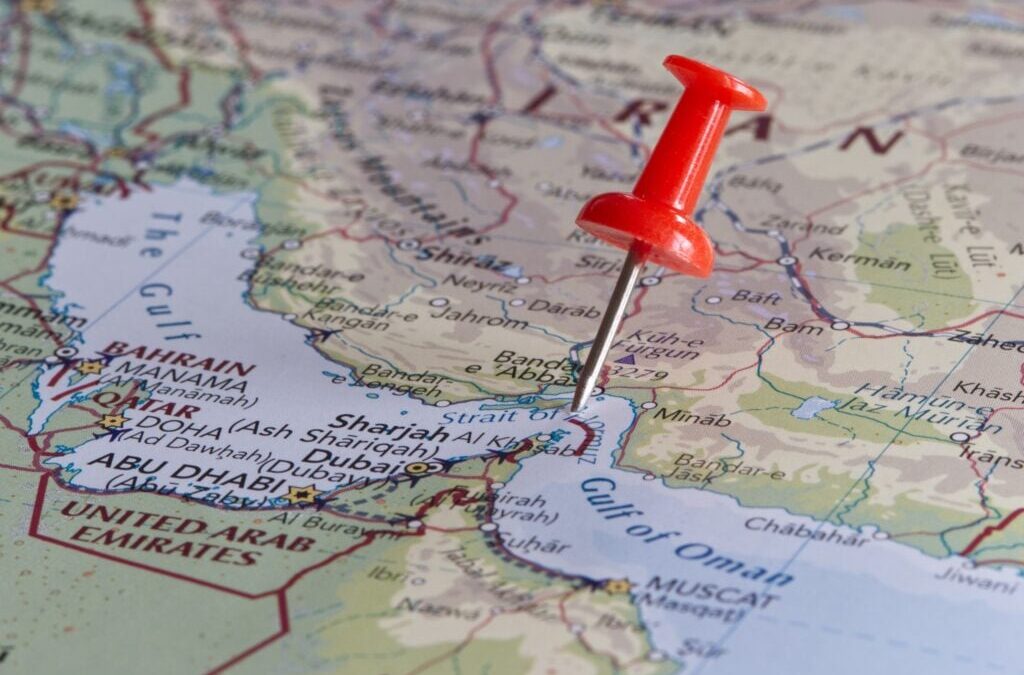
On Saturday, Iran’s Islamic Revolutionary Guard Corps (IRGC) said in a statement that the Strait of Hormuz was shifted back to how it operated before April 17, putting the passage under tighter military oversight after what it described as U.S. interference with shipping. The move lands amid warnings that Tehran could go further, as Iran threatens to shut Strait of Hormuz if Washington keeps pressure on Iranian ports.
In a post on X an IRGC spokesperson said that Iran had previously allowed a managed transit arrangement for a limited set of oil tankers and commercial ships, framing it as a good-faith step tied to earlier negotiation understandings.
The post accused the U.S. of maritime “piracy” under what it called a blockade and said Iran’s armed forces would now run the strait more strictly until ship movements to and from Iran are no longer obstructed.
Friday’s messaging from Tehran had already pointed to escalation risk, with parliament speaker Mohammad Bagher Ghalibaf saying on X that “With the continuation of the blockade, the Strait of Hormuz will not remain open.” Ghalibaf also said access could hinge on Iran’s approval, a reminder that the route can become a bargaining chip in a wider standoff.
Hours earlier, Iranian Foreign Minister Abbas Araghchi had taken a different tone, saying commercial traffic through the corridor was “completely open” during a 10-day ceasefire tied to tensions involving Israel and Lebanon. The swing from open-lane assurances to conditional access underscored how quickly operational rules can change.
The U.S. military has described immediate effects on shipping patterns, with U.S. Central Command saying 21 vessels were ordered to change course after the blockade began earlier in the week. “21 ships have complied with direction from U.S. forces to turn around and return to Iran,” the command said on X.
Could Iran Really Close Hormuz Again?
The Saturday statement described a rollback to the pre-April 17 setup rather than a full shutdown, but it paired that with a clear condition: the stricter posture stays until the U.S. ends what Iran calls restrictions on Iranian-linked maritime movement. The strait is now under “strict management and control” by Iran’s armed forces as that dispute continues.
Meanwhile, the IRGC has acknowledged launching strikes on two ships in the waterway that it claimed had attempted to defy Iranian jurisdiction. The announcement came just a day after Araghchi had stated that the strait remained fully accessible throughout the duration of the ceasefire.
UK’s Maritime Trade Operations Center has also confirmed that a tanker passing through the strait came under fire from two IRGC speedboats. The agency added that both the vessel and those aboard emerged from the incident unharmed.
On the U.S. side, President Donald Trump signaled the blockade policy would not be quickly lifted, tying it to a broader deal. “The naval blockade will remain in full force and effect … until such time as our transaction with Iran is 100% complete,” Trump wrote on Truth Social.
Iran’s earlier Friday posture also included the more severe threat of closing the corridor if the blockade persists, even as officials had described a temporary window of open navigation during the ceasefire. The combination of U.S. enforcement actions and Iran’s shifting access terms has left ship operators navigating a fast-changing set of instructions.
Iran’s Maritime Shifts Impact Global Trade
This escalation follows recent claims from Donald Trump that the Strait of Hormuz is now open and that Iran has agreed it “will never close the waterway again.” In a series of posts on Truth Social, Trump asserted that Iran is actively removing sea mines with U.S. assistance, emphasizing that the strait would no longer be used as a weapon against global trade, which contrasts sharply with Iran’s current military posture.
Trump’s announcement came shortly after Iranian Foreign Minister Abbas Araghchi stated that all commercial vessels were free to transit the chokepoint during the 10-day ceasefire involving Israel and Lebanon, a development that may significantly impact shipping and oil prices, as seen by the recent drop in WTI crude by 15% to around $80 a barrel following these geopolitical shifts triggering market reactions.
Understanding The Impact On Global Oil Prices
The Strait of Hormuz is a key chokepoint for energy flows, and traders often react quickly to any sign that transits could tighten. In commodities trading, WTI crude’s May contract dropped 9.63% to $85.57 a barrel, while the June contract slid 7.86% to $84.00 as of 6:44 p.m. EDT, with both contracts still in a downtrend.
Those price moves came as the U.S. reported ships being turned back and Iranian leaders floated the possibility of restricting or halting passage if the blockade continues.
The latest Iranian statement points to intensified monitoring rather than an outright closure, but it keeps the shipping lane’s operating rules tied directly to the U.S.-Iran dispute.
Recent Comments