
OpenAI CEO Sam Altman said the company supports broad access to artificial intelligence and accepts some risks, putting it at odds with rival Anthropic over regulation.
In an interview set to appear in Monday’s debut edition of Decoded, Altman told Politico that the two companies have “a lot of daylight” between their policy positions. Discussing his divergent views from Anthropic CEO Dario Amodei, Altman said, “We believe that the world should accept some bad things happening for the benefits of this technology and people having agency.”
Sam Altman sought to distinguish OpenAI’s regulatory approach from Anthropic’s, rejecting concerns about regulatory capture and arguing that concentrating powerful AI within a single lab would be an “unacceptable trade-off” inconsistent with OpenAI’s preference for lighter-touch regulation. Altman said he does not believe society should accept “really catastrophic risks,” including a potential “serious loss of control to AI.”
Altman also declined to promise that AI would eliminate hacking, fraud or other forms of abuse, arguing that the technology’s benefits would ultimately outweigh such harms.
Anthropic did not immediately respond to Benzinga’s request for comments.
Altman Cautions as Trump Forms AI Force
Altman’s comments followed a Saturday post on X in which he warned against treating AI as a deity or replacing human judgment with model decisions. Altman said he was “very uncomfortable” with attempts to give AI “religious force,” calling the surrender of human judgment “a real safety issue.”
Last month, Altman joined calls to slow the development of the most advanced AI models, while OpenAI separately backed new state-level AI safety legislation and called for mandatory national AI safety requirements.
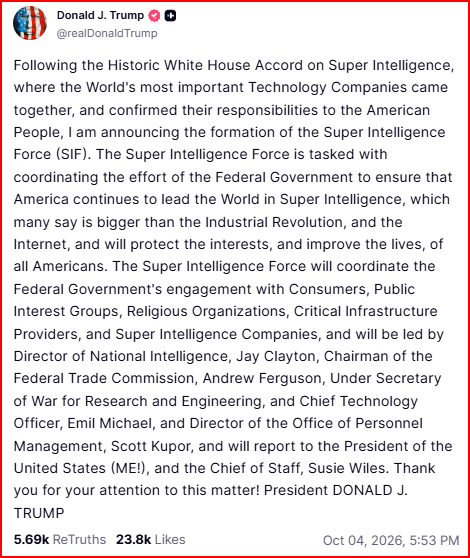
Amid the ongoing AI debate, President Donald Trump appointed Jay Clayton as the AI czar to lead a new White House “Super Intelligence Force.”
On Sunday, the President wrote on Truth Social, “The Super Intelligence Force will coordinate the Federal Government’s engagement with Consumers, Public Interest Groups, Religious Organizations, Critical Infrastructure Providers, and Super Intelligence Companies.”
That task force has 120 days to assess AI’s risks and opportunities and determine the federal government’s role.
Disclaimer: This content was partially produced with the help of AI tools and was reviewed and published by Benzinga editors.
Photo courtesy: Meir Chaimowitz on Shutterstock.com
Recent Comments