
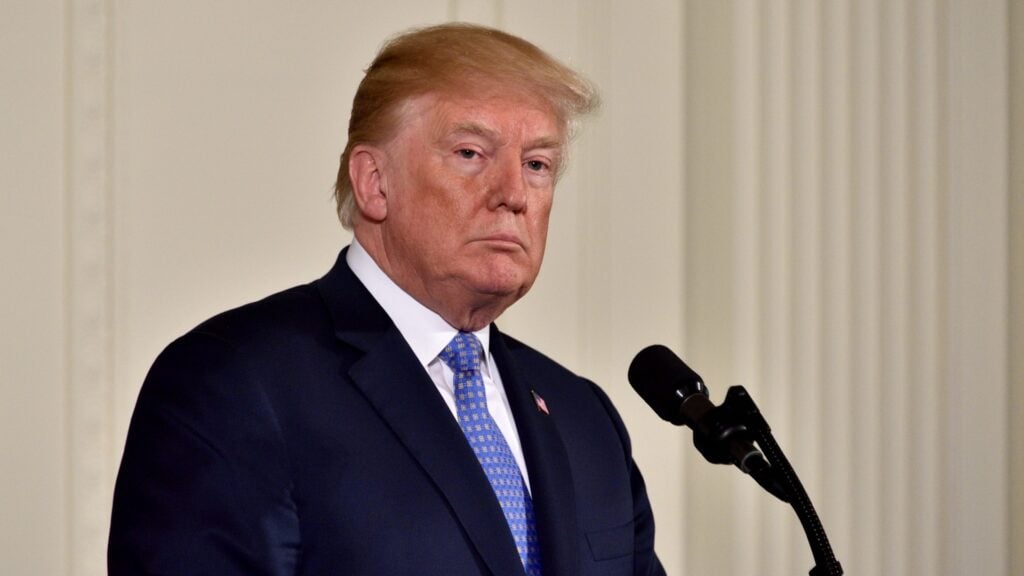
Senate Minority Leader Chuck Schumer (D-N.Y.) criticized President Donald Trump’s business history and political record, arguing that Trump has repeatedly benefited from branding and controversy while raising broader concerns about democracy and civil rights.
Schumer Targets Trump’s Business Record
On Monday, Schumer posted on X, while sharing a clip from his speech, writing, “Trump Steaks. Trump University. Trump Airlines. Trump Coin. The Trump Presidency—all cons.”
He added, “The product changes. The con stays the same. You pay, Trump profits.”
Democracy And Voting Rights
In the speech, Schumer shifted his focus to democracy and civil rights, arguing that the country faces broader challenges beyond policy disagreements.
“In Washington and across the country, extremists holding high office are working to erase Black history rather than learn from it, to take away voting rights instead of strengthening them, to divide us rather than unite us,” he said.
He added, “These are not simply disagreements over policy. No, they’re not. These are challenges to the very idea that democracy belongs to all of us.”
Schumer also referenced the Constitution’s opening words, saying the phrase “We the People” originally excluded enslaved people, women and others, while arguing that generations of Americans have worked to make the nation “a more perfect union.”
White House did not immediately respond to Benzinga’s request for a comment.
Trump Presidency Criticism Over Tax Law, Tariffs And Truth Social
Economist Justin Wolfers criticized President Trump’s tax law, saying promised tax breaks for tips, overtime and Social Security were temporary carve-outs, while permanent benefits favored wealthy Americans.
He called the policy “populism with an asterisk.”
Canadian Prime Minister Mark Carney said Canada was prepared to deepen trade talks with the U.S. after new tariffs, calling them a USMCA violation and urging a resolution to reduce costs for families.
Sen. Adam Schiff (D-Calif) criticized Trump over reports that Truth Social could charge for early access to his posts, arguing it raised concerns about potential profits from market-moving presidential messages.
Disclaimer: This content was partially produced with the help of AI tools and was reviewed and published by Benzinga editors.
Photo courtesy: Shutterstock
Recent Comments