
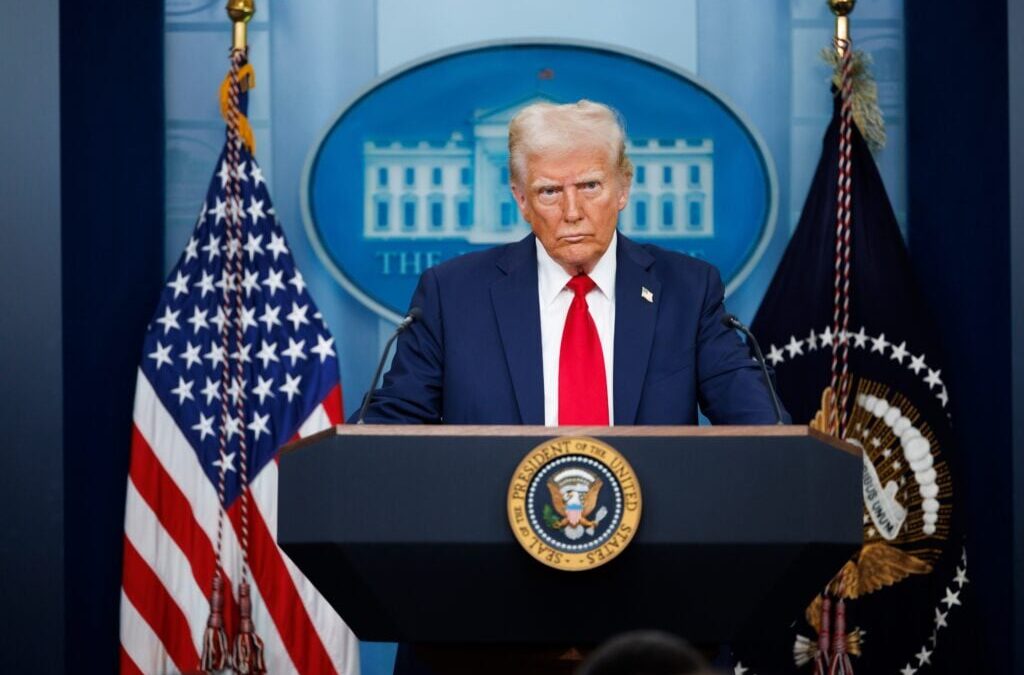
Former Defense Secretary Mark Esper on Monday backed President Donald Trump’s decision to reinstate a U.S. naval blockade of Iranian ports, calling it the “right move” as Washington claims a bigger security role in the Strait of Hormuz.
Esper Backs Trump’s Blockade Decision
“I agree with the president, I think it’s the right move to reinstate the blockade,” Esper, who led the Pentagon during Trump’s first term, told CNN’s “Erin Burnett OutFront.”
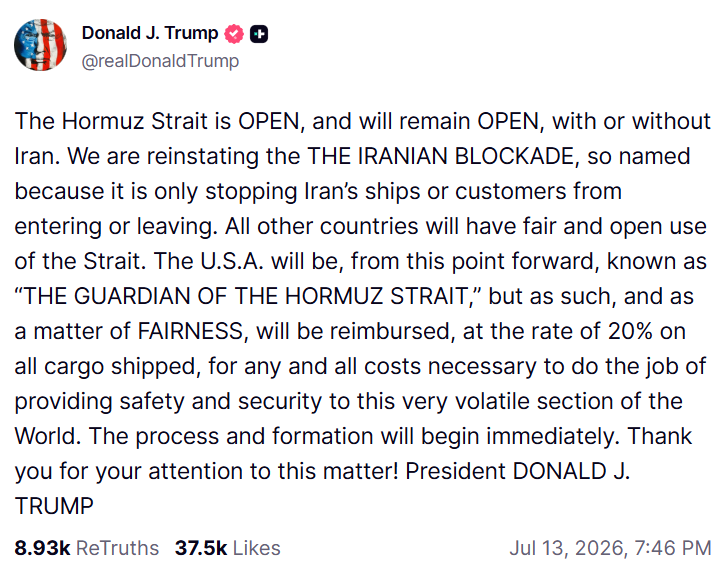
Trump in a Truth Social post said that U.S. forces “are reinstating… THE IRANIAN BLOCKADE,” which he described as targeting only Iranian ships or customers entering or leaving Iranian ports. He also wrote that “all other countries will have fair and open use of the Strait” and said the U.S. would be known as “THE GUARDIAN OF THE HORMUZ STRAIT.”
Esper said Trump should pair military pressure with an “economic strangling” of Iran and walk away from last month’s memorandum of understanding. “It was not a good MOU,” Esper said, adding that only one of its 14 points addressed Iran’s nuclear program and pushed key issues “much, much later.”
Iran Rejects US Hormuz Claim
Reuters separately reported on Monday that Trump also said the U.S. would charge a 20% fee on cargo passing through the waterway. Iranian Foreign Minister Abbas Araghchi used sarcasm on social media to reject Trump’s plan, mockingly agreeing that whoever secures the Strait of Hormuz deserves financial compensation. However, Araghchi firmly reasserted that Tehran, not Washington, holds historic and eternal guardianship over the vital shipping lane.
U.S. Central Command said it would resume “blockading maritime traffic entering and exiting Iranian ports” at 4 p.m. ET Tuesday. CENTCOM said American forces previously redirected more than 140 compliant vessels, disabled nine non-compliant ships and allowed more than 50 qualifying vessels to pass during the earlier blockade period.
Oil Chokepoint Raises Wider Risks
The Strait of Hormuz remains one of the world’s most important oil chokepoints. The U.S. Energy Information Administration said oil flows through the strait averaged 20.9 million barrels per day in the first half of 2025, equal to about 20% of global petroleum liquids consumption.
The renewed blockade follows fresh U.S.-Iran strikes after Tehran attacked commercial vessels near the strait. Iran retaliated against U.S. military positions after Trump ordered strikes over alleged ceasefire violations. Prediction-market traders were already pricing rising odds of a wider U.S.-Iran conflict.
The Treasury Department has also expanded sanctions on Iranian oil networks, keeping financial pressure aligned with the blockade.
Photo courtesy: Joshua Sukoff / Shutterstock
Recent Comments