
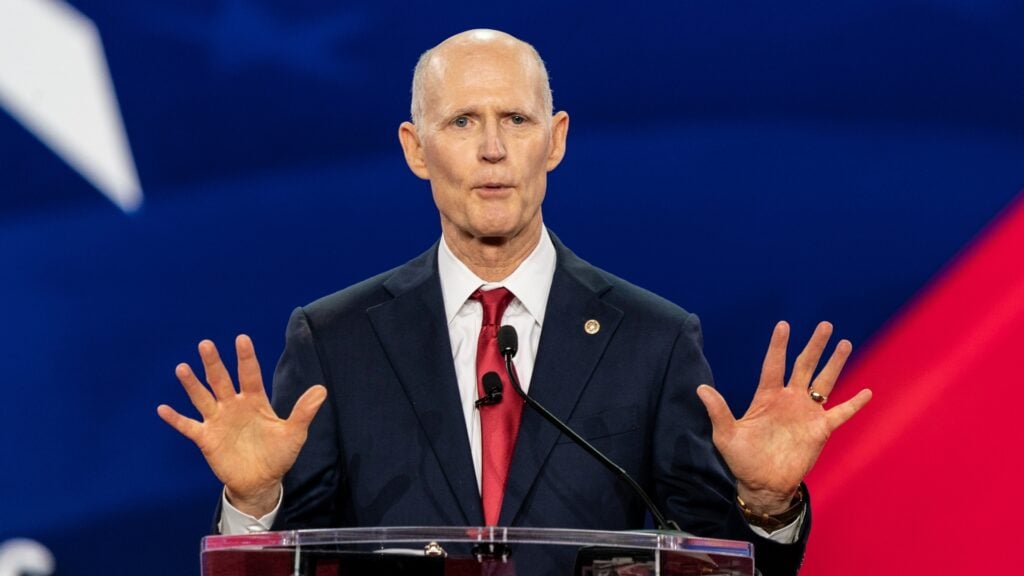
On Monday, Sen. Rick Scott warned that growing Chinese ownership of U.S. brands and supply chains could threaten national security, calling for a stronger push toward domestic manufacturing.
Scott Calls Out Chinese Ownership Risks
In a post on X, Scott said the “Made in America” label is no longer enough
He added that “Communist China is buying up brands Americans know and trust.”
Scott further said, “They can use many of our common household goods to SPY on you,” without providing specific examples.
He continued, “It’s time to free ourselves from Communist China and make American goods AMERICAN again.”
US-China Trade Tensions, Deals And New Framework Talks
Earlier, the Trump administration proposed new tariffs on imports from 60 economies over concerns tied to forced labor practices in global supply chains.
The U.S. Trade Representative’s office suggested duties of 10% or 12.5% following a Section 301 investigation into unfair trade practices.
The plan included 10% tariffs on 15 trading partners such as the European Union, Canada, Mexico and the United Kingdom, while 45 other economies, including China and India, faced potential 12.5% duties.
U.S. Trade Representative Jamieson Greer called the failure to address forced labor imports “unacceptable,” saying it disadvantaged American workers.
Separately, President Donald Trump brokered an agricultural agreement with China requiring Beijing to purchase at least $17 billion in U.S. farm products annually through 2028.
During the same visit, Trump and Chinese President Xi Jinping created two new institutions, the U.S.-China Board of Trade and the U.S.-China Board of Investment, to manage goods flows and investment disputes.
The White House said the framework marked the first formal trade and investment mechanism between the two economies.
China’s Commerce Ministry said both sides also reached a tentative agreement to lower tariffs and ease non-tariff barriers.
Disclaimer: This content was partially produced with the help of AI tools and was reviewed and published by Benzinga editors.
Photo courtesy: lev radin / Shutterstock.com
Recent Comments