
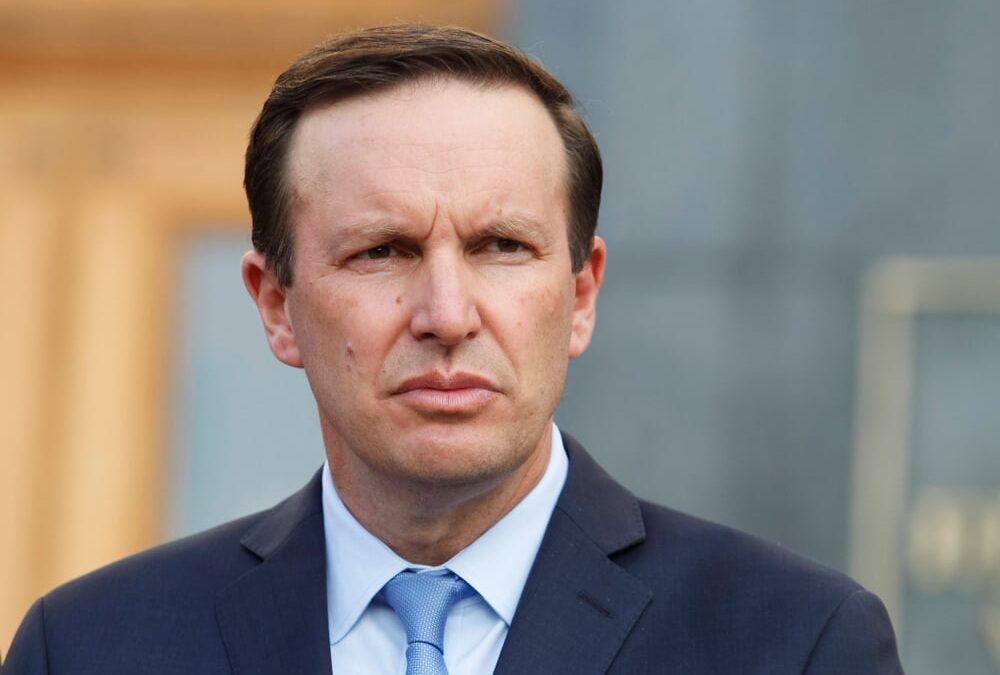
Sen. Chris Murphy (D-Conn.) on Thursday introduced the Living Wage For All Act, a bicameral bill that would raise the federal minimum wage from $7.25 to $25 an hour nationwide through a phased rollout.
The legislation would require large corporate employers to implement a $25 hourly wage floor by 2032, while smaller businesses would have until 2039 to comply. The bill would also mandate automatic future increases by tying the federal minimum wage to two-thirds of the national median wage, helping ensure wages continue to rise with broader earnings.
The bill is co-sponsored by Sen. Richard Blumenthal (D-CT), Andy Kim (D-N.J.) and Sen. Ron Wyden (D-Ore.). Companion legislation was introduced in the House by Reps. Delia C. Ramirez (D-Ill.), Analilia Mejia (D-N.J.), Jesus “Chuy” Garcia (D-Ill.) and Lateefah Simon (D-Calif.).
Wage Stagnation Meets Rising Costs
The federal minimum wage has remained unchanged at $7.25 since 2009, even as housing, groceries and healthcare costs have climbed sharply.
Murphy’s office said worker productivity has risen roughly 92% since 1979, while wages have increased by less than 34%. Supporters of the bill argue that if the minimum wage had kept pace with inflation and worker productivity since 1968, it would have reached roughly $25 by 2023.
Murphy said the proposal is aimed at addressing a deepening affordability crisis.
“If you work full time in this country, you should be able to afford to live,” Murphy said.
The push comes as inflation continues to pressure household budgets. Recent data cited by Sen. Elizabeth Warren (D-Mass.) showed consumer prices rose 4.2% year over year in May, while wages increased 3.4%, leaving many workers with less purchasing power despite nominal pay gains.
Some economists argue the U.S. faces a structural wage problem rather than simply an inflation problem. Economist Mihir Torsekar of the Coalition for a Prosperous America has said worker pay has failed to keep pace with broader economic growth and corporate profitability, leaving many households financially strained even as inflation moderates.
Debate Over Economic Impact
Supporters say higher wages could reduce poverty, boost consumer spending and improve employee retention. Murphy’s office said about 45% of American workers currently earn less than $25 an hour.
Critics, however, warn that aggressive wage hikes could create unintended consequences. Berkshire Hathaway Chair Warren Buffett has previously argued that large increases in minimum wage could reduce hiring, cut worker hours and raise prices, particularly for small businesses and lower-skill jobs.
The bill would also gradually eliminate subminimum wages for tipped workers, workers with disabilities and youth workers, ensuring all workers move toward the same wage floor.
The proposal has drawn support from major labor and civil rights organizations, including One Fair Wage, the NAACP, the Service Employees International Union and the National Education Association.
Disclaimer: This content was partially produced with the help of AI tools and was reviewed and published by Benzinga editors.
Image via Shutterstock
Recent Comments