
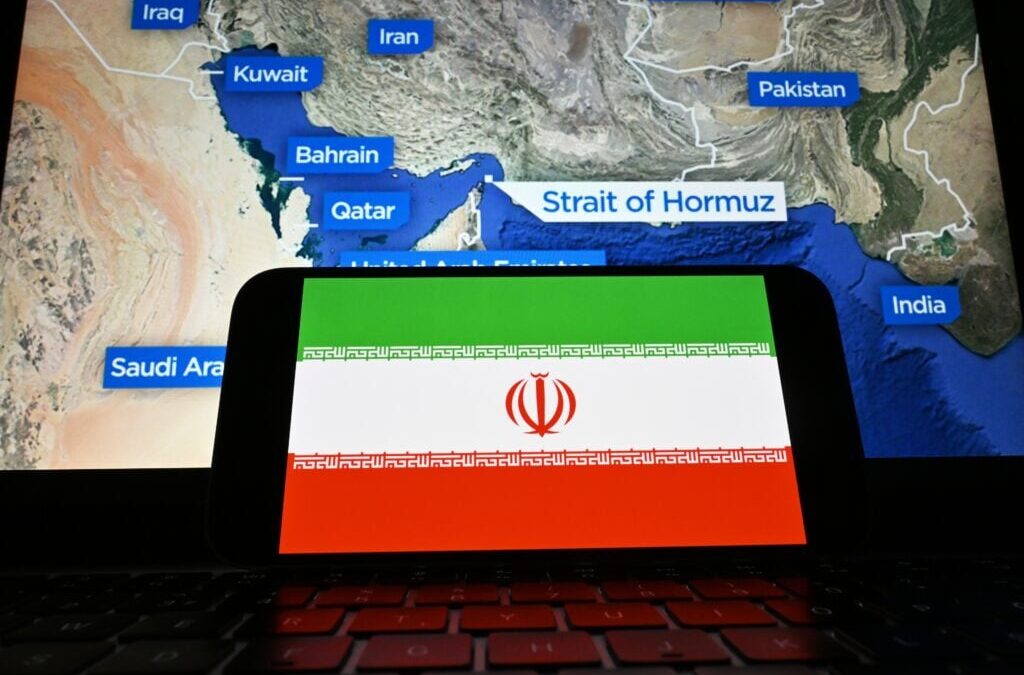
Iran’s Parliament Speaker Mohammad Bagher Ghalibaf on Monday reaffirmed that Tehran will administer the Strait of Hormuz in accordance with international law, as the U.S. Treasury issues a 60-day license to export Iranian oil.
Ghalibaf Says Iran Will Administer Strait Of Hormuz
The Iranian Parliament Speaker said that the administration of the Strait of Hormuz will “never” go back to the pre-war status quo, according to a report by the Iranian news agency IRNA. “Iran will administer the Strait of Hormuz,” Ghalibaf said.
According to the Memorandum of Understanding (MoU) signed by Washington and Tehran, the administration of the Strait of Hormuz would be at the discretion of Iran and Oman. At the same time, ships would be allowed to pass through the waterway free of charge for 60 days.
Scott Bessent Issues 60-Day Export License
Meanwhile, Treasury Secretary Scott Bessent took to the social media platform X on Monday, sharing the news that the U.S. had issued “a temporary 60-day general license authorizing the production, delivery, and sale of Iranian oil.”
Bessent said that the decision came after “productive talks in Switzerland,” where Iran has committed to “free and open transit in the Strait of Hormuz,” the Treasury Secretary said.
He also echoed Vice President JD Vance‘s earlier comments about Iran permitting inspectors from the International Atomic Energy Agency (IAEA) into their country.
Iran Denies IAEA Visit
However, Iran’s Foreign Ministry spokesperson Esmaeil Baqaei reacted to Vance’s comments in a report by the news agency IRNA on Monday.
Baqaei said that “Iran’s interactions with the Agency, in accordance with Iran’s obligations under the Safeguards Agreements, will continue according to existing procedures.”
He added that the interactions would also continue in compliance with the regulations decided upon by Iran’s Parliament as well as the Supreme National Security Council.
The report also cited unnamed sources familiar with the matter, saying that there were no discussions on the nuclear issue during the 18-hour negotiations and that Iran had not agreed to new commitments.
IAEA Access Suspended
Notably, Iran had suspended IAEA access to its sites that were bombed by Israel and the U.S. during last year’s 12-day war (June 13 to June 24) that took place following Israeli strikes on Iran’s military and nuclear facilities.
The agency also pulled out its inspectors from the country in July last year. The country’s parliament had passed a law last year to suspend cooperation with the agency until the safety of its nuclear facilities could be guaranteed.
Check out more of Benzinga’s Future Of Mobility coverage by following this link.
Photo courtesy: Shutterstock
Recent Comments