
Iran’s Islamic Revolutionary Guard Corps (IRGC) said it launched retaliatory strikes on U.S. military bases across the region after American forces conducted “self-defense” strikes against Iranian targets late Tuesday in response to the downing of a U.S. Apache helicopter.
The IRGC targeted a base at Al Azraq in northern Jordan, destroying hangars that housed F-35 fighter jets, according to Iran’s state-affiliated Fars News Agency. This marks the first direct attack on Jordan since the ceasefire between the U.S. and Iran was put into effect in April.
A light flash was also noted near a U.S. base in Bahrain, which coincided with the sounding of sirens in the country. The cause of the flash has not yet been confirmed. However, Iran’s Revolutionary Guards said they were behind a drone strike targeting the U.S. Fifth Fleet headquarters in Bahrain.
Jordan’s military reported the interception of five missiles from Iran aimed at Azraq. The General Command of the Jordanian Armed Forces stated, “We intercepted and downed five missiles launched from Iran toward Azraq,” according to the state media. The interception resulted in falling shrapnel, but no human injuries or material damage were reported.
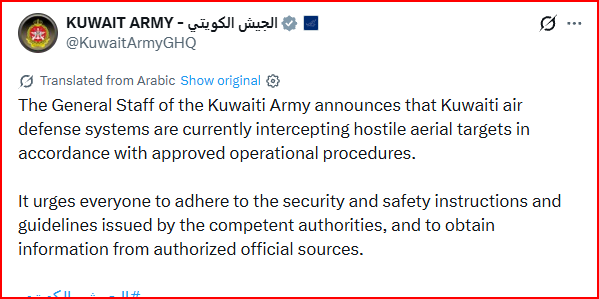
Meanwhile, Kuwait activated its air defenses to intercept “hostile aerial targets”, and Bahrain sounded alarms in response to the strikes.

US Strikes End, Diplomacy Push Remains
The U.S. military (CENTCOM) announced it had concluded its strikes on Iran, which it said were carried out in response to the downing of an Army Apache helicopter, following the orders of President Donald Trump. The strikes on Gulf nations come after Iranian Foreign Minister Abbas Araghchi also wrote on X that Iran would “leave no attack or threat unanswered.”
Meanwhile, Defense Secretary Pete Hegseth is set to visit Guantanamo Bay, Cuba, and Tampa, Florida, on Wednesday to meet with troops and U.S. Central Command (CENTCOM), according to the Pentagon.
Just a day before the strikes, Trump expressed confidence in a swift conclusion to the ongoing war with Iran, stating that a “very, very good deal” aimed at prohibiting nuclear weapons was on the horizon. He suggested that a deal could be struck in “two or three days,” with the reopening of the strategically important Strait of Hormuz to follow “immediately.”
Notably, a U.S. official told CNN that the Trump administration does not believe the strikes will disrupt ongoing war negotiations.
Disclaimer: This content was partially produced with the help of AI tools and was reviewed and published by Benzinga editors.
Image via Shutterstock
Recent Comments