
On Thursday, Elon Musk once again targeted Meta Platforms, Inc.’s (NASDAQ:META) WhatsApp after reacting to allegations that the platform accessed private messages without user consent.
Musk Questions WhatsApp
“Can’t trust WhatsApp,” Musk wrote on X, sharing a report about a new class action against the instant messaging platform.
WhatsApp’s official X handle responded to Musk’s post, saying, “The claims in this lawsuit are categorically false and absurd.”
The platform added that it has relied on end-to-end encryption powered by the Signal protocol for years, ensuring that only the sender and recipient can access messages.
Telegram’s Pavel Durov Escalates Criticism
Telegram founder Pavel Durov joined in alleging that the platform misleads users about its security, calling its encryption “the biggest consumer fraud in history.”
He further said, “Despite its claims, it reads users’ messages and shares them with third parties,” adding that Telegram has “never done this — and never will.”
Meta did not immediately respond to Benzinga’s request for comments.
Privacy Debate Extends Beyond Messages
The lawsuit in question alleges that while Meta has widely promoted WhatsApp as a secure, end-to-end encrypted platform, only users can access their conversations.
However, the company’s employees, along with Ireland-based firm Accenture and potentially other third parties, may be able to access messages without users’ knowledge through a purported “backdoor” in the app’s code.
The complaint claims this mechanism enables internal staff or contractors to bypass encryption protections and view private user communications.
In January 2026, another lawsuit claimed that Meta misleadingly promotes WhatsApp as a fully end-to-end encrypted service. At the time, Meta denied the allegations, describing the lawsuit as “frivolous.”
Price Action: Meta shares rose 2.61% to close at $628.39 on Thursday and edged up a further 0.099% to $629.01 in after-hours trading, according to Benzinga Pro.
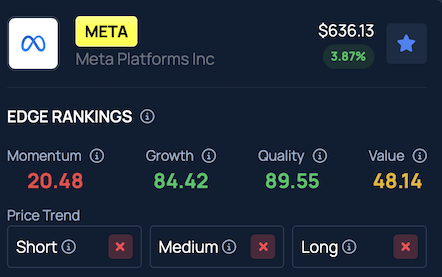
Meta stock holds a Quality score in the 89th percentile in Benzinga Edge rankings. It shows a negative trend across short, medium and long-term.

Disclaimer: This content was partially produced with the help of AI tools and was reviewed and published by Benzinga editors.
Photo: Shutterstock/Joshua Sukoff
Recent Comments