
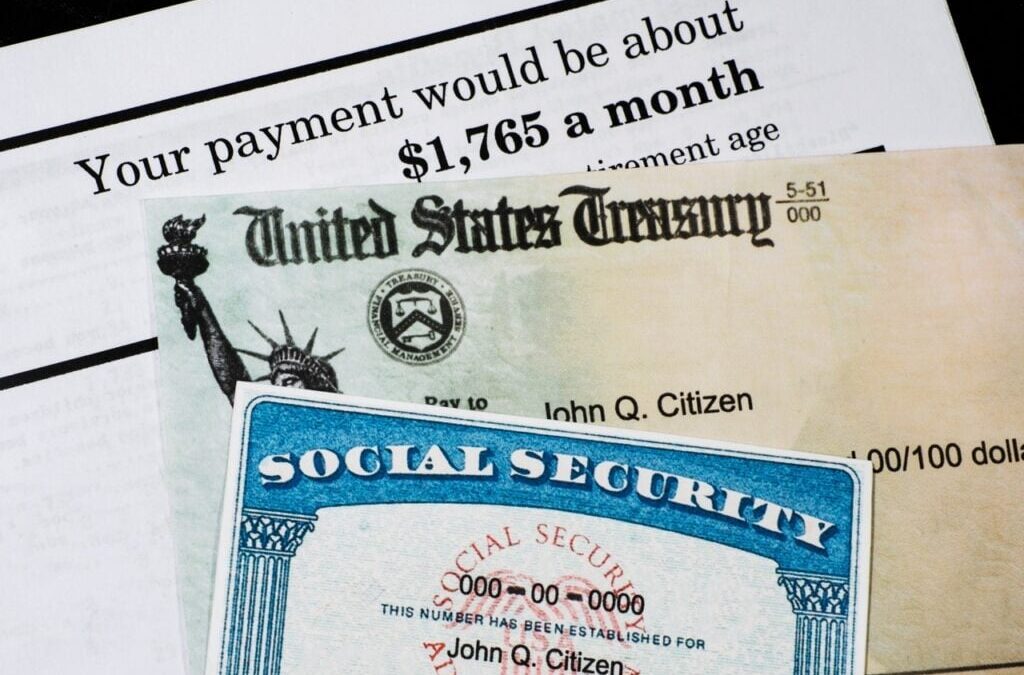
Millions of Americans are receiving Social Security payments this week, including retirement, disability, and survivor benefits. The Social Security Administration (SSA) distributes payments on a staggered schedule. Supplemental Security Income (SSI) goes out on April 1, while combined SSI and Social Security payments are scheduled for April 3. Other recipients will receive funds throughout April based on their birth dates.
Monthly retirement benefits depend on lifetime earnings, claiming age, and work history. Those earning the maximum taxable income from age 22 could receive up to $5,181 per month if they delay claiming until 70. Most retirees receive far less; the average Social Security payment for retired workers is $2,071.30. The maximum SSI benefit in 2026 is $994 for individuals and $1,491 for couples.
Long-Term Solvency Concerns
Billionaire Larry Fink, CEO of BlackRock Inc. (NYSE:BLK), warned in his 2026 annual letter that Social Security could “break its promise” under the current system. He highlighted that a third of Americans lack emergency savings, forcing them to withdraw from retirement accounts and weakening long-term financial security. Fink noted that the system operates on a pay-as-you-go model with trust fund investments mainly in Treasury bonds, which limits growth. He suggested exploring carefully structured long-term investments alongside the existing system to preserve guarantees and improve outcomes.
Sen. Bill Cassidy (R-La.) echoed concerns at a Senate Budget Committee hearing, warning that inaction could force benefit cuts of up to 28% or drive U.S. debt to dangerously high levels. The SSA trust fund is projected to run dry by 2032–2033, leaving payroll tax revenue to cover only 75–80% of scheduled benefits. Cassidy proposed a $1.5 trillion prefunded investment account, while other policymakers have considered capping benefits for high earners or merging retirement and disability trust funds.
Both Fink and Cassidy stress the urgency of addressing Social Security’s fiscal shortfall. Without timely reforms, benefit outlays may be reduced, threatening the system’s role as a core safety net for tens of millions of Americans.
Disclaimer: This content was produced with the help of AI tools and was reviewed and published by Benzinga editors.
Image via Shutterstock/ Rix Pix Photography
Recent Comments