
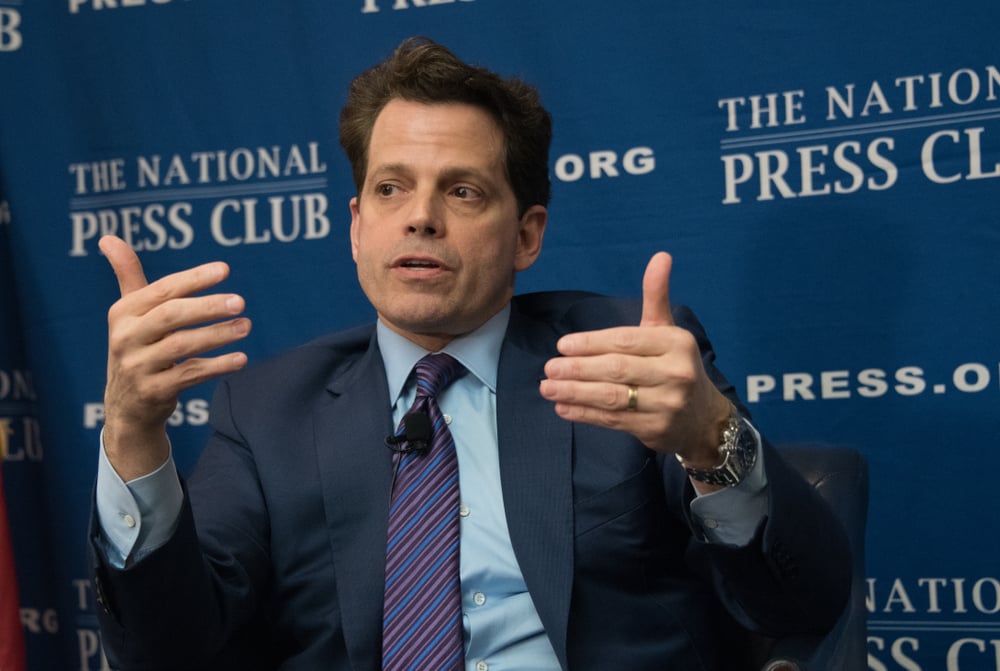
Former White House communications director Anthony Scaramucci is criticizing what he describes as systemic corruption in Washington, pointing to the prosecution of Martha Stewart as a contrast to lawmakers’ stock trading gains.
Congressional Stock Trading Controversy
In a Sunday post on X, Scaramucci argued that Stewart was prosecuted and served five months in federal prison after making roughly $45,000 from a stock trade.
He contrasted that case with members of Congress, who have reported significantly larger gains without facing similar legal consequences.
“Martha Stewart made $45,000 in profits. They caught her. They prosecuted her. She spent five months in federal prison,” Scaramucci wrote.
He added, “Members of Congress are making hundreds of millions.”
He also pointed to the recent resignation of the head of an enforcement division tasked with monitoring such activity, suggesting the agency was unable to effectively focus on the issue.
Scaramucci stressed that the problem extends across party lines. “I want to be clear, this is not a Republican problem. This is a Washington problem,” he said, calling the situation “the scandal.”
He urged lawmakers to enact reforms, including overturning Citizens United, passing the proposed “Bets Off Act,” which would restrict stock trading by members of Congress, and strengthening enforcement of the STOCK Act.
Political Corruption Sparks Economic And Crypto Concerns
Last week, Sen. Chris Murphy (D-Conn.) warned that political corruption benefiting corporations and billionaires drove Americans’ economic struggles.
He highlighted stagnant wages and high prescription drug prices as outcomes of corporate influence in Washington.
Last year, Rep. Ro Khanna (D-Calif.) announced a resolution to block President Donald Trump and his family from engaging in cryptocurrency business or accepting foreign funds.
Khanna cited alleged millions in earnings from a Trump-backed stablecoin and criticized the president’s use of office for personal gain.
Disclaimer: This content was partially produced with the help of AI tools and was reviewed and published by Benzinga editors.
Photo Courtesy: Al Teich On Shutterstock
Recent Comments