
Key Takeaways:
- China is aggressively pressing companies to unwind opaque offshore variable interest entity structures to stem capital flight and enforce domestic taxation
- U.S. lawmakers are targeting boutique investment banks over their underwriting practices in a bid to rein in pump-and-dump schemes by Chinese firms

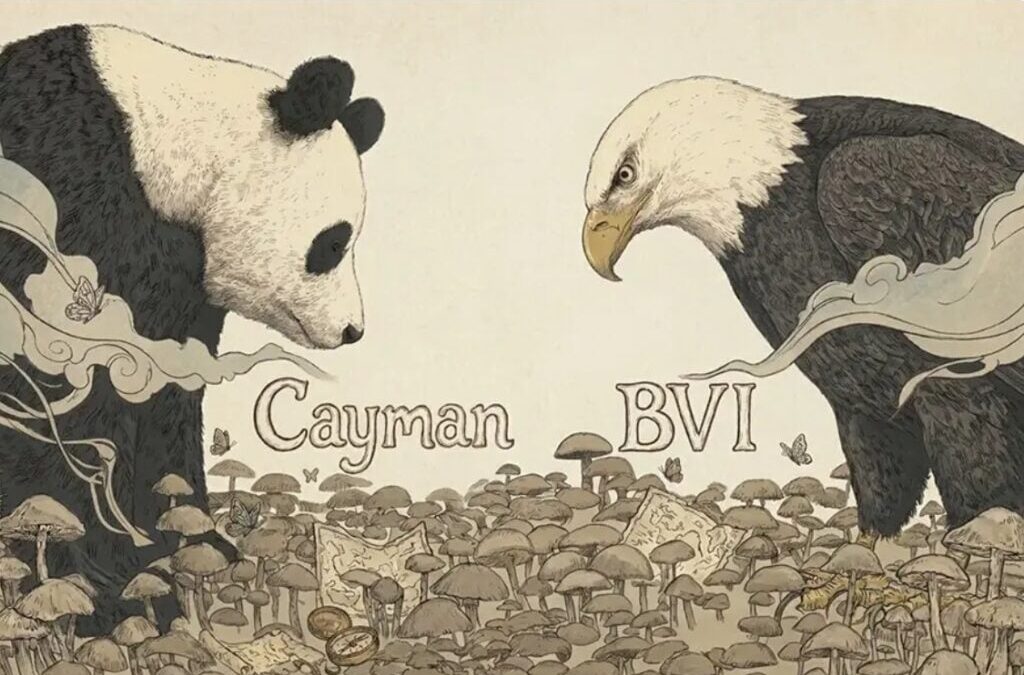
image credit: Bamboo Works
A pair of separate regulatory moves from opposite sides of the Pacific — one driven by Beijing’s financial watchdog and the other by U.S. lawmakers — are converging to further pressure the already fading market for U.S. IPOs by Chinese companies.
We believe these coordinated pressures are effectively hammering the latest nail into the coffin for a once-lucrative pipeline, fundamentally reshaping how these enterprises access foreign capital.
We’ll start with the view from China, where the China Securities Regulatory Commission is increasingly pressuring Chinese companies listed in the U.S. and Hong Kong to unwind their offshore corporate registrations. For decades, founders circumvented Chinese government prohibitions on foreign ownership in the telecom and internet sectors by using the variable interest entity (VIE) structure, routinely registering their businesses in offshore havens like the Cayman Islands or the British Virgin Islands (BVI).
This offshore setup functioned as an elegant workaround that allowed foreign investors to buy stock without ever holding a direct interest in the underlying Chinese operations. However, these structures offered a suite of other benefits that founders eagerly embraced. They provided significant tax advantages, created a veneer of North American incorporation, and permitted founders to distance their wealth from the domestic tax system. The foreign jurisdictions were also vastly more lax regarding shareholder engagement, with some entities entirely avoiding the requirement to file quarterly earnings with the SEC.
That freewheeling era is ending. Starting April 1, China will require the proceeds of any offshore IPO or subsequent follow-on offering — including founder share sales — to be repatriated to China. We believe this represents a clear initiative to prevent capital flight and curb domestic tax avoidance. The days of the VIE structure are numbered, and we expect it will eventually be prohibited entirely.
Interestingly, while this could eventually spell the end of tax-free wealth accumulation for some entrepreneurs, we think it could actually prove beneficial for international investors. Under a dismantled VIE structure, a U.S. investor could essentially buy into a domestic Chinese company and hold a direct claim on its actual underlying assets. This presents a fundamentally stronger economic position than holding shares in a shell company with no direct ownership of the actual money-producing assets in China.
U.S. House committee targets boutique banks over pump-and-dump IPOs
On the other side of the Pacific, the squeeze on Chinese listings is highly political. A U.S. House committee recently demanded explanations from three obscure boutique investment banks regarding their underwriting of small Chinese listings. A substantial number of these offerings appear to be classic “pump and dump” schemes, where a stock briefly pops upon its debut and crashes dramatically soon after.
There’re some cases, such as one involving a company called Pomdoctor, where shares were sold for $4 and briefly rose to $5, only to crash in a single day two months later to just 50 cents.
Lawmakers are now using these small boutique underwriters like Boral Capital and Revere Securities as wedges to expose flawed due diligence and potential collusion. We believe politicians are stepping into this arena primarily because the SEC and Nasdaq have been asleep at the switch. While the Nasdaq announced last year that it would tighten IPO listing rules for these companies, the action arrived far too late, coming only after massive losses by U.S. retail investors. Genuine, well-established Chinese businesses with solid financial performance will likely survive these new constraints, but their numbers have already severely dwindled. Driven by a volatile mix of geopolitics, strict Chinese controls over cybersecurity, and U.S. anxieties regarding technology and espionage, we anticipate only a handful of respectable Chinese companies will successfully brave the U.S. market going forward.
China Inc by Bamboo Works discusses the latest developments on Chinese companies listed in Hong Kong and the United States to drive informed decision-making for investors and others interested in this dynamic group of companies.
Benzinga Disclaimer: This article is from an unpaid external contributor. It does not represent Benzinga’s reporting and has not been edited for content or accuracy.
Recent Comments