
Africa is quickly becoming one of the most interesting emerging markets in the world of crypto, though it is still largely untapped by institutional investors. While markets in North America and Europe are becoming increasingly developed, African markets are growing in real-world use cases.
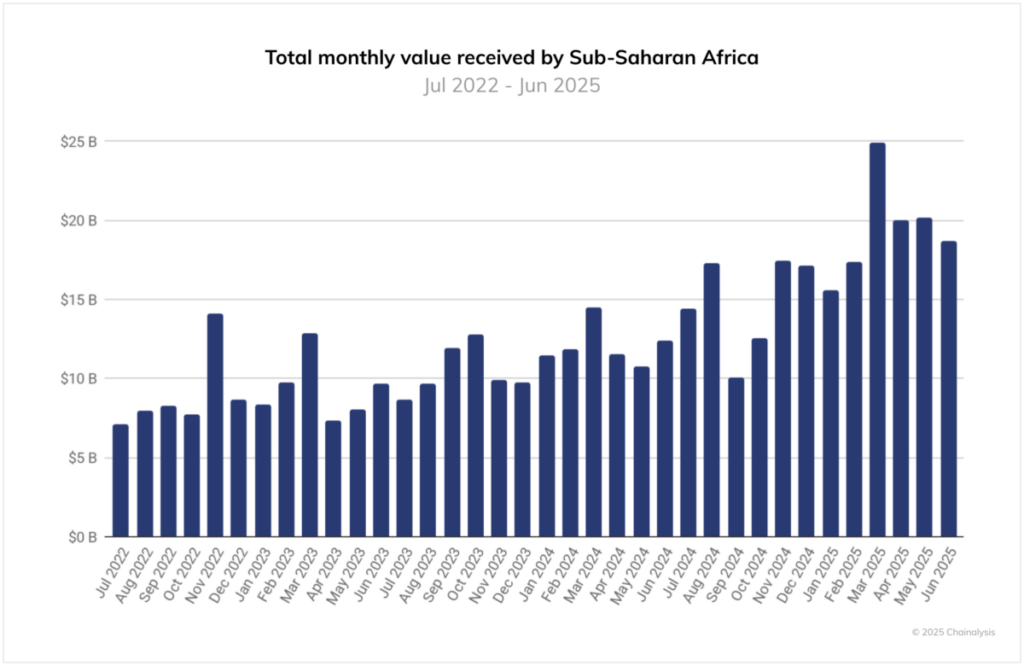
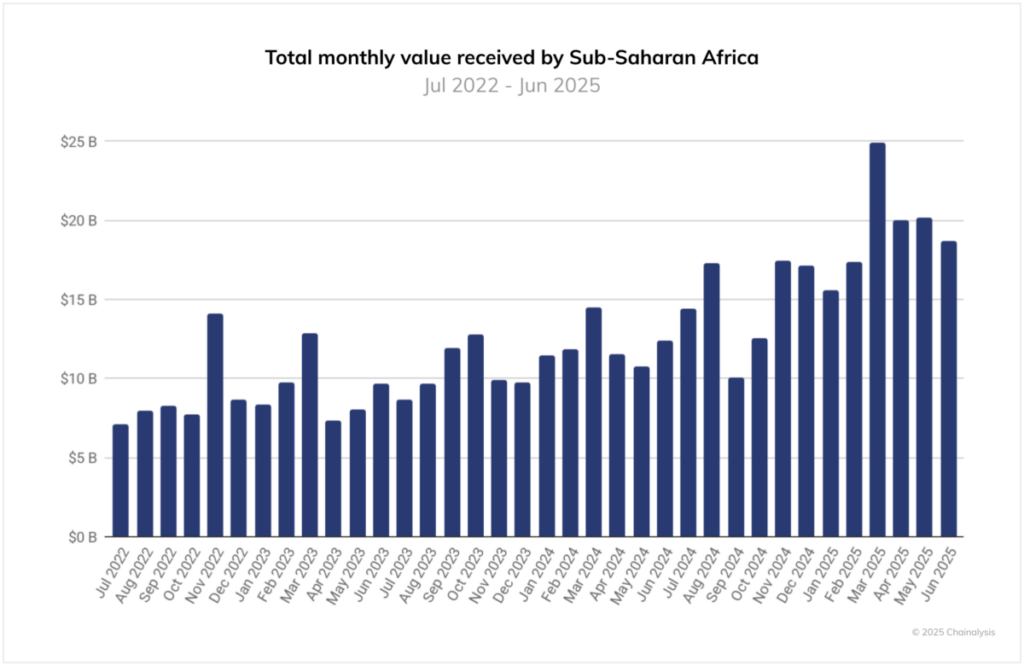
According to Chainalysis, the total value of on-chain activity within the region surpassed $205 billion for the twelve months to June 2025. This represents a 52% growth from the preceding year. This growth represents the third fastest-growing region in the world after APAC and Latin America.
The growth is mainly attributed to real-world use cases. For example, remittances, payment services, and record-keeping.
In March 2025, there was a surge in activity within the region. The monthly figure reached nearly $25 billion, representing a deviation from other months when most other regions recorded declining figures.
Nigeria Just Logged $96B in Crypto, And It’s Leading All of Africa
Much of the crypto growth in Africa has been fueled by centralized exchange activities in Nigeria. This saw a surge in cryptocurrency usage after the currency’s devaluation.
Recently, the DG of the SEC in Nigeria, Emomotimi Agama, disclosed that the country’s digital finance ecosystem had processed $96 billion in crypto and other virtual assets.
Also, an examination of on-chain transactions shows that stablecoins are being used in large transactions related to trade flows between Africa, the Middle East, and Asia.
Specifically, there are multi-million-dollar stablecoin transactions related to sectors like energy and merchant payments, which illustrate the utility of crypto assets in these regions, where financial infrastructure may be less developed.
At the country level, Nigeria again dominates the region by a large margin. It received more than $92.1 billion in value within the 12-month period. This is almost triple that of the next country in line, South Africa.

Nigeria’s large figure is also due to other factors beyond the country’s large population and tech-savvy youth. The country’s problems with inflation and access to foreign currency have created major interest in stablecoins.
Meanwhile, authorities in the country are stepping up measures to protect investors. Agama revealed that the SEC has issued more than 90 advisories to alert Nigerians about suspicious schemes and investment offers. Agama cautioned that some victims are drawn to unregistered investment schemes promising unrealistic returns.
Africa’s Crypto Economy Is Now Drawing in Millions
According to the CV VC 2024 African Blockchain Report, South Africa saw 18% of blockchain VC funding. Blockchain accounted for 7.4% of all VC funding in Africa. This is significantly higher than its global share of 3.2%.
Many of these blockchain projects in Africa are working on real-world use cases such as identity verification, land registries, and financial inclusion, rather than speculative crypto assets.
To add, South Africa has made strides in terms of its advanced regulatory framework, which has led to a more institutionalized crypto market.
With hundreds of virtual asset service providers already registered and licensed, there is a high level of regulatory certainty. This paves the way for institutional players to enter the market without roadblocks.
For example, institutions like Absa Bank are at advanced stages of product development for institutional clients. South Africa is, therefore, unique in the region as a leader in terms of infrastructure and compliance for institutional clients.
Tokenization Boom in Africa Is Closer Than Most Think
As the tokenization sector continues to see adoption in major crypto economies, Africa, as well, has not been left behind. In October 2025, the Global Settlement Network (GSN) and the Diacente Group joined forces to create the most advanced tokenised economy in Africa, with a real-world infrastructure worth $5.5 billion.
Uganda is pioneering this move, launching its first Central Bank Digital Currency (CBDC) pilot, built on GSN’s permissioned blockchain and backed by treasury bonds. Agro-processing facilities, mining, and solar farms are part of the infrastructure for the tokenisation program.
The initiative is part of Uganda’s Vision 2040 and the African Union’s Agenda 2063, in line with the ambitions set out in the African Continental Free Trade Area. One million jobs and $10 billion in exports are predicted annually.
In other words, there is still so much that is being overlooked by investors and institutions in this booming economy. The plan by FirstRand Bank to use Kinexys blockchain technology in treasury management is a clear indication that Africa is now ready for “big capital.”
Benzinga Disclaimer: This article is from an unpaid external contributor. It does not represent Benzinga’s reporting and has not been edited for content or accuracy.
Recent Comments