
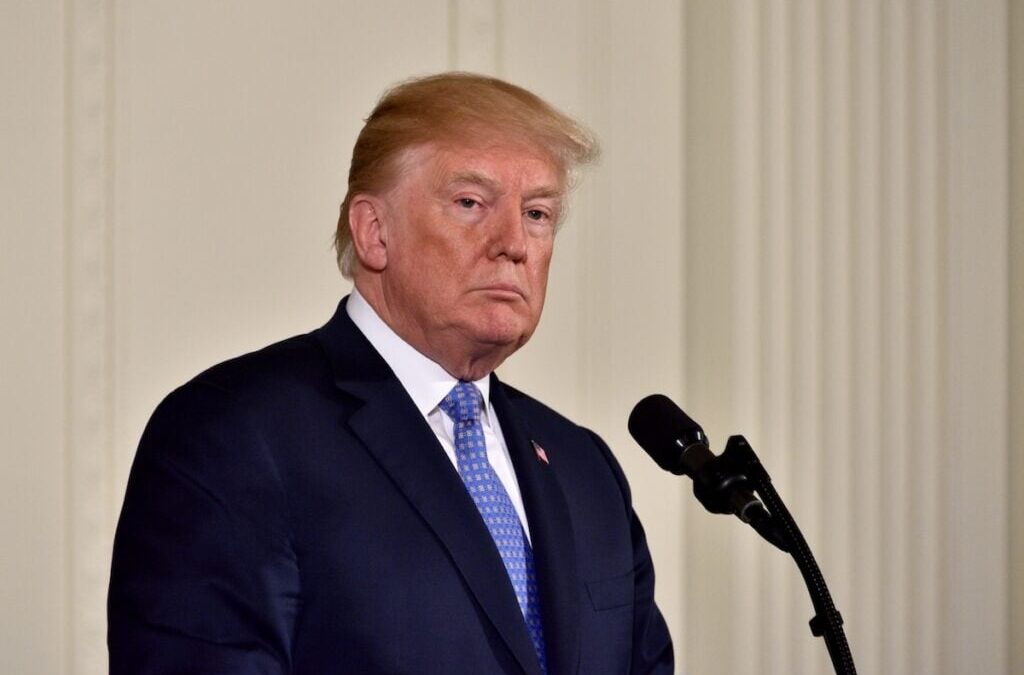
President Donald Trump‘s Golden Dome missile defense system will now cost $185 billion, in what is a $10 billion surge from the earlier-touted cost of $175 billion.
New Prime Contractors
During the McAleese Defense Programs Conference in Arlington, Virginia, on Tuesday, the Golden Dome Program Director, Michael Guetlein, shared that the defense system would cost $185 billion and announced that defense companies like Lockheed Martin Corp (NYSE:LMT), RTX Corp (NYSE:RTX) and Northrop Grumman Corp (NYSE:NOC) had been signed on as prime contractors on the project.
Guetlein shared that the additional funding would enhance the system’s Advanced Missile Tracking Initiative and the Hypersonic and Ballistic Tracking Space Sensor, both of which are space-based systems designed to track missiles. He also dismissed claims that the system would cost over $1 trillion.
Golden Dome’s First Year
Unveiled last year, the system is modeled after Israel’s “Iron Dome” system and combines ground-based defenses and orbital satellite capabilities to track and deter ballistic missile threats. Despite the ambitious goal, the plan has struggled to make headway amid concerns about the system’s space-based technology, as well as China’s progress.
Several companies were involved with the system, including Elon Musk‘s SpaceX, entrepreneur Peter Thiel‘s software company Palantir Technologies Inc. (NASDAQ:PLTR), drone manufacturer Anduril, as well as Boeing Co. (NYSE:BA). SpaceX and Palantir were also reportedly frontrunners for the project last year.
Meanwhile, Scalable Homeland Innovative Enterprise Layered Defense (SHIELD), a major contracting initiative worth $151 billion by the Missile Defense Agency (MDA), serves as a crucial element of the initiative and features a list of over 2,400 vendors.
L3 Harris’ Missile Tracking
Elsewhere, defense manufacturer L3Harris Technologies Inc. (NYSE:LHX) had earlier said it can deploy over 45 hypersonic missile tracking satellites for the defense system. The company also partnered with Joby Aviation Inc. (NASDAQ:JOBY) to build hybrid military aircraft capable of crewed as well as autonomous operations.
Check out more of Benzinga’s Future Of Mobility coverage by following this link.
Photo courtesy: Evan El-Amin on Shutterstock.com
Recent Comments