
Oil’s surge back to $100 per barrel is smashing the post‑pandemic recovery trade in airline stocks, sending major U.S. carriers’ shares down through key technical support levels as the Iran war reprices travel risk across the sector.
- AAL stock is moving. See the chart and price action here.
Shares of Delta Air Lines Inc. (NYSE:DAL), United Airlines Holdings Inc. (NASDAQ:UAL) and American Airlines Group Inc. (NASDAQ:AAL) extended recent losses this week as Brent crude pushed above $100 per barrel and briefly traded closer to $105 amid escalating supply fears tied to the war with Iran and attacks on shipping near the Strait of Hormuz.
Airline bulls entered the year betting that upbeat guidance would finally stick. They touted 2026 as if it were a clear runway rather than a turbulence‑prone recovery trade.
Airline brass talked a big game. Delta’s confidence in 20% earnings growth and American’s plans to pair higher profits with more than $2 billion in free cash flow, helped fuel a rotation back into the group. And investors leaned into the idea of normalized travel demand, disciplined capacity, and improving balance sheets.
Consensus estimates were creeping higher and valuation multiples had begun to rerate off post‑pandemic lows. The sector, experts claimed, was a cyclical winner of a post-COVID soft‑landing narrative.
Then the war began in Iran.
Recent Price Action Of Airline Stocks
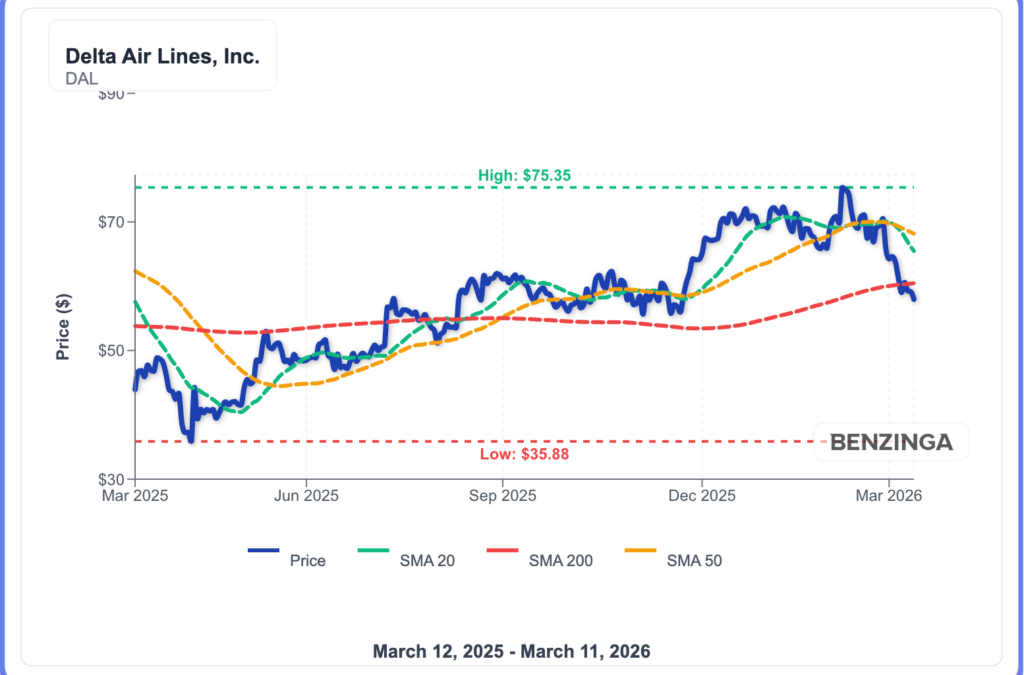
Delta, United and American dropped between 15% to 20% over the past month, breaking below near‑term support as investors rushed to reprice fuel costs and demand risk.
All three airline stocks are below their 20, 50 and 200-day moving averages, illustrated by the charts below:


The selling has been broad‑based. The U.S. Global Jets ETF (NYSE:JETS), a popular gauge of airline equities, is down more than 18% over the same period, reflecting sector‑wide pressure as jet fuel prices in some regions have doubled from pre‑war levels.
Southwest Airlines Co. (NYSE:LUV), down 25%, and JetBlue Airways Corp. (NASDAQ:JBLU), down 30%, have been hit particularly hard as traders punish carriers most exposed to domestic leisure and price‑sensitive traffic.
Looking Ahead
The move in energy is outpacing airlines’ ability to adjust.
WTI crude oil has jumped roughly 55% over the past month and sits at its highest levels since 2022 as supply cuts and war‑related shipping disruptions roil oil markets, while some jet fuel benchmarks have risen even faster.
Many large U.S. airlines have largely abandoned fuel hedging, leaving balance sheets fully exposed to spot price spikes.
Delta has previously estimated $40 million dollars in extra annual fuel expense for every one‑cent move higher in jet fuel, implying a sharp hit to 2026 earnings if elevated prices persist.
To defend margins, carriers are already pushing through fare increases and trimming capacity on some long‑haul and Middle East‑adjacent routes, even as they reroute flights to avoid closed airspace.
With oil still hovering $100 per barrel and airline stocks trading below key chart levels, investors are treating the sector as a frontline proxy for geopolitical risk in the new phase of the Iran war.
Photo: ZenyuPH / Shutterstock
Recent Comments