
United Airlines Holdings Inc (NASDAQ:UAL) shares are trading lower Thursday morning as investors react to a sharp escalation in Middle East-related energy risk. Here’s what investors need to know.
- United Airlines Holdings stock is feeling bearish pressure. Why are UAL shares down?
United Airlines Highly Exposed To Volatile Fuel Prices
United operates a vast global network and depends heavily on jet fuel to move passengers across domestic and international routes, making energy prices a major variable in its cost structure. That exposure leaves the airline particularly sensitive to sudden swings in oil markets.
Those concerns intensified Thursday amid a fresh wave of geopolitical headlines. Reports indicated the U.S.-Iran war had escalated, prompting U.S. officials to move to release 172 million barrels from the Strategic Petroleum Reserve in an effort to help contain surging energy costs during the conflict. The United Nations Security Council also adopted a resolution condemning Iran for attacks on Gulf countries and Jordan.
Goldman Sachs Warns Of Record Oil Supply Shock
Goldman Sachs said disruption near the Strait of Hormuz now represents the largest oil supply shock on record, with Persian Gulf exports falling to roughly 3% of normal levels.
The bank raised its Brent crude forecast to an average of $98 in March and April and warned oil prices could climb even higher if the disruption persists. Front-month West Texas Intermediate crude was already up about 6% Thursday morning near $95 a barrel.
Rising Oil Prices Threaten United Airlines Profit Margins
This news matters deeply for United because fuel is one of the airline industry’s largest operating expenses. When crude prices jump, investors worry that higher jet fuel costs could pressure margins, especially if carriers cannot fully offset those expenses through fares.
Higher oil also raises broader concerns about inflation and slower economic growth, which could weaken travel demand.
United Airlines RSI Signals Weakening Stock Momentum
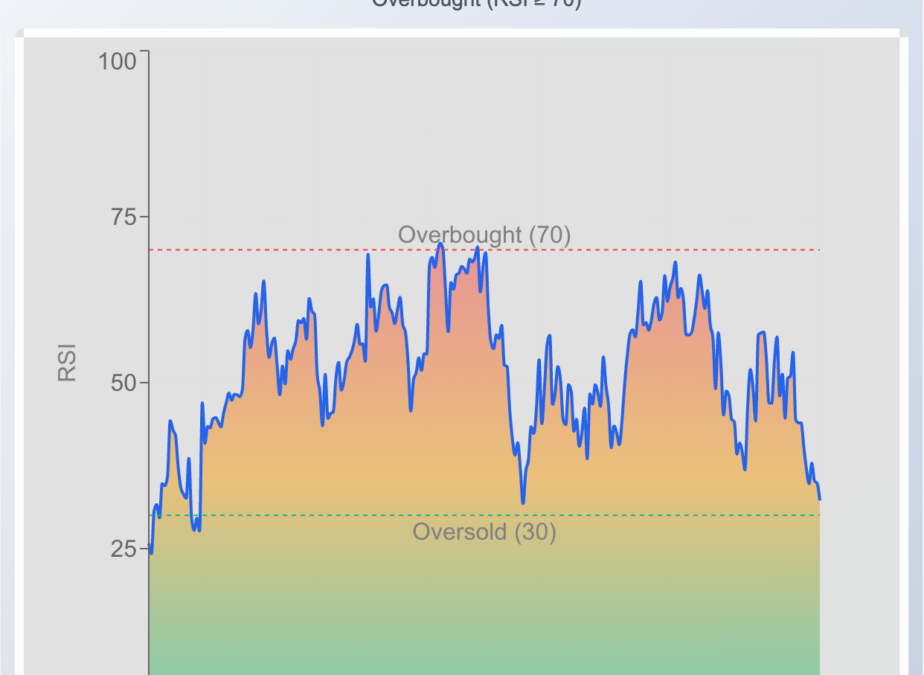
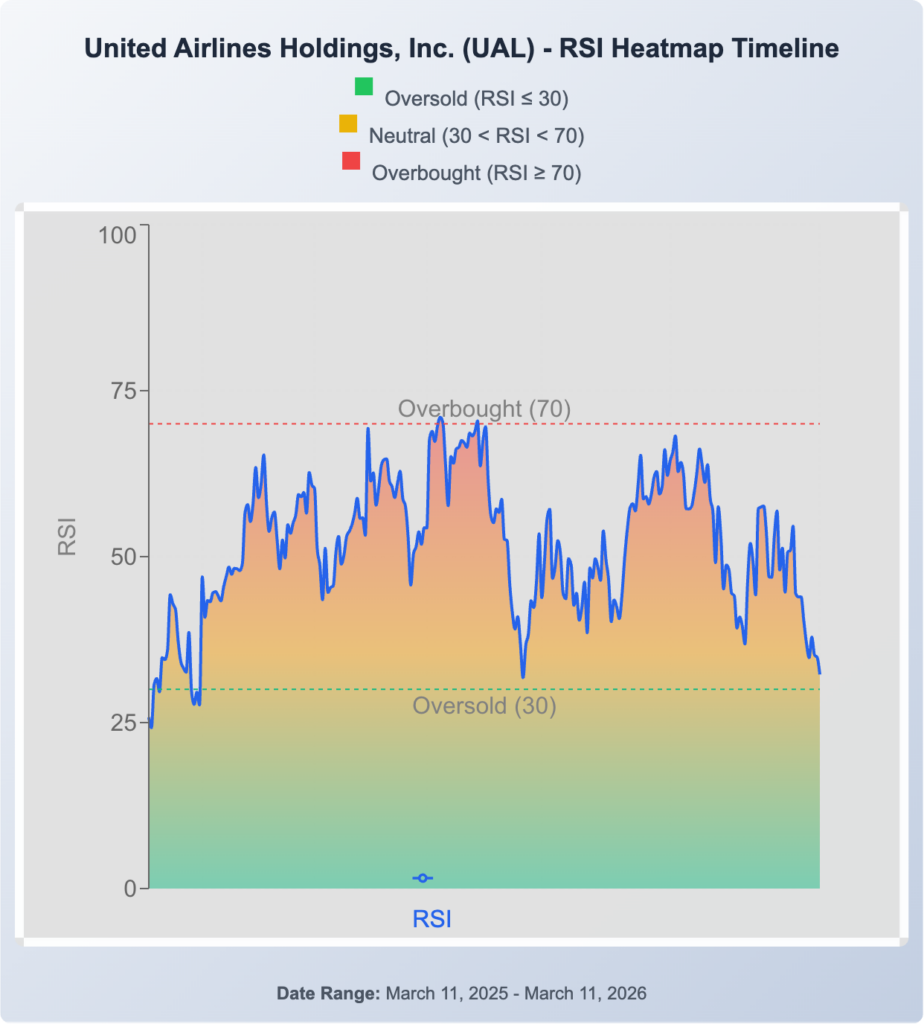
United Airlines Holdings (UAL) has traded mostly in the neutral RSI range (30–70) over the past year, with periodic moves toward overbought levels near 70 during stronger rallies.
More recently, the RSI has fallen toward the oversold threshold near 30, suggesting weakening momentum and potential near-term selling pressure in the stock.
UAL Shares Slide Thursday Morning
UAL Price Action: United Airlines Holdings shares were down 4.76% at $86.29 at the time of publication on Thursday, according to Benzinga Pro data.
Image: Shutterstock
Recent Comments