
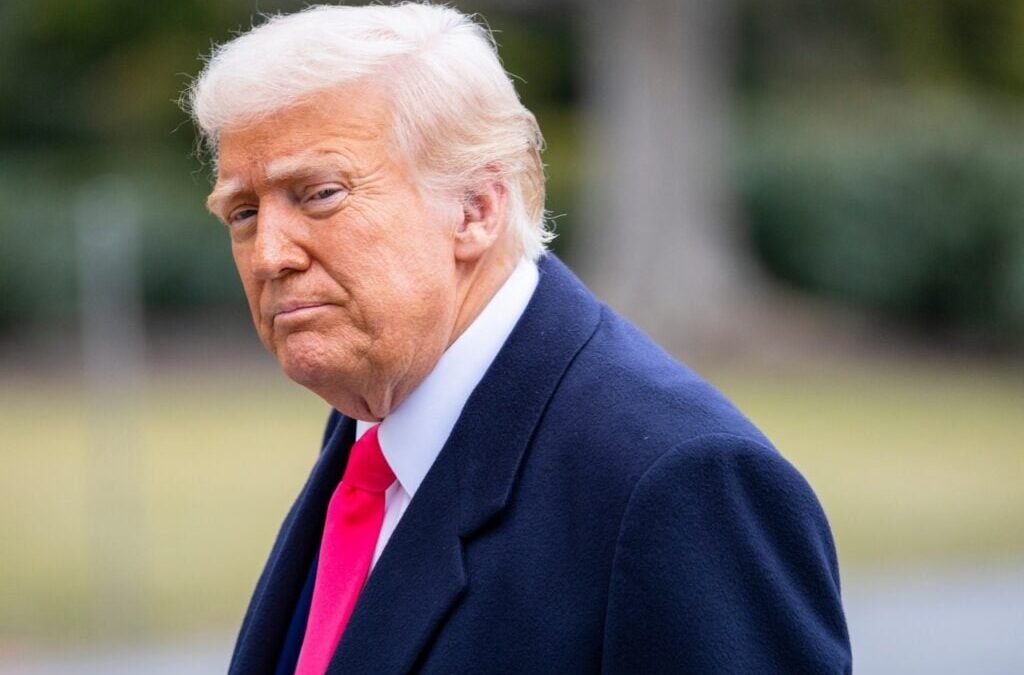
Iran warned the United States that any escalation in the region would be met with a military response, blaming President Donald Trump for derailing a chance at de-escalation.
Iran Warns Trump Over Escalation
On Saturday, Iranian Foreign Minister Seyed Abbas Araghchi said that comments and actions by the Trump administration had effectively ended a diplomatic opening signaled by Iranian President Masoud Pezeshkian.
In a statement shared on X, Araghchi said Pezeshkian had expressed “openness to de-escalation within our region-provided that our neighbors’ airspace, territory, and waters are not used to attack the Iranian People.”
He accused Trump of misreading Iran’s position and warned that Tehran was prepared for confrontation if tensions intensified.
“President Pezeshkian’s openness to de-escalation… was almost immediately killed by President Trump’s misinterpretation of our capabilities, determination and intent,” Araghchi wrote.
He added that if the U.S. president “seeks escalation, it is precisely what our powerful armed forces have long been prepared for, and what he will get.”
Araghchi also warned that responsibility for any further military escalation would fall on Washington.
He claimed Trump’s “week-long misadventure” had already cost the U.S. military roughly $100 billion and could push costs higher when markets reopen, adding that the financial burden would ultimately affect American consumers through fuel prices.
He further accused a small group of “Israel Firsters” in Washington of pushing the U.S. into conflict, writing, “This is a war of choice pursued by a small cabal of ‘Israel Firsters,’ and ‘Israel First’ always means ‘America Last.'”
The Iranian diplomat also argued that U.S. intelligence assessments had previously concluded that a war with Iran would fail.
US-Iran Tensions Escalate
On Thursday, Araghchi said Tehran was ready for a possible U.S. ground invasion as regional tensions escalated.
He dismissed the likelihood of American troops entering Iran, blamed U.S. and Israeli forces for a deadly school strike in Minab, and said Iran had not sought a ceasefire despite ongoing attacks.
Last week, Trump announced “major combat operations” in Iran to eliminate threats, dismantle its nuclear program, and weaken Iran’s military.
The announcement followed Israeli missile strikes, which Iran’s Islamic Revolutionary Guard Corps retaliated against with missiles and drones.
Explosions were reported in Tehran, Bahrain, and Abu Dhabi, prompting regional airspace closures.
Trump also claimed Iran’s supreme leader, Ali Khamenei, had been killed, calling it a chance for regime change.
He said the strikes used advanced U.S. intelligence and coordination with Israel, and vowed that heavy military operations would continue until peace in the Middle East and beyond was achieved.
Disclaimer: This content was partially produced with the help of AI tools and was reviewed and published by Benzinga editors.
Photo courtesy: Shutterstock/ Joshua Sukoff
Recent Comments