
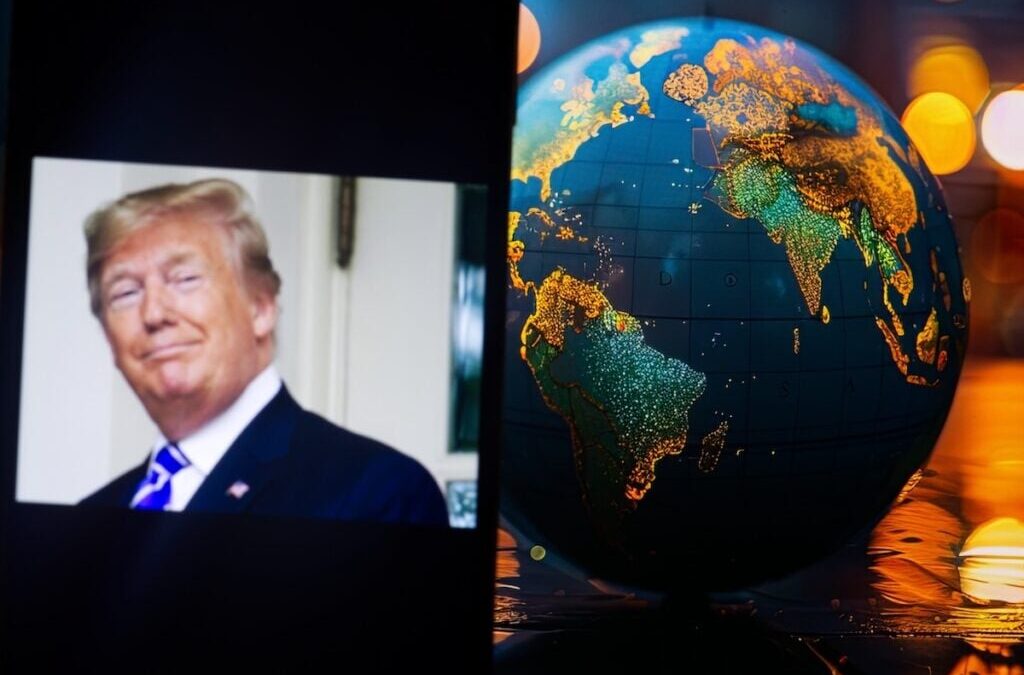
A majority of Americans say the country’s global influence has declined under President Donald Trump’s second term, according to a new poll that highlights sharp public divisions over foreign policy and international leadership.
Poll Shows Decline In US Global Standing
On Tuesday, in an Economist/YouGov survey of 1,551 adults, 52% said the U.S. standing on the world stage has deteriorated under Trump’s second term, reported The Hill.
29% said it has improved and 12% said it has remained the same. 7% percent were unsure.
Poll respondents cited concerns tied to foreign policy actions, trade disputes and diplomatic tensions with longtime allies.
Trump’s administration has pursued aggressive moves abroad, including military strikes, tariff expansions and efforts to reshape international relationships, actions that supporters describe as assertive leadership and critics frame as destabilizing.
The poll also found broader political pressure on the administration, with Trump’s approval rating at 41.2% and disapproval at 56.4%, according to a separate polling average.
Criticism has centered on trade policy and strained relations with partners such as the United Kingdom, European Union and Canada.
Supporters argue these policies prioritize U.S. interests, while opponents say they weaken alliances.
Policy & Leadership Under Scrutiny
President Trump framed his second-term State of the Union address as proof of a “golden age,” highlighting economic gains, tighter border enforcement and record stock market highs while claiming major foreign investment commitments.
However, official data showed slower growth than suggested and public polling reflected skepticism about the economy despite his optimistic assessment.
Separately, critics raised concerns about broader economic stability.
Last month, Economist Peter Schiff argued that Trump’s aggressive foreign policy rhetoric worsened debt and currency risks amid a $38 trillion national debt and rising interest costs.
He warned that escalating fiscal pressures and declining foreign demand for U.S. assets could weaken the dollar and intensify financial vulnerabilities.
Last year, former Treasury Secretary Lawrence H. Summers also criticized U.S. strategy, pointing to high-profile meetings in China involving leaders such as Vladimir Putin, Kim Jong Un and others.
He said those gatherings signaled that U.S. policy had “united our adversaries and divided our friends,” calling it a breakdown in traditional alliance-building strategy and a threat to global stability.
Disclaimer: This content was partially produced with the help of AI tools and was reviewed and published by Benzinga editors.
Photo Courtesy: Below the Sky on Shutterstock.com
Recent Comments