
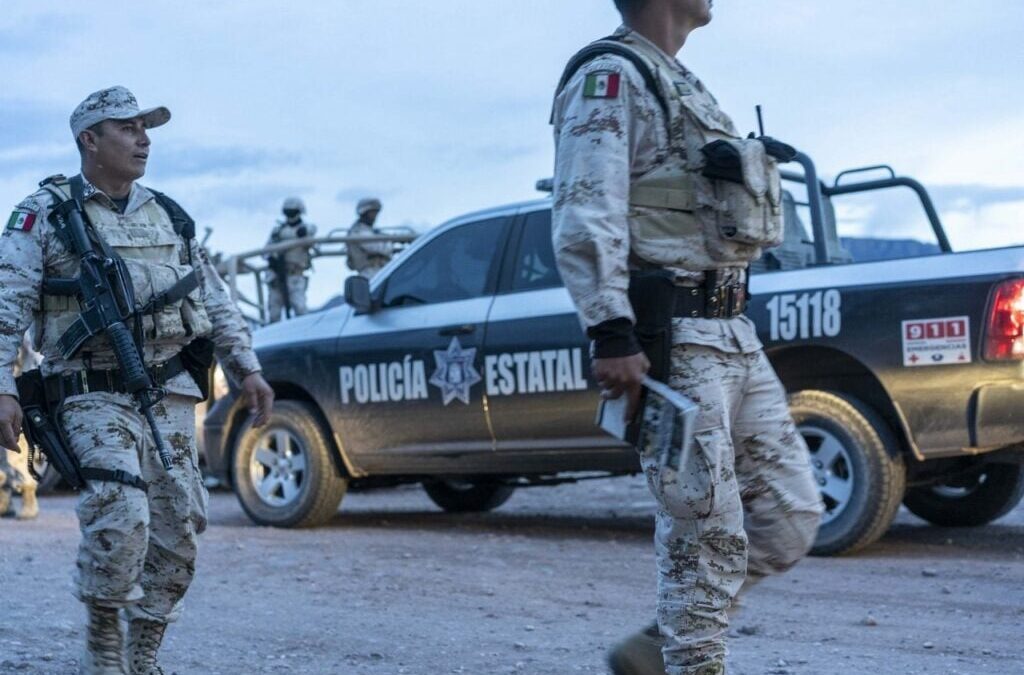
Mexican security forces killed Nemesio Oseguera Cervantes, the leader of the Jalisco New Generation Cartel (CJNG), in a raid backed by the United States, ending a $15 million bounty and triggering violent retaliation across multiple states.
$15 Million Bounty Target Killed In Jalisco Raid
On Sunday, Mexican defense officials said Oseguera, also known as “El Mencho,” was wounded during a clash with soldiers in Jalisco state and later died while being transported for medical treatment, reported Al Jazeera.
Authorities reported that four cartel members were killed in the operation and others were arrested, with armored vehicles, rocket launchers and weapons seized.
The operation involved intelligence support from the United States, which had placed a $15 million reward on his capture.
US Deputy Secretary of State Christopher Landau described the takedown as “a great development for Mexico, the U.S., Latin America, and the world,” calling Oseguera “one of the bloodiest and most ruthless drug kingpins.”
Following the raid, gunmen torched vehicles and blocked highways across several states, including Jalisco.
Officials suspended public transportation and closed schools in affected areas as residents sheltered in place.
Mexican President Claudia Sheinbaum said federal forces conducted a morning operation that led to blockades and reactions but stressed that “there is absolute coordination with the governments of all states” and urged people to “remain informed and calm.”
She noted that most of the country is operating normally, praised Mexico’s security forces, and said authorities work daily “for peace, security, justice, and the well-being of Mexico.”
US Expands Border And Drug Enforcement Measures
Last month, President Donald Trump called for stronger action against drug trafficking and defended military operations targeting cartel-linked activity, saying they were not aimed at political messaging but at border security.
He argued that most drugs enter through the southern border and pushed for expanded enforcement.
Last year, the Justice Department had classified fentanyl as a potential chemical weapon, authorizing military action against suspected smuggling operations under a legal framework that cited alleged weaponization.
Officials later clarified that the legal justification did not depend solely on that argument, while experts noted there was no evidence that certain countries produced or trafficked fentanyl at scale.
Homeland Security Secretary Kristi Noem also announced plans to paint the U.S.–Mexico border wall black to increase heat and add surveillance technology as part of efforts to complete and reinforce the barrier system.
Disclaimer: This content was partially produced with the help of AI tools and was reviewed and published by Benzinga editors.
Image via Imagn
Recent Comments