
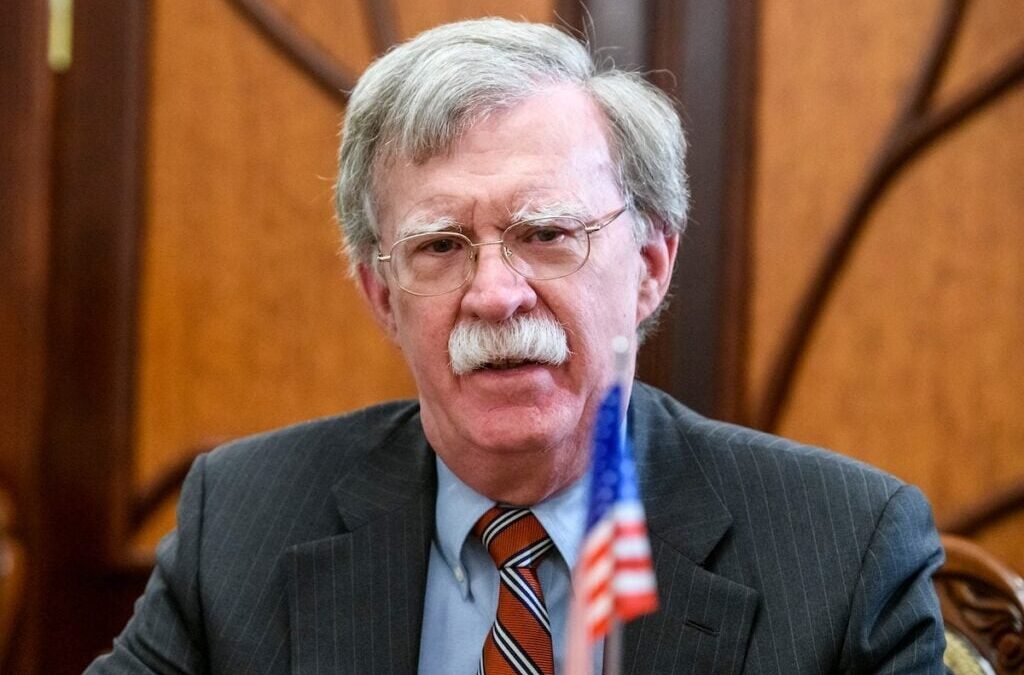
Critics argue that President Donald Trump’s foreign policy has become chaotic and self-serving, undermining traditional U.S. approaches to international stability.
Venezuela Missteps Undermine Opposition
Trump campaigned in 2024 on promises of “no new wars” and an end to “regime change” and “nation-building.” The analysis was detailed by former national security adviser John Bolton in an article published Tuesday in The Atlantic.
Instead, critics say, he has pursued a series of interventions that appear inconsistent and improvised.
In Venezuela, he removed Nicolás Maduro but kept key allies like Interior Minister Diosdado Cabello in power, sidelining opposition leaders who could stabilize the country.
By authorizing the transfer of oil-related funds to officials aligned with the existing power structure, critics argue he strengthened the very regime he claimed to oppose.
One analyst described the approach as “Trump barely scratched the surface,” adding that partial measures risk prolonging instability.
Trump has also portrayed himself as Venezuela’s acting president, further illustrating a personal, theatrical approach.
Gaza Board Plan Deemed Unrealistic
In the Gaza Strip, Trump formed a “Board of Peace” to oversee his faltering Middle East plan, appointing family and close associates, including Jared Kushner and Steve Witkoff.
Trump has floated ambitious redevelopment plans, though critics note there is no clear framework for disarming Hamas or providing security.
European countries largely declined to participate, leaving the board’s credibility in doubt.
Trump also threatened military force to acquire Greenland before reversing course, a move that unsettled European allies and raised concerns about NATO cohesion.
Trump Faces Criticism Over Foreign Policy Amid Iran Talks
Last week, the U.S. and Iran resumed indirect nuclear talks in Oman, with President Trump calling the discussions “very good” but warning of “very steep” consequences if no deal was reached.
U.S. warships, including the USS Abraham Lincoln, operated near Iran and the top Middle East commander, Navy Adm. Brad Cooper, joined the talks for the first time.
Earlier this month, economist Peter Schiff criticized Trump’s increasingly incendiary rhetoric, claiming statements like running Venezuela or threatening Greenland were accelerating the nation’s sovereign debt and currency crisis.
Schiff noted that the U.S. debt had surpassed $38 trillion and predicted a “controlled decline” of the dollar amid rising deficits and global caution on U.S. assets.
Sen. Bernie Sanders (I-Vt.) also questioned whether Trump’s foreign policy prioritized U.S. interests, highlighting actions including arms sales to Israel and Saudi Arabia, a bailout for Argentina and granting Qatar an Air Force facility in Idaho.
Disclaimer: This content was partially produced with the help of AI tools and was reviewed and published by Benzinga editors.
Photo Courtesy: paparazzza on Shutterstock.com
Recent Comments