
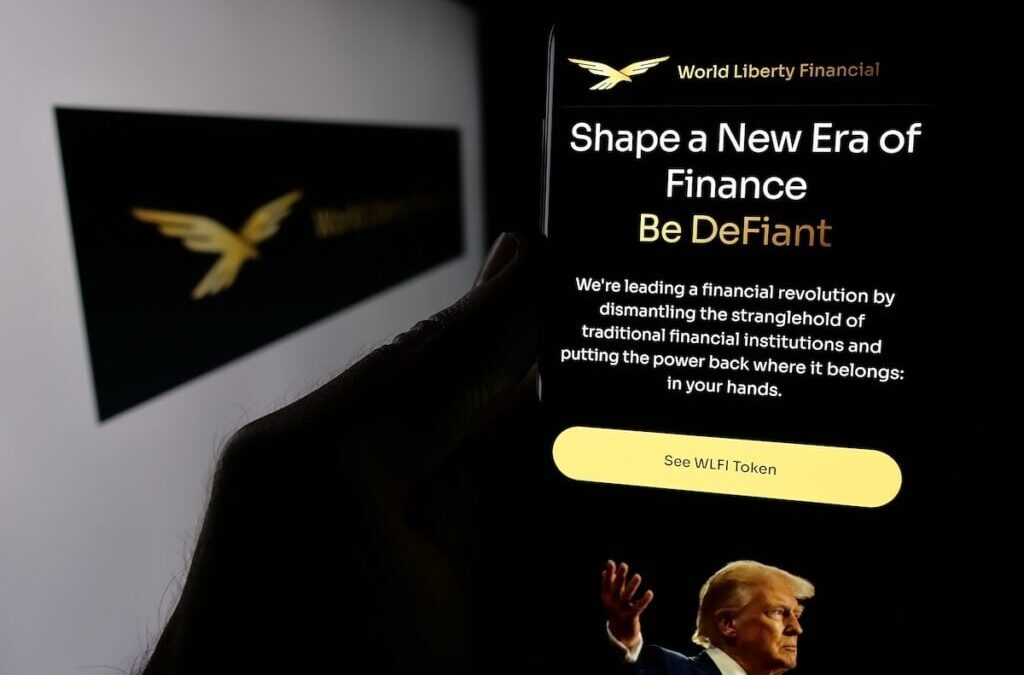
Pakistan’s government said Wednesday it’s partnering with World Liberty Financial (CRYPTO: WLFI), a decentralized platform affiliated with President Donald Trump’s family, to “explore” stablecoins for cross-border transactions.
Pakistan To Use Dollar Stablecoins For Payments?
The Pakistan Virtual Assets Regulatory Authority announced in an X post that World Liberty Financial has signed a Memorandum of Understanding with the Ministry of Finance.
The agreement aims to explore “innovation in digital finance”, specifically the use of stablecoins for cross-border transactions.
Zach Witkoff, co-founder and CEO of World Liberty Financial, visited Pakistan and met with the country’s leadership, including Prime Minister Shehbaz Sharif.
World Liberty Financial issues a dollar-pegged stablecoin, World Liberty Financial USD (USD1), currently worth $3.43 billion in market capitalization.
The Trump family is deeply invested in World Liberty Financial, with the president listed as Co-Founder Emeritus, while his sons, Eric Trump, Donald Trump Jr. and Barron Trump, serve as co-founders.
Pakistan’s Leap Into Crypto
This development comes in the wake of Pakistan’s increasing interest in digital assets.
In December 2025, the authorities granted a no-objection certificate to a cryptocurrency exchange backed by billionaire Justin Sun,
The country has also roped in Binance (CRYPTO: BNB) co-founder Changpeng Zhao as strategic advisor of the Pakistan Crypto Council, a government-backed regulatory body tasked with promoting blockchains and digital assets.
Pakistan also announced plans to establish a strategic Bitcoin (CRYPTO: BTC) reserve last year, drawing inspiration from Trump. The government’s cryptocurrency advisor stated that the government will hold BTC in a national wallet and “never ever” sell them.
Price Action: At the time of writing, the WLFI token was exchanging hands at $0.1700, down 7.61% in the last 24 hours, according to data from Benzinga Pro.
Photo Courtesy: T. Schneider on Shutterstock.com
Disclaimer: This content was partially produced with the help of Benzinga Neuro and was reviewed and published by Benzinga editors.
Recent Comments