
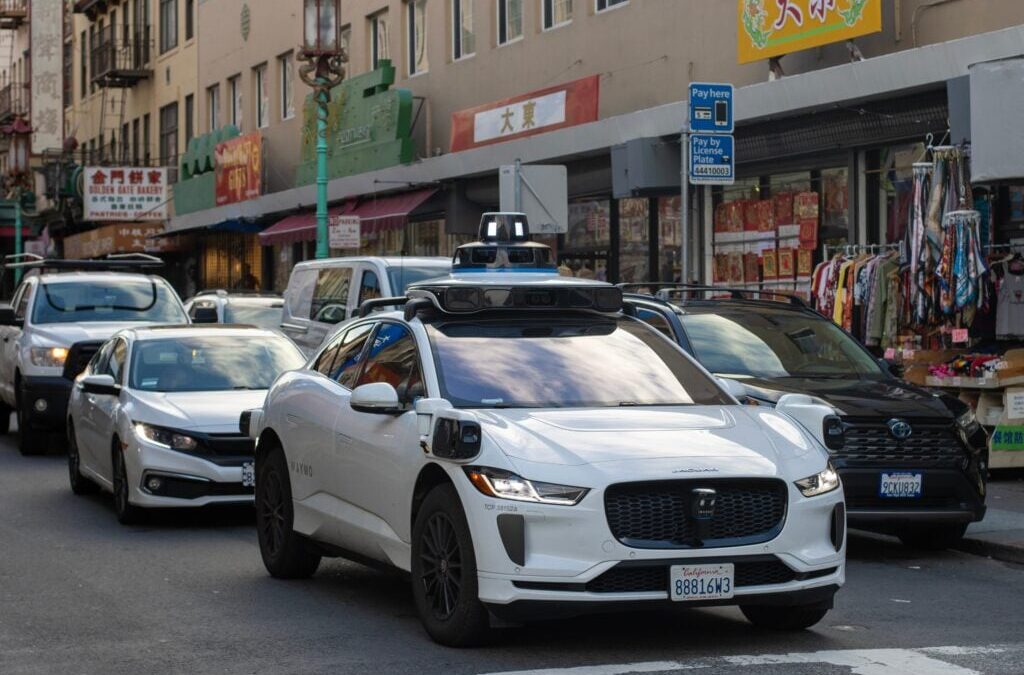
Rep. Brett Guthrie (R-KY) says that America is competing against China to innovate and develop autonomous vehicles during a House committee hearing.
Competing With China
During a House committee hearing by the House Energy and Commerce Committee on Tuesday, Guthrie shared that there was a clear “need” for a “national standard” when it comes to autonomous vehicles.
“We compete with them [China] in so many ways, AI and all the other things,” Guthrie shared. He added that the U.S. wasn’t competing with Europe “to regulate” but instead was “competing with China to innovate.”
He also mentioned that self-driving cars were not just restricted to one state, but had nationwide applications, which meant that the decision was “clearly within our jurisdiction,” Guthrie said.
Federal Framework
The Guthrie-led committee had touted easing self-driving regulations ahead of the hearing on Tuesday, in line with Transportation Secretary Sean Duffy‘s plan to ease regulatory hurdles by proposing amendments to the Federal Motor Vehicle Safety Standards (FMVSS).
Lawmakers under President Donald Trump have been pushing for affordability, with Sen. Ted Cruz (R-TX) also scheduled to hold a hearing with executives from top automakers in the U.S. to discuss the relevance of safety features like rear seat occupant alert and automatic emergency braking, which Cruz says drive up vehicle costs.
Waymo Vs Apollo Go
Alphabet Inc.‘s (NASDAQ:GOOGL) (NASDAQ:GOOG) Waymo and Baidu Inc.-backed (NASDAQ:BIDU) Apollo Go, arguably the frontrunners in the global autonomous and self-driving cab race, are targeting global expansions of their technologies, with Apollo Go recently partnering with Uber Technologies Inc. (NYSE:UBER) and Lyft Inc. (NASDAQ:LYFT) to conduct Robotaxi testing in London this year, coinciding with Waymo’s targeted expansion into the city.
Meanwhile, Nvidia Corp (NASDAQ:NVDA) has also joined the self-driving race, unveiling its Alpamayo technology, which takes a Vision-Language-Action approach to self-driving and is touted by the chipmaker as an open-source “ChatGPT moment” for physical AI and autonomous driving.
Check out more of Benzinga’s Future Of Mobility coverage by following this link.
Photo courtesy: Shutterstock
Recent Comments