
Market research platform Bull Theory said on Wednesday that a Republican loss in the November midterms could be the “trigger” that bursts the AI bubble.
AI Becoming More Dependent on External Financing?
In an X post, Bull Theory argued that the AI industry’s growth is heavily reliant on capital spending, with major hyperscalers, including Amazon.com Inc. (NASDAQ:AMZN) and Alphabet Inc. (NASDAQ:GOOGL), expected to invest nearly $800 billion in 2026, up 10x from 2019.
Bull Theory, citing JPMorgan research, said AI spending is projected to consume 93% of hyperscalers’ cash flow in 2026, up from 33% in 2023.
Additionally, Hyperscalers are projected to issue about $250 billion in bonds in 2026, up from roughly $121 billion a year earlier.
“So AI is becoming more dependent on debt and external financing at exactly the wrong time,” Bull Theory noted.
Financing to Become Tougher?
Bull Theory then drew attention to rising borrowing costs, with the Federal Reserve raising rates to 3.75%-4.00% and Treasury yields reaching record highs.
The firm said that President Donald Trump has been pushing the Fed toward lower rates, and losing Congress “could weaken” his broader ability to push a “pro-liquidity” agenda.
“For an AI industry increasingly dependent on outside financing, that’s another major risk,” Bull Theory said.
Congressional Pressure on Capex to Increase?
Bull Theory said Trump has made rapid AI infrastructure expansion a “major part” of his policy, but a Democratic-controlled Congress could impose stricter oversight of power consumption, water usage and environmental impacts, potentially slowing capital spending plans.
Notably, Sen. Elizabeth Warren (D-Mass.) has criticized Trump’s support for AI data centers, arguing American families should not face higher electricity costs to fuel Big Tech’s artificial intelligence expansion.
“A Republican loss wouldn’t reverse all of that overnight,” Bull Theory argued. “But it could add congressional pressure to an AI CAPEX cycle that is already becoming much more expensive to finance.
What Do Crypto Punters Think?
Polymarket bettors see little risk of an AI crash, assigning a 9% chance of the bubble bursting this year and 17% by June 30, 2027.
Sam Rines, Macro Strategist at WisdomTree, told Benzinga that a slowdown in hyperscaler capital spending would likely hit semiconductors and infrastructure providers hardest, putting NVIDIA Corp (NASDAQ: NVDA) at greater risk.

Price Action: Nvidia shares rose 0.54% in after-hours trading, according to Benzinga Pro. The stock closed 0.51% higher at $228.38 during Wednesday’s regular trading session.
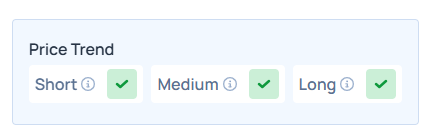
NVDA maintains a stronger price trend over the short, medium, and long terms, according to Benzinga’s Edge Stock Rankings.
See More:
Top Momentum Stocks
Photo: IAB Studio / Shutterstock
Recent Comments