
European nations have thrown their support behind the US–Iran peace deal, hoping it will end months of conflict that have disrupted energy markets and raised gas prices.
The UK, France, Germany, and Italy welcomed the deal as “a moment of opportunity to restore regional stability and stabilize the global economy.” They tied their cooperation to strict conditions.
“We are prepared to lift relevant sanctions in response to clear, verifiable steps by Iran on its nuclear program,” they said in a joint statement. “Iran must never acquire a nuclear weapon. We stand ready to work with the US, Iran, and the International Atomic Energy Agency (IAEA) to this end.”
The four European countries urged the rapid implementation of the agreement and stressed reopening the Strait of Hormuz without restrictions. They want Gulf stability to protect growth and keep global energy flows moving without disruption.
The agreement lands at a moment when Europe’s economic resilience is fraying and its geopolitical leverage is shrinking. The deal offers Europe a narrow window to stabilize energy markets. The region remains exposed to geopolitical shocks it cannot control — from Gulf chokepoints to US–Iran diplomacy.
War Hits Europe
Their support for the agreement reflects concerns about the economic impact of the conflict on the Eurozone. Inflation across the region rose for five consecutive months as energy costs became the main driver of price pressures.
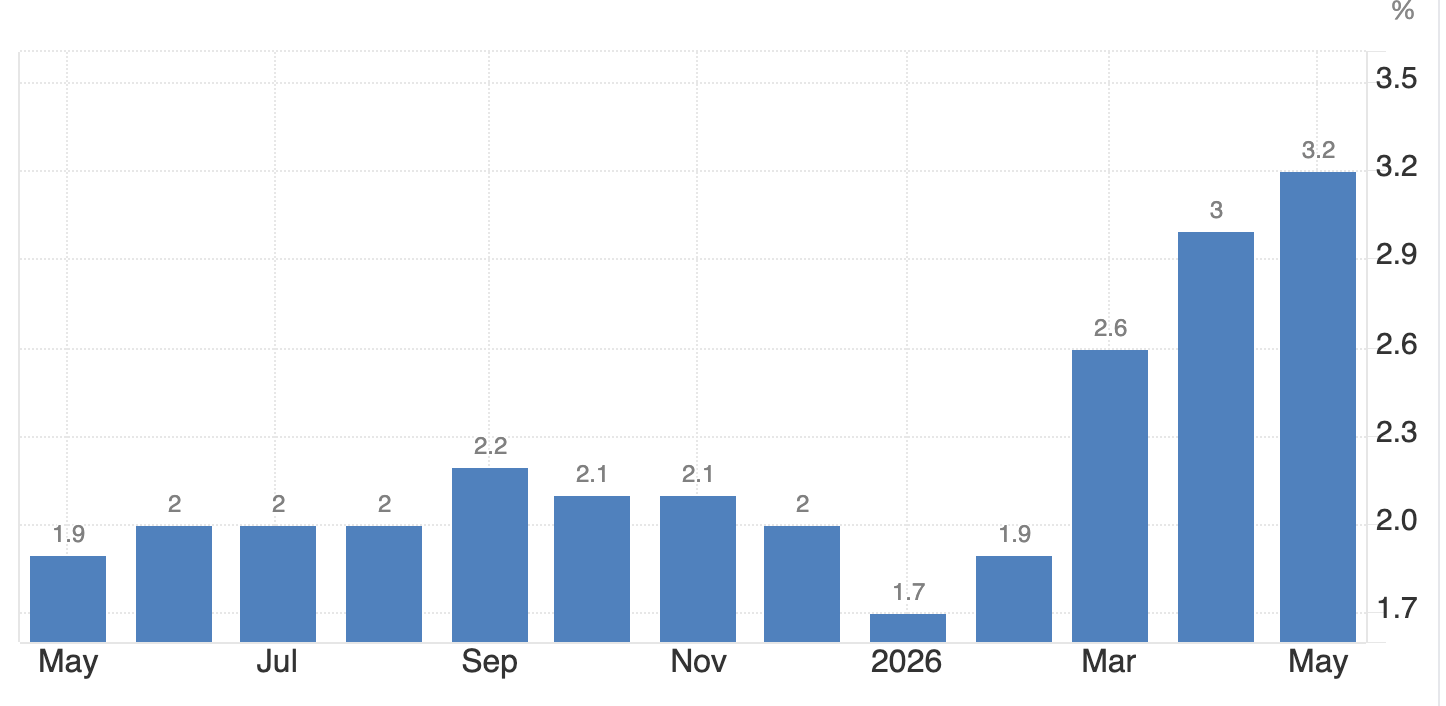
Euro Area Inflation Rate (%), Source: Trading Economics
“Staff now expect domestic demand to be weaker than they projected in March, as the war has dented confidence and higher energy costs are weighing on real incomes,” European Central Bank President Christine Lagarde said at the Hearing of the Committee on Economic and Monetary Affairs of the European Parliament on June 22.
The Eurozone’s economy shrank by 0.2% in the first quarter, according to EUROSTAT data. This marks the first contraction since Q4 2022 and the sharpest decline since mid-2020. Consumer confidence has moved lower for three straight months since February.
The S&P Global Flash Eurozone Composite PMI stayed below the 50.0 threshold in June, signaling continued contraction across the bloc. June’s 49.5 reading marked a third straight monthly decline in Eurozone business activity, despite improving slightly from May’s 48.5.
EU Turns to US, Russia for LNG
The conflict exposed Europe’s economic vulnerability. Its energy security hinges on decisions made in Washington, Tehran, and Moscow, not Brussels
The disruption in liquified natural gas (LNG) supplies from the Gulf forced Europe to rely more heavily on alternative suppliers. Russian LNG imports rose 17% from January to May, highlighting the bloc’s continued difficulty in fully disengaging from Moscow.
EU imports of US LNG rose 59% in 2025. They increased by a further 27% year-on-year in the first quarter of 2026, accounting for 57% of all LNG imports.
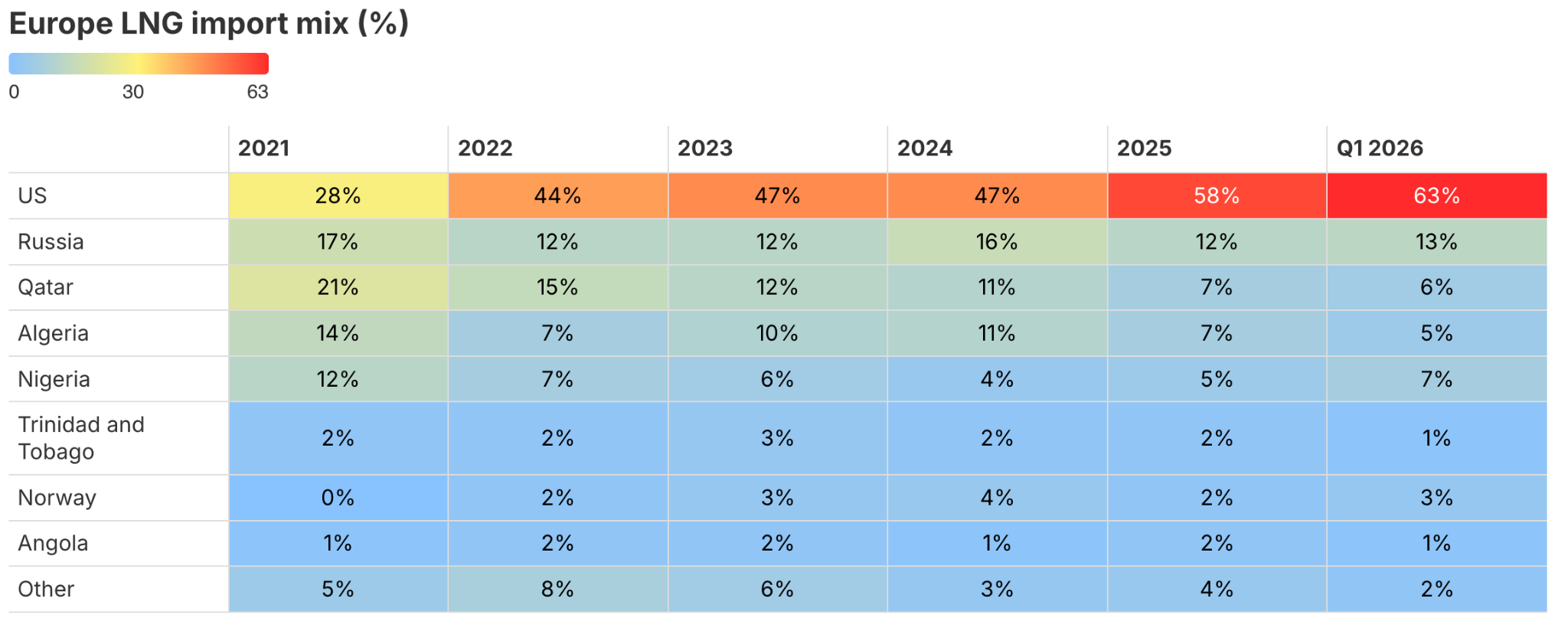
Europe’s LNG Import % by Country, Source: IEEFA
Analysts warn that without deeper structural reforms, Europe will remain vulnerable to external supply shocks for years.
Europe entered the “crisis heavily import-dependent,” Irina Patrahau and Lucia van Geuns, analysts at The Hague Centre for Strategic Studies, wrote on June 11. “The crisis exposes the vulnerability of Europe’s fuel system and shows the slow pace of structural measures to reduce risky dependencies. Europe has been here before, and that is precisely the problem.”
Europe’s Gas Import Costs
Europe entered the crisis poorly positioned for disruptions despite efforts at energy security. The International Energy Agency (IEA) labeled the Iran conflict “the largest supply disruption in the history of the global oil market.”
Gas storage reached a four‑year low as LNG disruptions worsened Europe’s supply situation. The EU’s total gas bill ballooned 48% during the crisis. Average prices rose 31% from the start of the war.
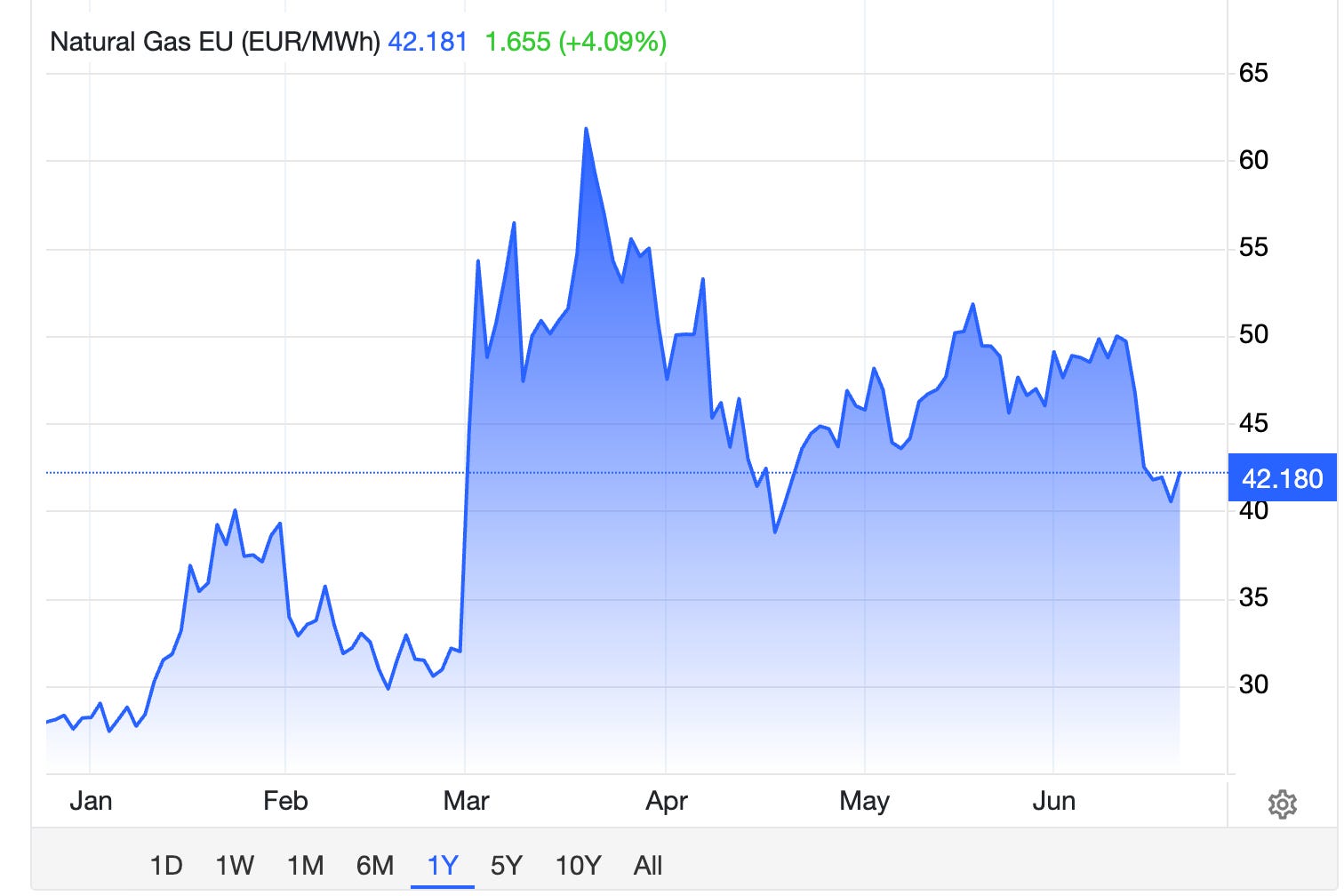
EU Natural Gas Price Chart in €/MWh, Source: Trading Economics
“Inventories take a long time to be rebuilt,” Andrei Covatariu, a nonresident senior fellow with the Atlantic Council’s Global Energy Center, said. “Even after a peace deal, repairs could take months or years, keeping supply tight and prices elevated.”
Peace Deal Details
US President Donald Trump and Iranian President Masoud Pezeshkian signed an agreement on June 17 aimed at ending the conflict.
The deal includes reopening the Strait, lifting sanctions, releasing frozen assets, and funding a major reconstruction package. It also creates a 60‑day window for nuclear talks and guarantees temporary toll‑free passage through the Strait.
The waterway’s long‑term administration is to be negotiated separately with Oman and the Gulf states. Iran announced a renewed closure of the Strait of Hormuz on June 20. It cited alleged Israeli ceasefire violations in Lebanon and Washington’s failure to implement key provisions of the agreement.
Nevertheless, US and Iranian officials began direct talks in Switzerland aimed at preserving the agreement. The episode highlighted the deal’s fragility. The Lebanon clause is unenforceable without Israeli cooperation.
With energy security at stake, several European governments signaled readiness to help secure the Strait of Hormuz. France and Britain have been building a Hormuz escort coalition since March.
Europe Prepared to Help
The G7 in Évian centered on mine‑clearing operations. Trump told French President Emmanuel Macron, “I don’t think it’s a bad idea to have a ship or two up here from a few countries. You’d be a great country to do it.”
Macron said he could deploy jets and frigates within days if requested by the US, Iran, and Oman. German Chancellor Friedrich Merz said his country had already sent mine-clearing vessels. Italian Prime Minister Giorgia Meloni backed security contributions but insisted on durable solutions in Lebanon.
The Gulf crisis demonstrated that Europe “is in a structurally familiar position,” Patrahau and van Geuns wrote. The region is “heavily exposed, reacting with emergency measures, and reaching for the same toolkit of short-term subsidies and long-term promises for structural change.”
The crisis underscored Europe’s geopolitical weakness, exposing how little influence it has over the forces shaping regional stability and energy security. Whether the peace deal endures will determine global energy prices and Europe’s relevance in a region where it increasingly reacts rather than shapes outcomes.
“Europe is sidelined,” Nathalie Tocci, a Professor of Practice at Johns Hopkins University, said. “Regional players like Turkey, Saudi Arabia, Pakistan, and Egypt, but also other global actors like China, have become far more relevant.”
Disclaimer: Any opinions expressed in this article are not to be considered investment advice and are solely those of the authors. European Capital Insights is not responsible for any financial decisions made based on the contents of this article. Readers may use this article for information and educational purposes only.
Benzinga Disclaimer: This article is from an unpaid external contributor. It does not represent Benzinga’s reporting and has not been edited for content or accuracy.
Recent Comments