
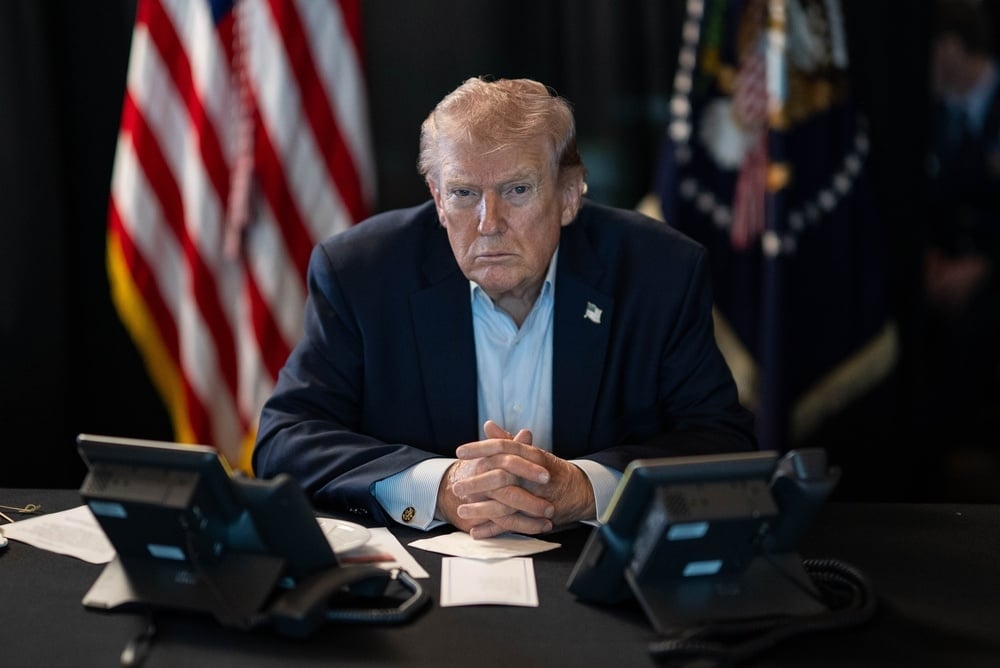
Former New Jersey Gov. Chris Christie (R) accused President Donald Trump of abandoning “America First” for “Iran First,” saying the president ended the U.S.-Iran conflict too quickly and accepted a weak deal after Tehran closed the Strait of Hormuz.
Christie Says Trump Accepted A Weak Iran Deal
“He stopped the war early, got cornered when Iran closed the Strait of Hormuz, and cut a deal: a $300 billion bribe, unfrozen assets, and their oil profits back. Then he handed negotiations to a naive Vice President and guys who’d be better off buying you an office building in Alexandria,” Christie wrote Sunday on X.
Christie’s attack followed the sudden resolution of a military standoff in the Persian Gulf and focused on the deal’s financial terms. He cast the unfreezing of Iranian assets, restoration of oil revenues and proposed reconstruction fund as a payoff rather than a durable national security agreement.
Benzinga reached out to the White House for comment, but did not receive an immediate response.
Implementation Talks Stall As Agreement Begins To Fray
The agreement between the Trump administration and Iran, which suspended the four-month war, began to fray over the weekend, four days after Trump signed it at Versailles. Reuters reported that the first implementation talks in Switzerland were postponed after Iran held back its delegation over Israel’s continued bombing of Lebanon, prompting Vice President JD Vance to delay his trip.
The U.S.-Iran framework includes a 14-point roadmap, a $300 billion private investment fund and a possible reopening of the Strait of Hormuz.
Critics Attack Deal As Trump Allies Defend It
Democrats also attacked the agreement. Sen. Cory Booker (D-N.J.) told NBC’s “Meet the Press” on Sunday that he did “not support this deal,” calling it “an abject surrender.” He said Iran would receive “billions and billions of dollars of benefits” while U.S. resources would help rebuild Iran.
Susan Rice, former national security adviser to Barack Obama, called the deal “a jaw-dropping, horrific surrender” on ABC’s “This Week,” warning that Iran could use the strait “to hold us and the global economy hostage anytime they want.”
Former Trump Defense Secretary Mark Esper told NBC the deal was “a strategic setback,” saying Iran had found “a reusable tool” to threaten the global economy.
Trump and his allies have defended the outcome as a means of avoiding a longer war. Vance has argued that if Iran complies, the agreement will “fundamentally transform the Middle East for the next 50 years.”
Photo courtesy: Shutterstock
Recent Comments