
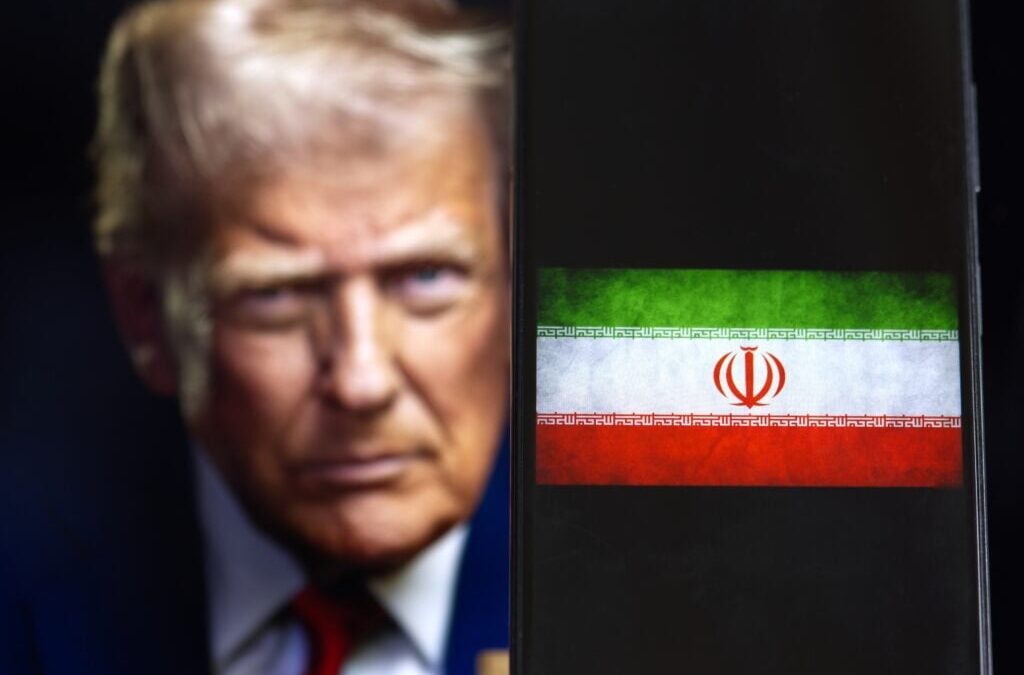
On Thursday, Iran and the United States exchanged airstrikes near the Strait of Hormuz after President Donald Trump dismissed reports of a potential agreement with Tehran, intensifying regional tensions and driving oil prices higher.
Airstrikes Escalate Near Hormuz
The U.S. military said it shot down four Iranian attack drones and struck a ground control site near Bandar Abbas that was preparing to launch another drone, describing the action as defensive, reported Reuters.
“These actions were measured, purely defensive and intended to maintain the ceasefire,” a U.S. official said, speaking on condition of anonymity.
Iran’s Islamic Revolutionary Guard Corps said it retaliated by targeting a U.S. airbase in response to the American strike, according to Iranian state media.
The IRGC did not identify the base but said it acted against the installation it believed was involved in the attack near Bandar Abbas airport.
President Trump rejected reports of a draft deal that would have eased tensions around the strategic waterway. “Nobody’s going to control (the strait).
He added, “It’s international waters and Oman will behave just like everybody else or we’ll have to blow them up. They understand that, they’ll be fine.”
Trump also dismissed the Iranian report as a “complete fabrication.”
Iranian officials, meanwhile, said they are demanding the release of frozen assets and the lifting of sanctions, according to Tasnim news agency.
“We are seeking the release of all Iranian assets blocked by the United States, and this is the legal right of the Iranian nation,” Ali Bagheri Kani said. “Iran’s assets must be fully and unconditionally returned to Iran.”
US-Iran Conflict Triggers: Strikes, Oil Price And Criticism
Earlier, U.S. Central Command said American forces struck Iranian missile sites and boats allegedly placing mines near key waterways, calling the operations defensive and part of ongoing efforts to protect U.S. troops under a ceasefire.
Former Rep. Marjorie Taylor Greene criticized Trump over rising oil prices tied to the Iran conflict.
She accused him of breaking promises on energy costs and foreign wars, pointing to earlier lower crude prices and market expectations of stabilization.
Former national security adviser John Bolton also condemned U.S.–Iran negotiations, calling them a mistake that weakened U.S. leverage and arguing that Iran was using diplomacy to delay while Washington eased pressure due to domestic economic concerns.
Disclaimer: This content was partially produced with the help of AI tools and was reviewed and published by Benzinga editors.
Photo courtesy: Shutterstock
Recent Comments