
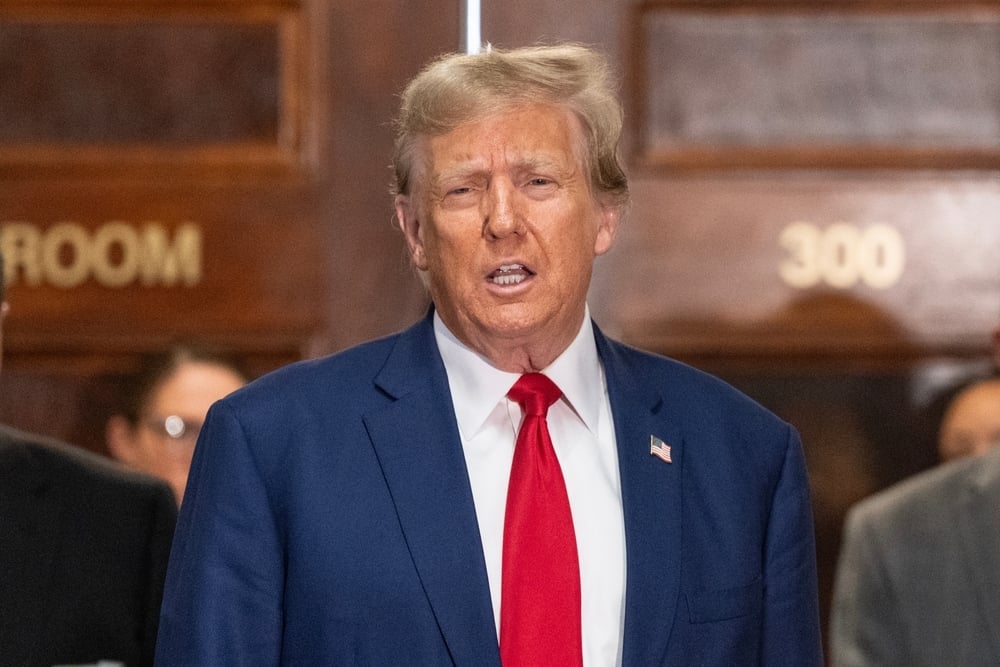
President Donald Trump told Congress on Friday that the war with Iran is over, three weeks after he ordered a ceasefire, and on the same day, the War Powers Resolution would have forced him to seek lawmakers’ approval to keep fighting.
The Strait of Hormuz handled just seven ships in 24 hours, according to Kpler data, a stark contrast to the 100–120 vessels that transit daily under normal, pre-war conditions.
For the White House, the conflict is over, but the oil market has rarely looked worse.
The implied gap between political resolution and physical reopening has rarely been wider.
Trump Calls The Iran Fight Finished After 60 Days Of Hostilities
In separate letters delivered to House Speaker Mike Johnson and Senate President Pro Tempore Chuck Grassley, Trump wrote that there has been no exchange of fire between United States Forces and Iran since April 7, 2026
, and that the hostilities that began on Feb. 28 “have been terminated
.”
As reported by the Wall Street Journal, Trump’s announcement arrives precisely 60 days after the administration formally informed Congress of the war on March 2, the date many lawmakers expected to trigger a binding vote.
The argument is legal and pre-emptive. Under the 1973 War Powers Resolution, the president must seek congressional authorization within 60 days of a notified military action or wind it down. By calling the war already over, the administration sidesteps the vote entirely.
Kpler Calls It The Illusion Of Reopening
Kpler analyst Matt Wright laid out the structural issue in a note this week.
To restore flows to pre-conflict levels, Wright wrote, a full reopening of the Strait of Hormuz must occur without Iranian-imposed conditions on the freedom of vessel movement.
That outcome, he argued, is not supported by current dynamics.
“If Iran retains operational control, transit volumes may increase from current levels but will fall short of full normalization,” he said.
Under what Kpler calls the long-term Iranian Control scenario, transit volumes recover to roughly 40% to 50% of Middle East Gulf export capacity.
Crude markets can absorb that. Refined product markets, particularly diesel and jet fuel, cannot. Petrochemical feedstocks face persistent supply pressure and price inflation.
Wright’s prior base case assumed Iran would either be rendered operationally ineffective or step back to preserve military capability and trade relationships, allowing a phased normalization.
Two months in, that assumption is breaking down.
“There is growing evidence that Iran may seek to retain strategic control of the Strait for as long as possible,” Wright said.
The data backs him up. ING estimates roughly 14 million barrels per day of oil supply is currently disrupted and that the conflict’s first eight weeks have already removed about 850 million barrels from global supply.
Goldman Sachs now thinks Brent – as tracked by the United States Brent Fund, LP ETV (NYSE:BNO) – could average above $100 a barrel in 2026 if normalization stalls.
The EIA projects a Q2 peak near $115.
What Prediction Markets Are Telling Investors
Prediction markets are pricing two stories that should not be able to coexist.
The first is that the Iran war is essentially finished. The second is that the Strait of Hormuz is not coming back.
On Polymarket, the contract on Trump announcing the end of U.S. military operations against Iran by May 31 has moved into review, the platform’s signal that resolution is imminent.
The same traders give just an 18% chance that Strait of Hormuz traffic returns to normal levels by May 31, a probability that has collapsed from roughly 70% in mid-April.
Photo: Shutterstock
Recent Comments