
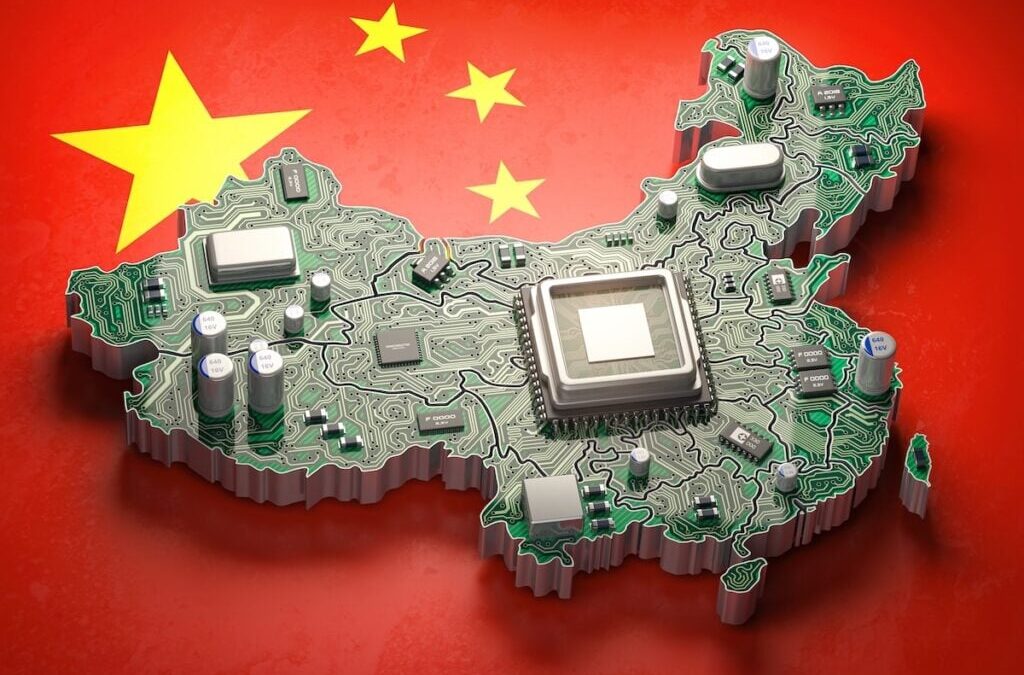
On Wednesday, a new report warns that Chinese-made components embedded in everyday smart devices could expose sensitive data and create vulnerabilities across critical U.S. infrastructure.
Global IoT Supply Chain Raises Security Concerns
A report released by the Foundation for Defense of Democracies (FDD) raised concerns about the widespread use of Chinese-produced cellular modules.
These key components connect devices to mobile networks in the United States.
The report said these modules, widely used in everything from home appliances to industrial systems, may enable data collection and remote access.
“When a doorbell, refrigerator, or thermostat in the United States is connected to the internet, it may already be sending data to the Chinese government,” the report stated.
Quectel And Fibocom Dominate Cellular Module Market
Chinese firms Quectel and Fibocom control nearly half of the global cellular module market, according to the findings.
The report warned that these components, which receive software updates remotely, could theoretically be used to “shut down their host devices” or inject malicious code.
Congressional investigations and Defense Department concerns about cellular modules embedded in port and logistics infrastructure.
The report cited concerns that cellular modules embedded in port equipment and logistics systems could allow for surveillance or disruption.
In extreme scenarios, it warned, “Beijing could hold Washington hostage by threatening to cause massive economic disruption.”
Jack Burnham, a senior research analyst, said one key concern is that modules embedded in Wi-Fi systems “could have access to the information that’s passing through that modem,” reported The Hill.
He added that Chinese authorities could potentially access such data.
Texas Bans Chinese Tech, China Pushes Space AI Plan
Earlier, Gov. Greg Abbott (R-Texas) had banned Chinese-linked technology on state devices, citing security risks and concerns over potential foreign access to sensitive data.
The ban had included firms such as Alibaba Group Holdings (NYSE:BABA), Shein, Temu, TP-Link and several others across AI, telecom and electronics sectors.
Meanwhile, China had moved forward with plans to develop space-based AI computing systems using solar-powered satellites, aiming to build a large-scale orbital data infrastructure and explore asteroid mining and in-orbit resource processing.
Disclaimer: This content was partially produced with the help of AI tools and was reviewed and published by Benzinga editors.
Photo Courtesy: Maxx-Studio on Shutterstock.com
Recent Comments