
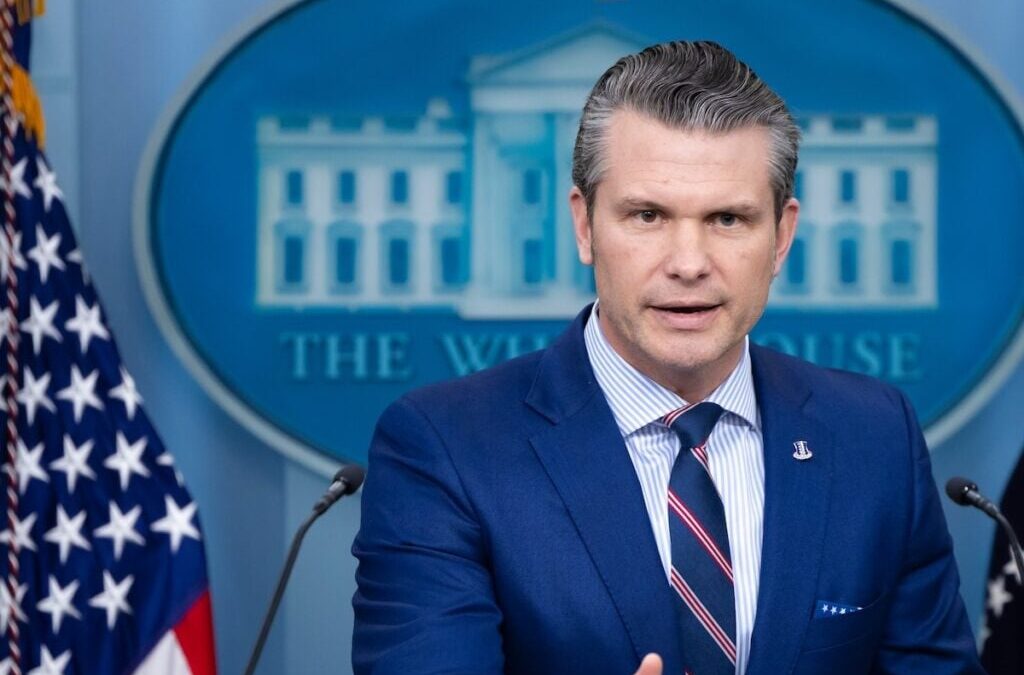
Army Secretary Dan Driscoll said that he has no intention of stepping down, amid reports of tension with Defense Secretary Pete Hegseth and questions about his future in the role.
Pentagon Leadership Feud Intensifies
On Wednesday, Driscoll said, “Serving under President Trump has been the honor of a lifetime and I remain laser focused on providing America with the strongest land fighting force the world has ever seen,” reported The Hill.
He added, “I have no plans to depart or resign as the Secretary of the Army.”
The feud between Driscoll and Hegseth has included disagreements over officer promotions and personnel decisions, including the ousting of Army Chief of Staff Gen. Randy George, a trusted ally of Driscoll.
Hegseth also ended the Army’s suspension of a crew that flew two military helicopters near musician Kid Rock’s estate in Tennessee and halted the investigation into the incident.
A White House spokesperson, Anna Kelly, emphasized the administration’s support for both officials, stating, “President Trump has effectively restored a focus on readiness and lethality across our military with the help of leaders like Secretary Hegseth and Secretary Driscoll.”
Pentagon Denies Hegseth Stock Allegations Amid Military Shakeup
Last month, the Department of Defense denied reports that a broker for Hegseth tried to move millions into defense stocks before U.S. operations against Iran, calling the claims “entirely false and fabricated.”
Hegseth announced “OPERATION EPIC FURY,” an unprecedented U.S. aerial campaign targeting Iranian missiles, infrastructure and naval forces, warning that threats to Americans would be met with force.
In February, President Donald Trump removed Air Force General C.Q. Brown as Joint Chiefs chairman, nominating former Lieutenant General Dan “Razin” Caine as his successor, while other top military leaders were replaced, prompting criticism over politicization and national security concerns.
Retired Gen. Jack Keane warned Trump might authorize a “much larger” military campaign against Iran, potentially targeting leadership and infrastructure, even as indirect nuclear talks in Oman showed only partial progress.
Disclaimer: This content was partially produced with the help of AI tools and was reviewed and published by Benzinga editors.
Photo Courtesy: Joshua Sukoff on Shutterstock.com
Recent Comments