
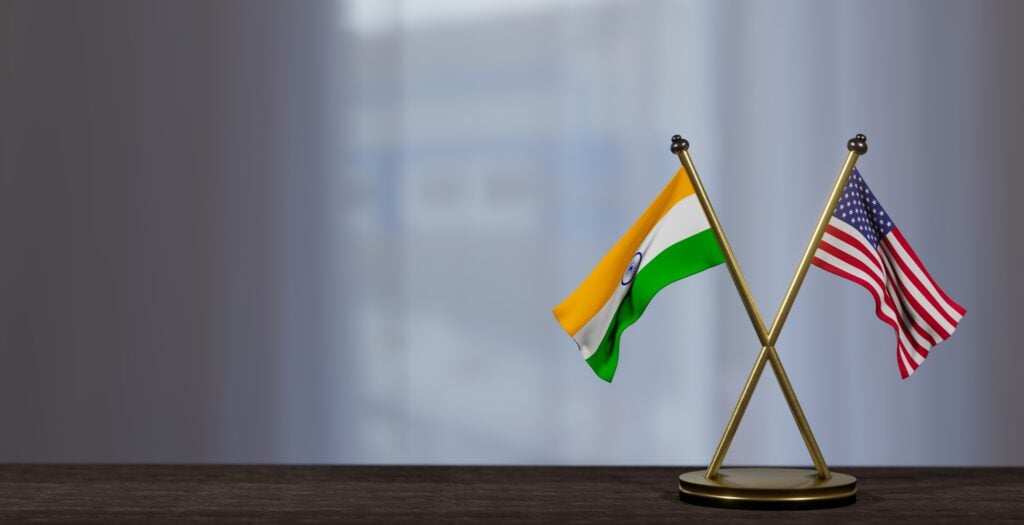
Global trade talks at the World Trade Organization (WTO) entered their final day with no breakthrough, as a standoff between the United States and India blocked agreement on extending the moratorium on customs duties for electronic transmissions.
US-India Deadlock Blocks E-Commerce Moratorium
On Sunday, Trade ministers met in Cameroon, aiming to bridge differences over the moratorium, which exempts digital goods like software, music, and ebooks from import duties, reported Reuters.
India signaled willingness to extend the ban for two years, while the U.S. insists on a permanent solution.
“If the moratorium does not get extended, the U.S. will use it as an excuse to beat the WTO on the head,” a senior diplomat told Reuters, highlighting the high stakes.
U.S. Ambassador Joseph Barloon said a permanent extension would ensure Washington remains “fully engaged” in the global trade body.
Diplomats are exploring compromise options, including a “pathway to permanence” with extensions of five to 10 years, though securing consensus among all WTO members remains uncertain.
A draft proposal seen by Reuters suggests support for developing countries and includes a review clause to monitor implementation.
Global Trade Tensions, Capital Risks Surge
Last week, Billionaire Ray Dalio warned that the world was “on the brink” of a capital war, citing shifts in forces that historically signal the collapse of world orders.
Speaking at the World Government Summit, he said the 1945 multilateral system—anchored by the UN, WTO, and U.S.-dominated monetary framework was fracturing, prompting some investors to move into hard assets like gold and silver.
Last year, India notified the WTO of plans to retaliate against U.S. tariffs on foreign-made automobiles, which could affect $2.89 billion in exports.
Trade Minister Piyush Goyal emphasized that free trade agreements must be “win-win,” resisting U.S. pressure to open key sectors while negotiating before a July 9 deadline set by President Donald Trump.
WTO Director-General Ngozi Okonjo-Iweala warned at the World Economic Forum that a tit-for-tat trade war with tariffs from 25% to 60% could mirror the 1930s, causing double-digit global GDP losses.
She stressed, “Everyone will pay,” underscoring the wide-reaching risks of escalating trade and capital tensions.
Disclaimer: This content was partially produced with the help of AI tools and was reviewed and published by Benzinga editors.
Photo courtesy: Shutterstock
Recent Comments