
Russia is poised to be a major beneficiary of the US‑Israeli military operations against Iran, despite ongoing efforts to curb Moscow’s revenue from its so‑called shadow fleet by the European Union (EU) and the US.
The three-week conflict has tightened global energy markets, disrupted LNG flows, and weakened sanctions enforcement. These developments will strengthen Russia’s position as a major oil and gas exporter as countries scramble to find energy supplies.
Disruptions in the Strait of Hormuz have threatened the flow of 60 million tons of oil and 7 million tons of LNG per month. This war has rattled international energy markets.
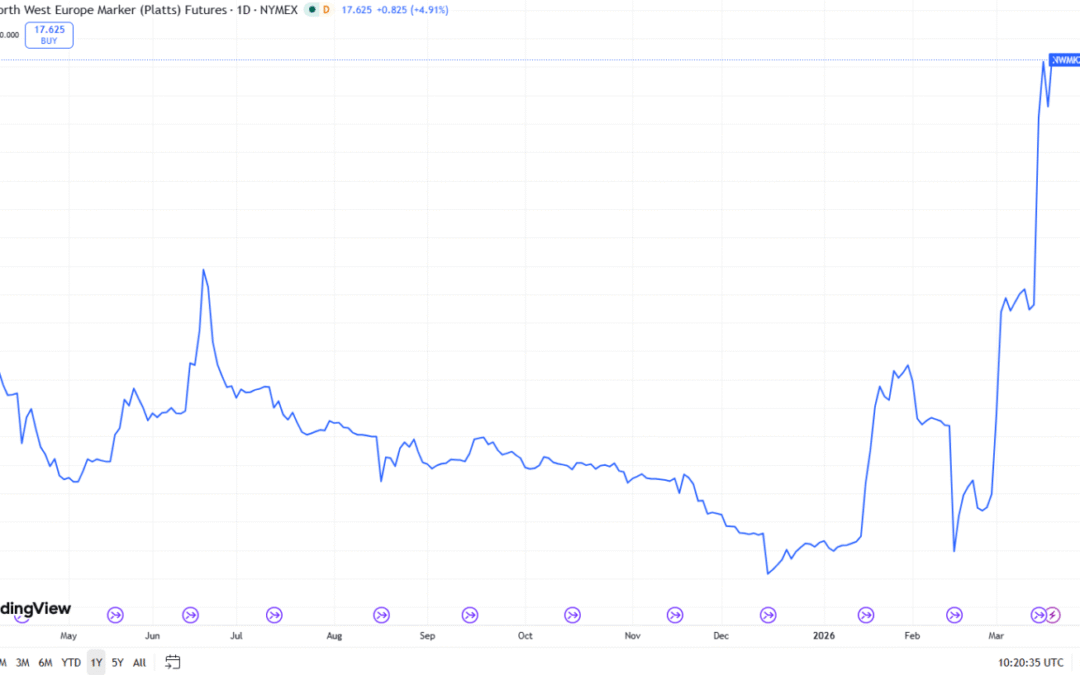
Oil prices surged to over $100 per barrel. Liquefied natural gas (LNG) prices in Northwest Europe are up 96% in the last month.
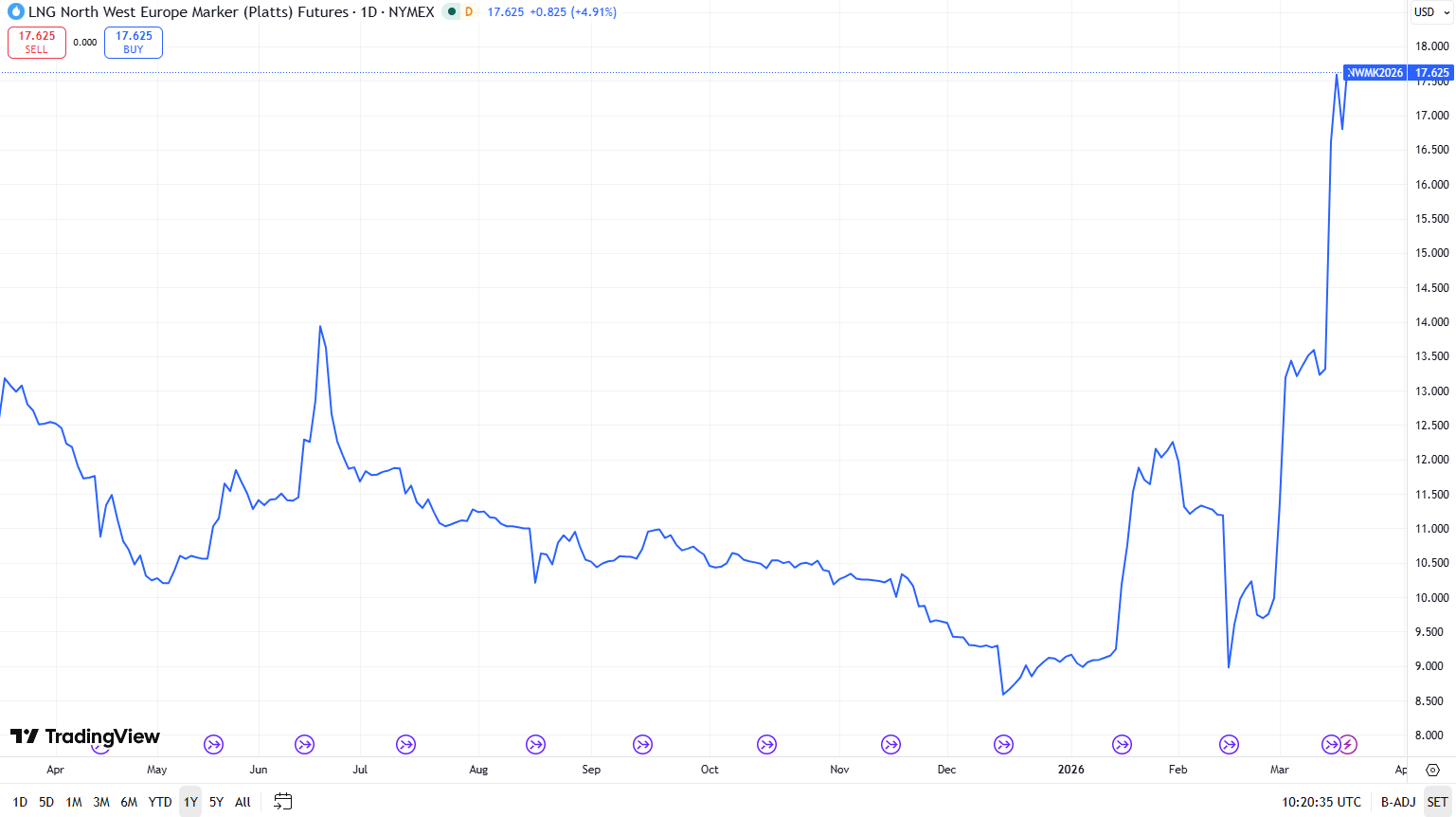
The price rally directly translates into stronger state revenues for Moscow.
Russia’s average fossil fuel export earnings have totaled an estimated €510 million per day, a week after Israeli-US airstrikes on Iran, Finland-based Centre for Research on Energy and Clean Air (CREA) said on March 12. That is 14% more than February’s daily average, it said.
“The benefit could be meaningful in the short term because Russia gains both from higher prices and from some easing in the practical enforcement of sanctions,” Carole Nakhle, founder of Crystol Energy, said. “But the upside is still constrained.”
Russian crude held on tankers fell to 118.3 million barrels this week, from 132.9 million barrels at the end of February, Kpler data showed. This suggests that cargoes have moved to buyers more quickly.
Europe May Increase Russian LNG Imports
The war, with no clear signs yet of ending, may force Europe to increase its imports of Russian LNG. This would slow plans by the European Union (EU) to phase out imports of LNG by January 1 next year.
Iranian attacks against Qatar have knocked out 17% of its LNG export capacity. This caused an estimated $20 billion in lost annual revenue. This will threaten supplies to Europe, QatarEnergy’s CEO and state minister for energy affairs told Reuters on Thursday.
“EU gas security now depends more on the global LNG market,” Brussels-based Bruegel analysts wrote on March 11. “If global gas demand rises or supplies are disrupted, the risk will show up in higher prices and stronger competition for cargoes, rather than in physical shortages.”
In February, the five largest EU importers of Russian fossil fuels paid Russia a combined €932 million, CREA said. France purchased €312 million worth of Russian LNG in February. Hungary, the second largest buyer, imported €234 million. Belgium imported €176 million worth of Russian LNG in February, while Spain bought €137 million.
Russia-Ukraine War Spreads to International Shipping Routes
One of the constraints that may mitigate the benefits for Russia is an asymmetric war unfolding in international shipping routes. Attacks against Russia’s so-called “shadow fleet” have spread outside the Black Sea, the main theater of combat.
The Russian LNG tanker Arctic Metagaz was disabled in March in the Mediterranean Sea by what Russian President Vladimir Putin labeled a “terrorist attack.” The country’s transport ministry called the strike against the 23-year-old carrier, with 30 Russians on board, an “act of international terrorism and maritime piracy.”
Moscow has used a large, covert network of aging, lightly regulated oil tankers to evade Western sanctions. The shadow fleet uses obscure ownership, insurance, and cargo movements to move energy products around the world.
Ukrainian President Volodymyr Zelenskyy has urged Kyiv’s partners to strengthen their crackdown on vessels that Moscow uses to evade international sanctions. The Security Service of Ukraine (SBU) did not comment on the Russian accusations that it struck the Arctic Metagaz.
Ukraine Attacks Russia’s Shadow Fleet
Ukraine has reportedly carried out drone strikes on vessels that are believed to belong to the Russian shadow fleet. Until the end of 2025, nearly all attacks had occurred in the Black Sea.
Ukraine has struck at least two oil tankers off the coasts of Turkey and West Africa, according to news reports. The SBU claimed that it struck two sanctioned Russian vessels, Kairos and Virat, in November and another tanker on December 10. Later that month, Ukraine conducted its first drone strike on a Russian tanker in neutral waters of the Mediterranean Sea.
Russia’s shadow fleet transports 3.7 million barrels of oil and oil products per day, according to Benjamin Jensen and Jose M. Macias III, research fellows at the Center for Strategic and International Studies.
That constitutes 65% of Russia’s seaborne oil trade. It generates as much as $100 billion in revenue per year, according to Jensen and Macias.
Russia Flies False Flags
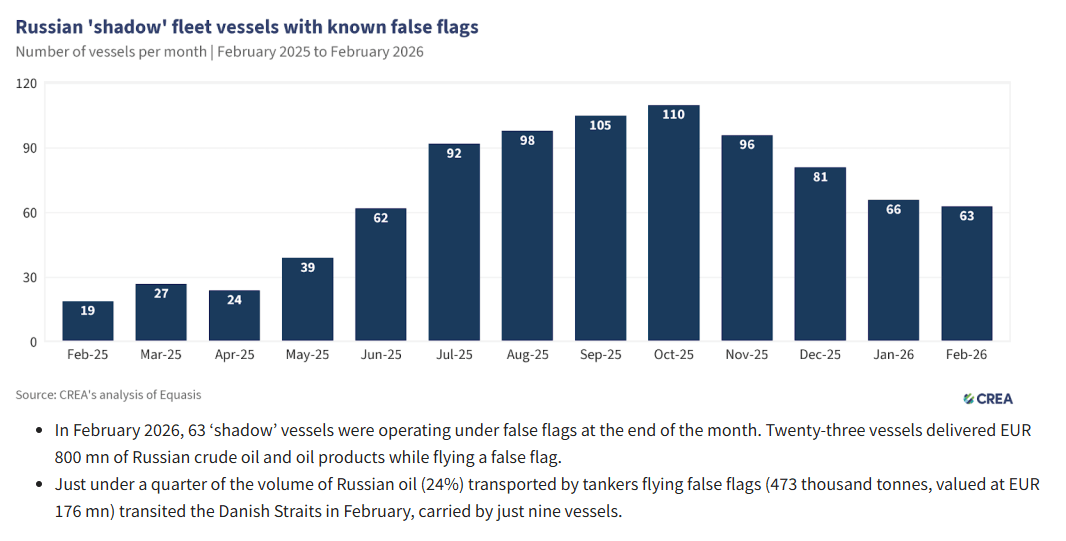
The Kremlin has increased its reliance on and evolution of its shadow fleet of maritime vessels to carry fuel products, according to CREA. The number of vessels using false flags went from 12 at the beginning of 2025 to 109 in October.
In February, 63 shadow vessels operated under false flags at the end of the month, according to CREA. Twenty-three vessels delivered €800 million worth of Russian crude oil and oil products while flying a false flag.
“Falsely flagged vessels specifically … transported an estimated €8.4bn of Russian oil and oil products in 2025, with over a third of that cargo transiting EU waters,” said Luke Wickenden, energy analyst at CEPS.
Just under a quarter of the volume of Russian oil transported by tankers flying false flags transited the Danish Straits in February, according to CREA.
Sanctions Spur Russian False Flags
Russia’s use of false‑flag vessels surged because sanctions on major Russian oil companies forced Moscow to reroute exports through newly created intermediaries and increasingly opaque shipping practices.
In October, the EU introduced a full transaction ban on major companies in its 19th sanctions package. The same month, the US Office of Foreign Assets Control and the UK imposed sanctions against Rosneft Oil Co. PJSC and Lukoil PJSC.
“Now is the time to stop the killing and for an immediate ceasefire,” US Secretary of the Treasury Scott Bessent said. “Given President Putin’s refusal to end this senseless war, Treasury is sanctioning Russia’s two largest oil companies that fund the Kremlin’s war machine.”
The company-specific sanctions routed Russian oil sales through newly created or rebranded intermediary trading companies, according to CREA. RusExport and Redwood Global Supply Group went on to export 5.5 and 11.5 million tons of Russian crude, respectively, between December 2025 and February 2026.
Geopolitics Hit Europe’s War on Moscow’s Fleet
Europe has taken a somewhat more assertive approach towards the Russian shadow fleet.
The Swedish coast guard seized the Russian tanker Caffa in its territorial waters in the Baltic Sea on March 6. Belgian and French armed forces launched Operation Blue Intruder. They intercepted the Ethera, a Guinean false-flag vessel of the Russian shadow fleet in the North Sea.
Despite the European efforts to curtail illicit Russian oil exports, geopolitics is working against the bloc. Disruptions in major producing regions “can quickly tighten markets and push up prices,” according to Bruegel.
“The EU’s overall reliance on imported energy continues to entail vulnerabilities,” Bruegel analysts wrote. “Supply security depends on global markets and political developments beyond Europe’s control.”
Disclaimer: Any opinions expressed in this article are not to be considered investment advice and are solely those of the authors. European Capital Insights is not responsible for any financial decisions made based on the contents of this article. Readers may use this article for information and educational purposes only.
Benzinga Disclaimer: This article is from an unpaid external contributor. It does not represent Benzinga’s reporting and has not been edited for content or accuracy.
Recent Comments