
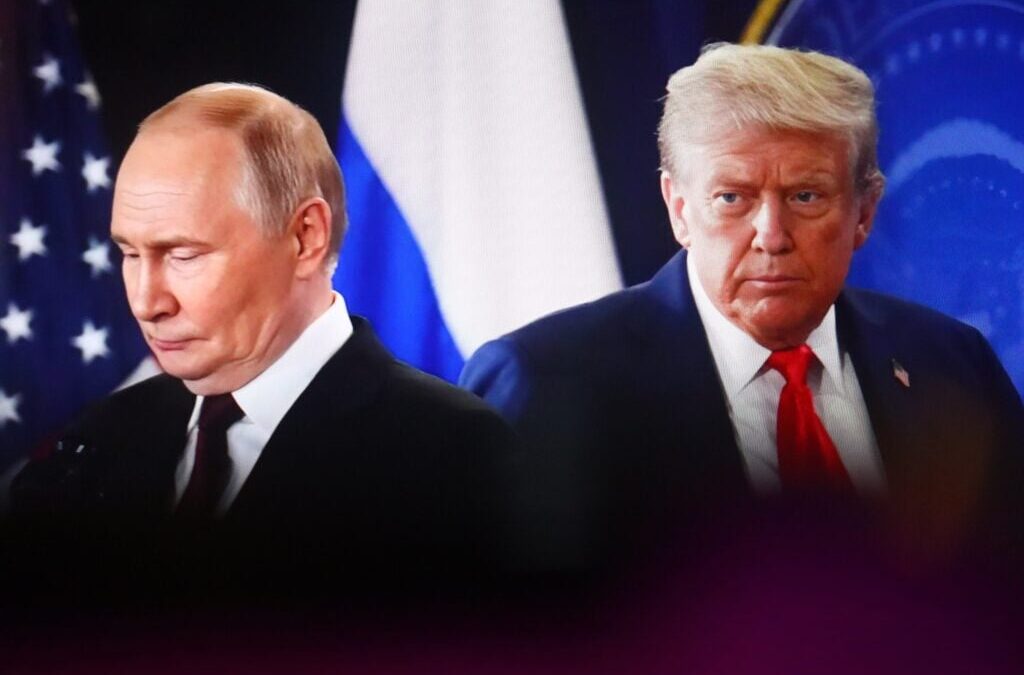
President Donald Trump said he has seen no evidence that Russia is sharing intelligence with Iran despite reports alleging Moscow may be providing data on U.S. military assets in the Middle East.
Russia-Iran Intelligence Claims Under Scrutiny
On Saturday, Trump told reporters aboard Air Force One that he had “no indication of that whatsoever” when asked about claims that Russia is assisting Iran with intelligence sharing, reported NBC News.
He added, “If they are, they’re not doing a very good job, because Iran is not doing too well.”
The comments followed a report citing four sources familiar with the matter who said Russia has provided Iran with intelligence on the locations of U.S. forces in the region, including warships and military infrastructure.
The sources said there is no indication Moscow is helping direct Iranian missile or drone attacks.
U.S. special envoy Steve Witkoff said he has warned Russia against offering assistance.
“Strongly said that,” Witkoff told reporters when asked whether he communicated concerns to Moscow.
Asked if he believed Russia was engaging in such cooperation, he responded, “I hope they’re not.”
Russia-Iran Tensions Escalate Over Intelligence Claims
On Friday, Anthony Scaramucci accused Russia of aiding Iran in targeting U.S. troops and noted the Trump administration had eased restrictions on Russian oil.
His comments came as Senate Minority Leader Chuck Schumer (D-N.Y.) warned that the Middle East conflict was expanding and WTI crude futures jumped 12.67% to $91.27.
Scaramucci framed the situation as a national security test, warning that lifting Russian oil restrictions could indirectly aid Iran.
He also criticized Defense Secretary Pete Hegseth and labeled lawmakers the “Do Nothing Congress.”
Reports indicated Russia had provided Iran with intelligence on U.S. military locations, including naval and air assets, after last weekend’s escalation.
Hegseth said the U.S. was monitoring communications and incorporating intelligence into planning, emphasizing that Trump could respond directly to Russia and that U.S. forces focused on putting adversaries at risk.
On Friday, Treasury Secretary Scott Bessent said the U.S. temporarily allowed certain Russian oil transactions to stabilize global energy markets, a move not expected to significantly benefit Moscow.
Rising tensions and energy policy shifts contributed to volatile oil markets and concerns over further regional escalation.
Disclaimer: This content was partially produced with the help of AI tools and was reviewed and published by Benzinga editors.
Photo courtesy: Shutterstock
Recent Comments