
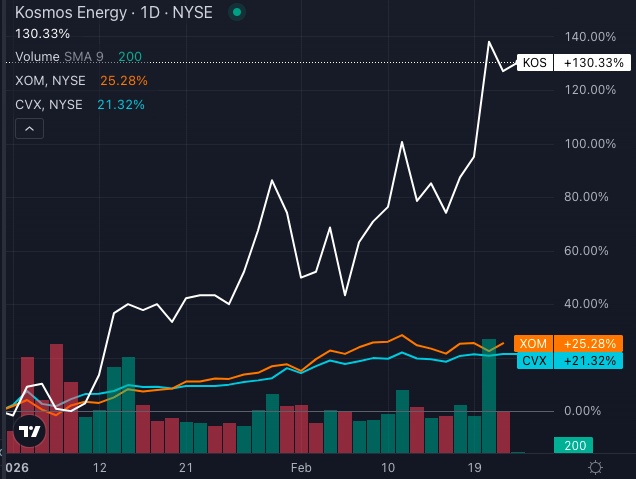
Kosmos Energy Ltd. (NYSE:KOS) has emerged as one of 2026’s most explosive oil trades, soaring 130% year-to-date and leaving industry giants Exxon Mobil Corp. (NYSE:XOM) and Chevron Corp. (NYSE:CVX) far behind.

Chart created using Benzinga Pro
Exxon is up about 25% over the same period, while Chevron has gained about nearly 21% — strong moves, but nowhere near Kosmos’ vertical climb.
Oil’s Biggest Winner Isn’t Who Investors Expect
Kosmos’ outperformance is even more striking in recent weeks. The stock has surged 62.20% over the past month alone, dramatically outpacing Exxon’s 11.81% gain and Chevron’s 10.39% rise over the same period.
The move highlights how smaller upstream producers like Kosmos can act as leveraged plays on rising oil prices. With operations concentrated in offshore oil fields across Ghana, Senegal, and the Gulf of Mexico, Kosmos offers highly leveraged exposure to crude prices. Without the refining and downstream operations that diversify Exxon and Chevron’s revenue, Kosmos’ earnings — and stock — respond far more aggressively when crude prices climb.
But that leverage cuts both ways. While Exxon and Chevron tend to deliver steadier returns across cycles in the long term, Kosmos’ sharper moves reflect both its higher upside potential and greater sensitivity to shifts in oil prices.
Exxon And Chevron Are Built Differently
Exxon and Chevron operate integrated business models spanning upstream production, refining, chemicals, and global distribution. Those diversified cash engines don’t just generate profits during oil rallies — they help cushion downturns.
That structural advantage allows both companies to fund massive buybacks, maintain dividends, and invest consistently across cycles. Kosmos, by contrast, remains far more dependent on favorable oil prices and continued operational execution.
In other words, Kosmos is behaving like a leveraged bet on oil’s direction, while Exxon and Chevron function more like cash-generating infrastructure.
Kosmos may be leading the rally — but Exxon and Chevron still control the foundation. And if oil volatility continues, stability could matter more than speed.
Photo: Shutterstock
Recent Comments