
Weekly Chart:
Germany’s manufacturing sector expanded for the first time since mid-2022, providing a rare lift for Europe’s largest economy.
The HCOB Flash Manufacturing PMI rose to 50.7 in February from 49.1. This crossed the 50‑point threshold that separates contraction from growth, according to S&P Global. The Composite PMI climbed to 53.1, its highest since October, with services driving the improvement. Business activity reached a four‑month high.
Why it matters: Germany’s industrial cycle remains the anchor of Europe’s broader economic trajectory. A sustained move above 50 would signal that the region’s manufacturing downturn is finally bottoming out. It will support a stronger Q2 growth outlook.
For further reading: Germany’s Manufacturing Expands for First Time Since 2022 as PMI Rises
Stock in Focus:
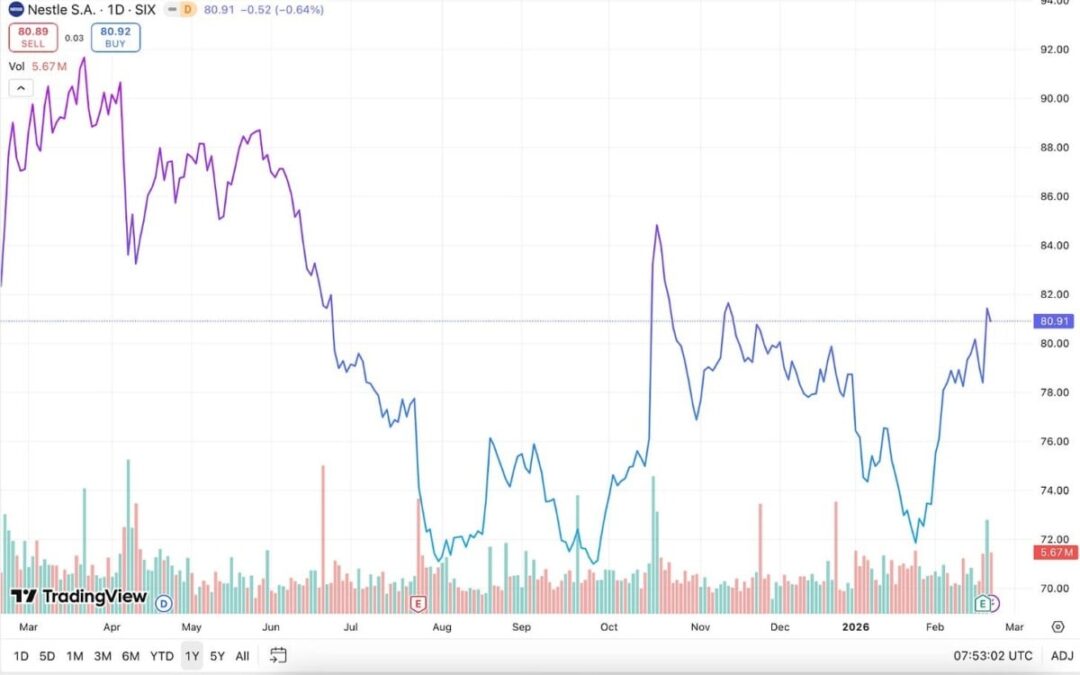
Nestlé (SIX: NESN)
- Nestlé S.A., a Swiss multinational food and drink processing conglomerate, posted on Friday full-year 2025 organic sales growth of 3.5%. This was slightly ahead of analyst expectations.
- Real internal growth was modest at 0.8%. Net profit slipped 17% to CHF 9.0 billion. The board proposed a dividend of CHF 3.10 per share, up 1.6% from the prior year.
- Shares rose 3.8% on results day, marking the biggest single-session gain in months.
- CEO Philipp Navratil reorganized Nestlé around four core divisions — coffee, pet care, nutrition, and food and snacks. He merged Nutrition with Nestlé Health Science and consolidated confectionery and prepared foods into a single reporting unit. Nestlé is selling its remaining ice cream businesses in Canada, Chile, Peru, China, Malaysia, and Thailand to Froneri.
Why it matters: In Europe, Nestlé is a bellwether for consumer demand. When Nestlé reports pricing power holding up or volumes recovering, it signals how European households are navigating cost-of-living pressures. Nestlé’s pricing trends and volume recovery are a direct read on European consumer demand and corporate pricing power. These are two variables the ECB watches closely when calibrating the pace of interest rate cuts.
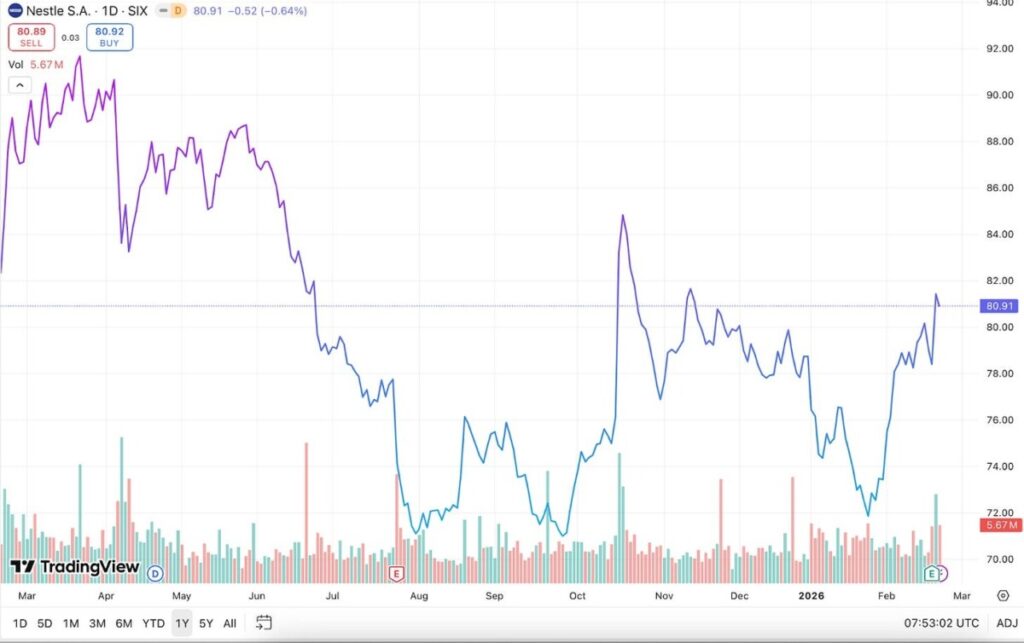
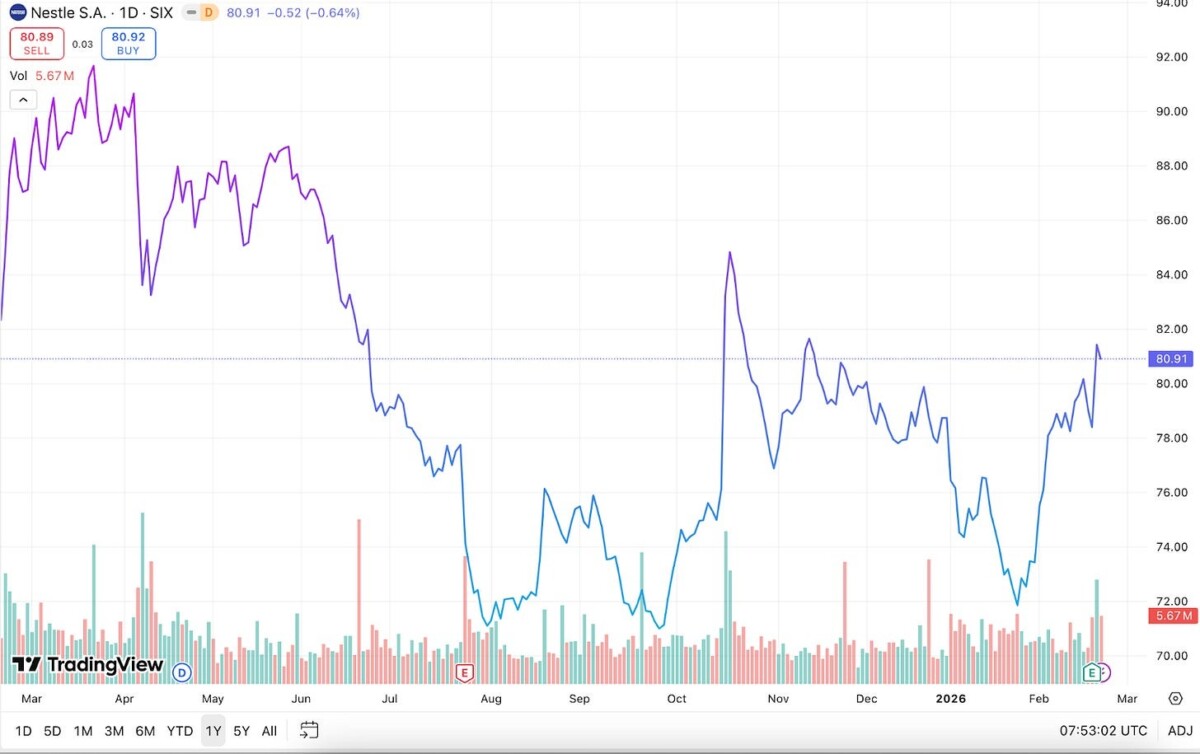
Nestlé S.A. share price, source: TradingView, February 2026.
Data This Week:
Germany and France to Release Key Confidence Indicators:
Germany:
- Ifo Business Climate (Monday): Current reading 88.6 (February) vs 87.6 (January).
- GfK Consumer Climate (Wednesday): Previously improved to −24.1 from −26.9.
- German Unemployment (Friday): Previous reading 6.3%.
France:
- INSEE Business Confidence (Tuesday): Previous reading 105 (January), above forecasts of 101.
- INSEE Consumer Confidence (Wednesday): Previous reading 90 (January), below the long‑term average of 100.

French Consumer Confidence: INSEE
Why it matters: These surveys will show whether tentative improvements in Europe’s macro data are filtering through to households and businesses. A rebound in sentiment would strengthen the case for a gradual recovery into mid‑2026.
Geopolitical Developments:
EU–US Trade Friction, UK Blocks Base Access, France Summons US Ambassador:
- ECB Chief Calls for Clarity on EU-US Trade: European Central Bank President Christine Lagarde said on Sunday that President Donald Trump’s latest tariff moves risk upsetting the previously negotiated “equilibrium” between the European Union (EU) and the US, posing a new headwind to its economy. It is critically important to have clarity about the future of the trade relationship, Lagarde told CBS’s Face the Nation after the US Supreme Court struck down Trump’s use of an emergency-powers law to impose his so-called reciprocal tariffs worldwide. “You want to know the rules of the road before you get in the car,” Lagarde said. “It’s the same with trade.”
- EU–US Trade Deal Freeze: European Parliament trade chief Bernd Lange urged the EU to halt ratification of its trade deal with the US after the Supreme Court decision. Lange on Sunday called the situation “pure tariff chaos” and wants legal clarity before proceeding.
- UK Blocks US Use of Bases for Potential Iran Strike: The UK has refused to allow the US to launch airstrikes against Iran from Diego Garcia and RAF Fairford, The Times reported. In response, Trump withdrew support for the UK’s agreement to return the Chagos Islands to Mauritius. Under long‑standing arrangements, the US requires British approval to conduct operations from UK territory.
- France Summons US Ambassador: French Foreign Minister Jean‑Noël Barrot will summon US Ambassador Charles Kushner after the US reposted a message describing “violent radical leftism” as a rising threat. The post follows the killing of a far‑right activist in Lyon. Paris argues the US comment mischaracterized the incident and risks further inflaming domestic tensions.
Why it matters: Europe–US relations are entering a more volatile phase. Trade, security cooperation, and political signaling are all under strain. This increases the risk of policy misalignment on sanctions, defense posture, and crisis management.
Policy Moves: Greece is considering adding clauses to future defense contracts that would prevent Turkey from purchasing the same weapons systems, Euractiv reported. The measure would apply to major procurement programs and reflects long‑standing maritime and security tensions between the two NATO allies.
Why it matters: This signals a hardening of the Greek deterrence strategy and could complicate alliance cohesion. It also leverages EU mechanisms—such as SAFE vetoes—where Greece already blocks Turkish access unless Ankara de‑escalates regional threats.
EU Meeting This Week:
Foreign Affairs Council (Monday): Chaired by High Representative Kaja Kallas, EU ministers are expected to discuss additional military and financial support for Ukraine. They may finalize a 20th sanctions package against Russia ahead of the February 24 anniversary of the full‑scale invasion. Discussions may cover Ukraine’s energy security, the use of frozen Russian assets for reparation‑linked loans, and broader security guarantees for Kyiv.
Why it matters: The meeting will test EU cohesion amid Hungary’s resistance and shape the bloc’s next phase of economic pressure on Russia. Outcomes could influence global energy markets, transatlantic coordination, and NATO’s strategic posture.
For further reading: Palantir’s Ukraine Expansion Highlights Growing Power of Private AI in Modern Warfare
Disclaimer: Any opinions expressed in this article are not to be considered investment advice and are solely those of the authors. European Capital Insights is not responsible for any financial decisions made based on the contents of this article. Readers may use this article for information and educational purposes only.
Benzinga Disclaimer: This article is from an unpaid external contributor. It does not represent Benzinga’s reporting and has not been edited for content or accuracy.
Recent Comments