
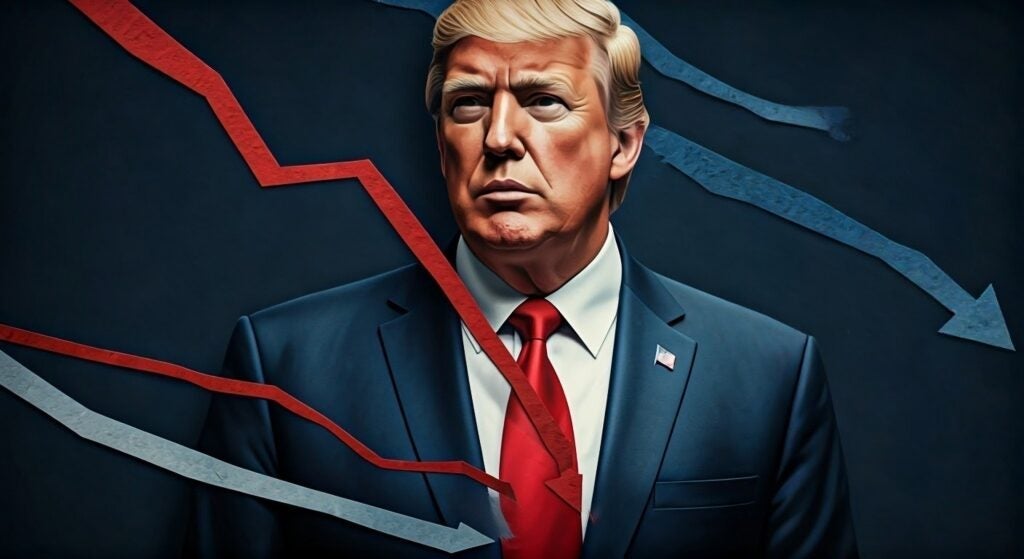
The US Supreme Court delivered a significant ruling on Friday, striking down President Donald Trump‘s tariffs in a 6-3 decision. This move has garnered widespread approval among Americans, with a recent YouGov poll indicating that 60% support the courts decision, attributing higher consumer prices to Trumps tariff policies. Meanwhile, Trumps claims of a trade deficit drop continue to face scrutiny as recent data shows a stark contrast to his optimistic assertions.
The Supreme Court’s ruling, which involved Chief Justice John Roberts and five other justices, declared that the International Emergency Economic Powers Act does not authorize the president to impose tariffs. Despite the ruling, Trump announced a new Global 10% Tariff on all Countries via Truth Social, asserting his ability to enforce tariffs without congressional approval.
How Tariff Policies Are Shaping Consumer Prices
According to the YouGov poll, as quoted by the Mediaite, a majority of Americans believe that Trump’s tariffs have led to increased prices, with 66% indicating that they have experienced a rise in costs for goods. This sentiment is echoed across political lines, with 88% of Democrats and 68% of Independents agreeing that tariffs have caused price hikes.
Trumps aggressive tariff policies, introduced in April 2025, were initially claimed to have reduced the U.S. trade deficit by 78%. However, official data revealed a 95% surge in the trade deficit by November 2025, highlighting a disconnect between the Presidents narrative and economic realities.
What Does The Poll Say About Public Sentiment?
The YouGov survey also highlighted partisan differences in perceptions of the tariffsimpact. While 44% of Republicans acknowledged that tariffs increased prices, a notable 28% believed there was no effect, and 10% thought prices decreased.
As reported by the outlet, the Supreme Courts decision and the subsequent poll results could have significant implications for the upcoming midterms, with control of Congress at stake. The ruling and public sentiment may influence campaign strategies, especially for Republican candidates.
Shifting Public Sentiment on Economic Policies
This ruling comes amid a significant shift in public sentiment regarding Trump’s economic policies, as the Pew Research survey last year indicated that 53% of American adults believe his policies have harmed the economy. Notably, 74% of respondents cited high inflation, tariffs, and a rising cost of living as reasons for their negative perception of current economic conditions.
This evolving public opinion, which starkly contrasts with the 59% who rated the economy positively during Trump’s first term in November 2018, may influence the Republican Party’s strategies leading up to the midterms, particularly in how they address economic issues and Trump’s tariff policies harm the economy.
The Economic Fallout From Trumps Trade Strategies
Despite Trumps claims of economic success through tariffs, the reality appears more complex. Reports suggest that nearly 90% of tariff costs are borne by U.S. businesses and consumers, contradicting the Presidents assertions of economic independence.
As the official December trade data release approaches, the contrast between Trumps proclamations and the actual economic data continues to draw attention. The President’s insistence on tariffs as a tool for economic policy remains a contentious issue in both political and economic spheres.
Recent Comments