
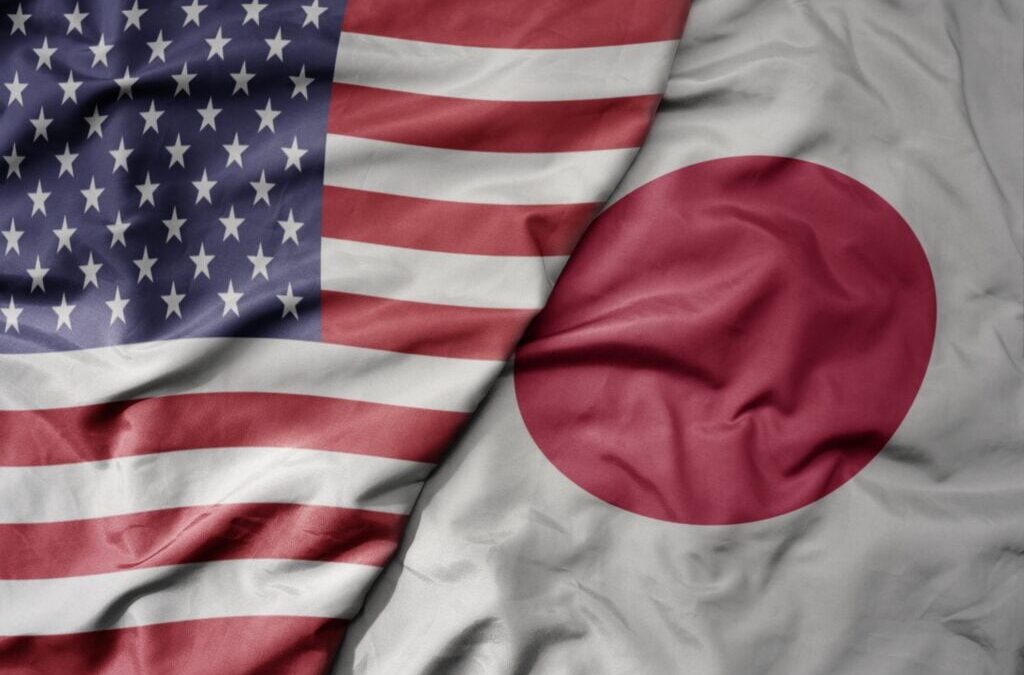
President Donald Trump announced on Tuesday that the trade deal with Japan, which includes a $550 billion commitment to invest in the U.S., has “officially, and financially” taken effect.
Trump stated on Truth Social that Japan has started with the first set of investments, as he disclosed three significant projects in strategic areas as part of the deal. These encompass oil and gas projects in Texas, power generation in Ohio, and critical minerals in Georgia. He stressed that the magnitude of these projects is so vast that they could not be executed without the imposition of tariffs.
The president claimed that the Ohio gas power plant would be the largest in history. He also highlighted the LNG facility in the Gulf of America, which is anticipated to boost exports and further the country’s energy dominance. Finally, he mentioned the critical minerals facility in Georgia, which aims to end the U.S.’s reliance on foreign sources.
He stressed that the magnitude of these projects is so vast that they could not be executed without the imposition of tariffs.
“America is building again. America is producing again. And America is WINNING again,” wrote Trump.
Trump–Takaichi Ties Deepen Trade Pact
Trump has fostered a strong relationship with Japan’s new Prime Minister, Sanae Takaichi, who has likewise sought to build a personal connection with him to help defuse trade tensions and reinforce bilateral relations. Trump also endorsed Takaichi before the snap elections earlier this month, which she won by a landslide.
In July, Trump announced a $550 billion trade deal with Japan that entailed major Japanese investment in the U.S., with America set to receive 90% of the profits. He said the agreement would create hundreds of thousands of jobs, expand U.S. access to Japan’s auto and agricultural markets, and establish a reciprocal 15% tariff on imports. However, Japan’s chief negotiator, Ryosei Akazawa, had clarified that just 1% to 2% of the $550 billion package would constitute direct investment, while the remainder would be arranged as loans and guarantees.
In November, Japan and the U.S. also agreed to explore the possibility of rare earth mining near Minamitori Island in the Pacific. This move was seen as a bid to reduce dependence on China for rare earth minerals.
Meanwhile, experts had cast doubt over the trade deal implementation. Richard Katz, an economist specializing in Japan, said the agreement was unlikely to happen, while Paul Nadeau, a professor at Temple University’s Japan campus, said he would be “very surprised” if the investment ever materialized.
Disclaimer: This content was partially produced with the help of AI tools and was reviewed and published by Benzinga editors.
Image via Shutterstock
Recent Comments