
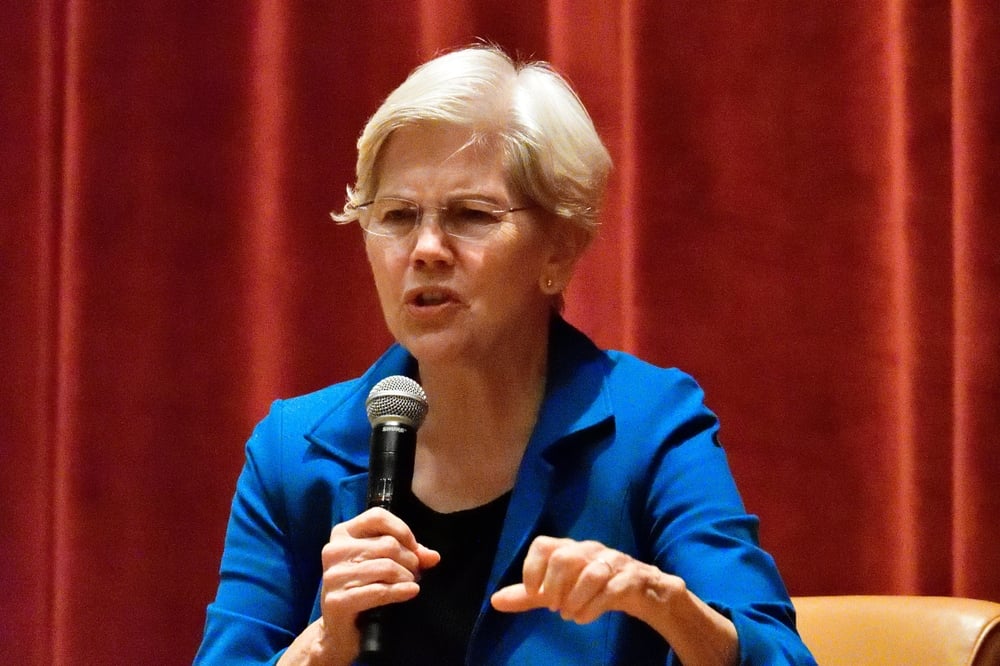
Senator Elizabeth Warren (D-Mass.) issued a scathing rebuke of the Commodity Futures Trading Commission (CFTC) on Wednesday, following Chairman Michael Selig‘s announcement that the federal agency would intervene in state-led lawsuits to defend the “exclusive jurisdiction” of prediction markets.
Defending State Sovereignty
Warren characterized the move by the Donald Trump-appointed chairman as a direct assault on the rights of individual states to oversee betting activities.
She argued that by shielding platforms like Kalshi and Crypto.com from local enforcement, the federal government is effectively legalizing unlicensed wagering under the guise of financial innovation.
“Trump‘s CFTC is trying to strip states’ authority to regulate gambling within their borders and protect Americans from getting ripped off,” Warren stated in a sharp response on X.
The Senator’s comments follow Chairman Selig’s video announcement on Feb. 18, 2026, in which he confirmed the CFTC had filed an amicus brief in federal court.
Selig argued that prediction markets—where users trade contracts on events ranging from the Super Bowl to energy prices—are “derivatives, plain and simple,” and should not be subject to a “patchwork of state gambling laws.”
Concerns Of Economic Instability
Beyond the jurisdictional battle, Warren raised the alarm regarding the broader economic risks of allowing unregulated “event contracts” to flourish.
She urged the commission to return to its core mandate of oversight rather than facilitating speculative betting markets.
“The CFTC should focus on ensuring our derivatives markets don’t blow up the economy again, not helping corrupt political insiders cash in.”
A Growing Regulatory Rift
The dispute highlights a deepening divide in Washington. While Selig maintains that prediction markets provide “important price discovery” and allow Americans to “hedge commercial risks,” Warren and other leading Democrats, including Senator Catherine Cortez Masto (D-Nev.), contend these platforms mirror sportsbooks and evade essential consumer protections.
As the CFTC prepares to see state attorneys general in court, the outcome of this battle will likely determine whether prediction markets are treated as sophisticated financial tools or simply another form of gambling.
Disclaimer: This content was partially produced with the help of AI tools and was reviewed and published by Benzinga editors.
Photo courtesy: OogImages/Shutterstock
Recent Comments