
Arthur Hayes, Chief Investment Officer at Maelstrom Fund, explored in an essay published Tuesday how a potential intervention by U.S. authorities to support the Japanese yen could boost risk assets like Bitcoin (CRYPTO: BTC).
Intervention In US Interest?
In the essay titled “Woomph,” Hayes argued that the Treasury Department, in coordination with the Federal Reserve, could sell dollars and buy yen, solving “many financial problems” for the Trump administration.
“This will strengthen the yen against the dollar, which will help U.S. export competitiveness,” Hayes said.
He added that this would push Japanese Government Bond yields lower, discouraging private Japanese investors from selling U.S. Treasuries to buy Japan’s sovereign debt.
Good News For Bitcoin?
Hayes suggested that the Federal Reserve could expand its balance sheet by printing more money, referencing the “Money Printer Go Brrr” meme. The resulting monetary expansion, he added, would trigger a Bitcoin “pump.”
The pace of yen appreciation, however, should be “gradual.”
“It cannot appreciate too quickly, otherwise it would cause catastrophic losses for investors who borrowed yen to fund other asset purchases as volatility rose,” the co-founder of cryptocurrency exchange BitMEX said.
Hayes urged investors to proceed cautiously, saying he won’t increase his BTC holdings until the Fed’s balance sheet shows a week-over-week rise in “Foreign Currency Denominated Assets.”
The Dollar-Yen Dynamics
Hayes’ comments came amid “suspected” U.S. intervention in the yen market. Reports suggested that the Federal Reserve Bank of New York began contacting banks to ask about their USD/JPY position sizes.
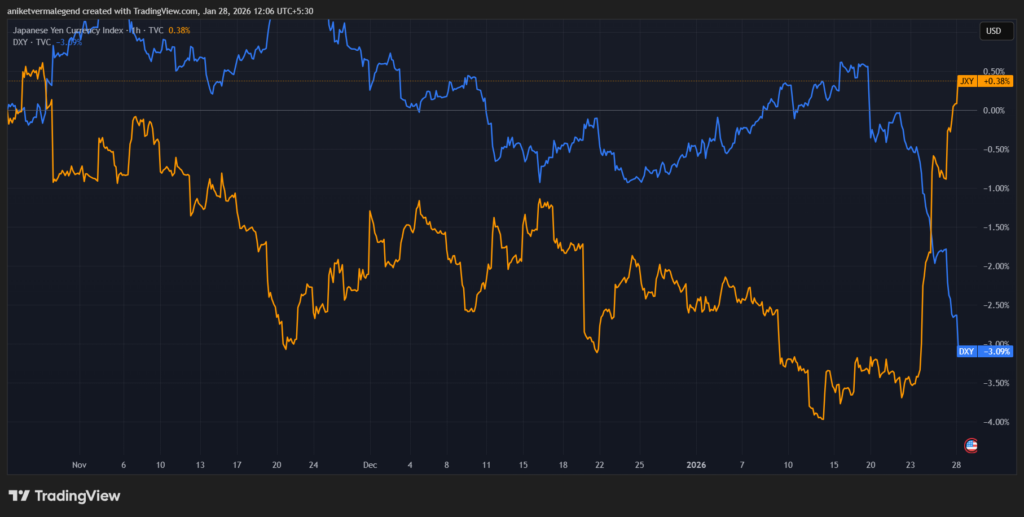
Interestingly, the U.S. Dollar Index and the Japanese Yen Currency Index diverged as these reports trickled in.
However, the reports suggested the Fed did not clearly communicate that it was acting solely on behalf of Japanese authorities.

The U.S. Dollar Index has dropped to a four-year low of 95.66 against a basket of other currencies. The currency is down 2.09% over the past month, and 10.6% since Trump took office last year, amid growing fiscal, macroeconomic and monetary uncertainties.
Disclaimer: This content was partially produced with the help of Benzinga Neuro and was reviewed and published by Benzinga editors.
Recent Comments