
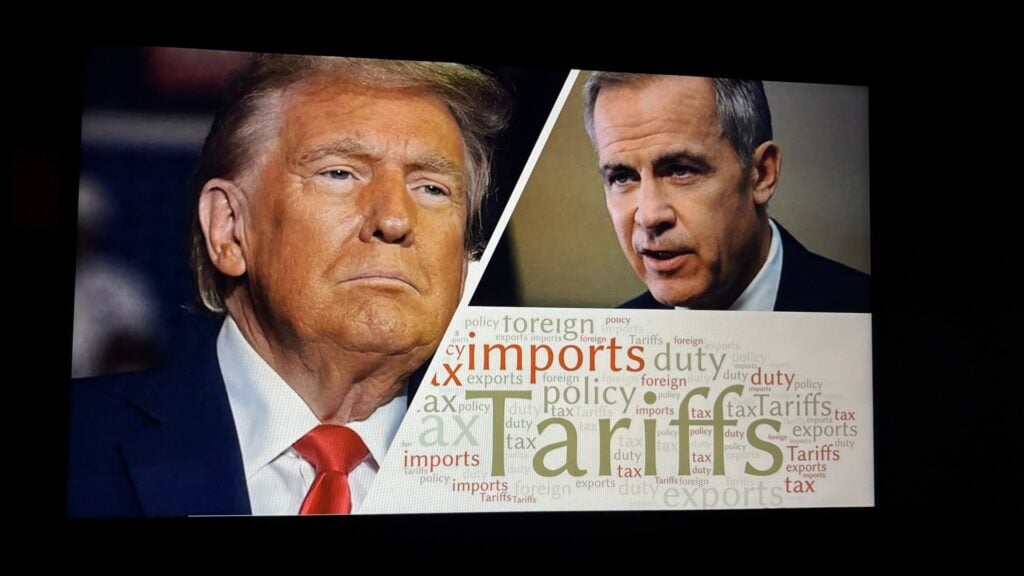
On Saturday morning, President Donald Trump issued a threat to impose a 100% tariff on Canadian imports, escalating the ongoing dispute spurred by Canada’s recent trade agreement with China.
Trump took to Truth Social to warn of the impending tariff, directly targeting Canadian Prime Minister Mark Carney. The U.S. president accused Canada of serving as a “Drop Off Port” for Chinese goods entering the U.S.
“If Governor Carney thinks he is going to make Canada a ‘Drop Off Port’ for China to send goods and products into the United States, he is sorely mistaken. China will eat Canada alive, completely devour it, including the destruction of their businesses, social fabric, and general way of life,” Trump wrote in the post.
“If Canada makes a deal with China, it will immediately be hit with a 100% Tariff against all Canadian goods and products coming into the U.S.A,” he added.
According to reports, earlier in the month, Canada had negotiated a deal to lower tariffs on Chinese electric vehicles, reciprocating with reduced import taxes on Canadian farm products. Initially, Trump had lauded the agreement, but his stance has since shifted.
The tariff threat emerges amidst a growing verbal conflict between Trump and Carney, which was instigated by the U.S. president’s attempts to acquire Greenland, causing strain within the NATO alliance.
Trump’s invitation to Carney to join his “Board of Peace” was subsequently withdrawn.
Trump’s provocations escalated further when he referred to Canada’s leader as “Governor Carney.” This nickname had previously been used for Carney’s predecessor, Justin Trudeau.
Why It Matters: The threat of a 100% tariff on Canadian imports by President Trump could significantly impact the economic relationship between the two countries. This move not only escalates the ongoing trade dispute but also threatens to destabilize the already strained diplomatic relations.
The implications of this could be far-reaching, affecting not just the two nations involved, but potentially the global economy as well.
The upcoming review of the Canada-U.S.-Mexico Agreement will be a crucial event to watch, as it could potentially redefine the trade dynamics in North America.
Recent Comments