
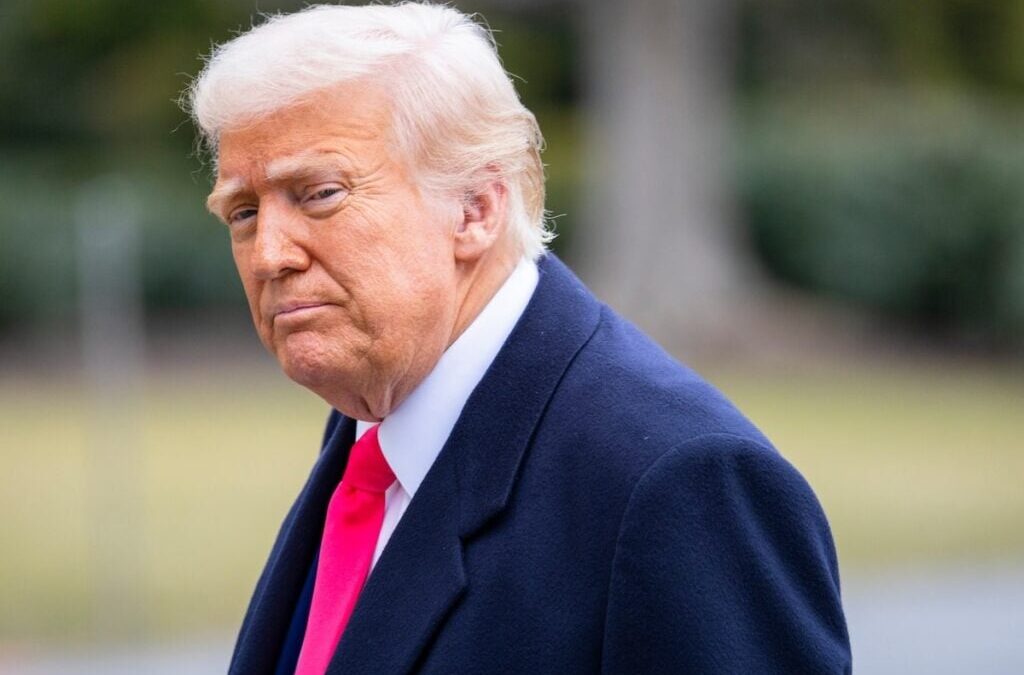
President Donald Trump is considering a range of strong responses, including military action, as Iran struggles with deadly protests that challenge the ruling clerics, while Tehran signals both readiness for war and a willingness to engage in talks.
Iran Protests Turn Deadly
On Monday, Iranian protests, which began on December 28 over soaring prices, have escalated into widespread unrest against the clerical establishment, reported Reuters.
U.S.-based rights group HRANA has verified 490 protesters and 48 security personnel killed, with more than 10,600 arrests, though exact numbers remain unconfirmed due to limited access.
Footage on state TV showed funerals for security personnel and dozens of body bags at Tehran’s coroner’s offices.
Trump Considers Military, Diplomatic Options
Trump said Sunday that Iran had expressed interest in negotiating its nuclear program: “Iran wants to negotiate, yes. We might meet with them. A meeting is being set up, but we may have to act because of what is happening before the meeting.”
He also warned that the U.S. would respond if Iranian security forces opened fire on protesters.
Iranian Foreign Minister Abbas Araqchi said, “We are ready for war but also for dialogue,” while Parliament Speaker Mohammad-Bagher Ghalibaf warned that U.S. bases, ships, and Israel would be legitimate targets if attacked.
State media accused the U.S. and Israel of fomenting unrest and called for nationwide rallies.
An internet blackout has limited information flow, though Trump said he would talk with Elon Musk about restoring access through Starlink.
Iran Protests 2026, US-Iran Tensions
Last week, Tensions between the U.S. and Iran escalated as nationwide protests in Tehran led to a harsh crackdown, internet blackouts, and at least 65 deaths with over 2,300 arrests.
Supreme Leader Ayatollah Khamenei blamed foreign interference and dismissed demonstrators as “rioters” and “hirelings.”
On Sunday, Ghalibaf warned that the country would retaliate against any U.S. strikes on military sites, potentially targeting American bases, Israel, and regional shipping lanes.
U.S. officials said no immediate action was planned, raising concerns of a broader Middle East conflict.
The unrest also unsettled global energy markets, with crude oil and natural gas prices rising.
The Strait of Hormuz, a critical chokepoint for one-third of seaborne oil and 19% of natural gas, remained a focus, with analysts warning that any disruption could spike Brent crude to $110 per barrel.
Nearly 80% of the strait’s oil shipments were destined for Asia.
Disclaimer: This content was partially produced with the help of AI tools and was reviewed and published by Benzinga editors.
Photo Courtesy: Joshua Sukoff on Shutterstock.com
Recent Comments