
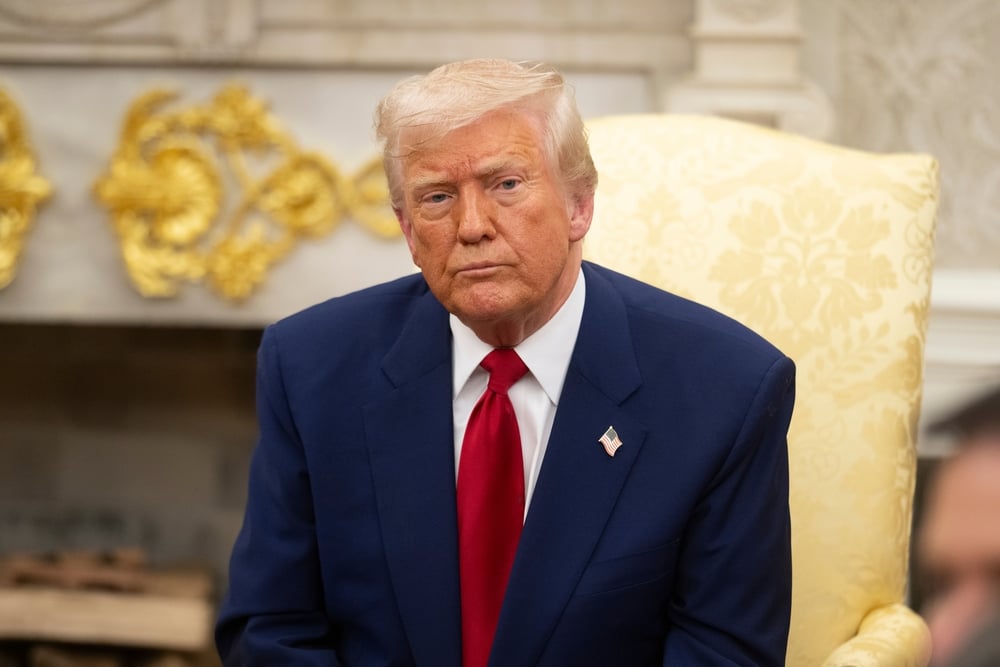
The US Senate voted on Thursday to rein in President Donald Trump’s ability to launch new military action in Venezuela, even as Trump said American “oversight” of the country could last for years.
Senate War Powers Vote Defies Trump’s Plans
As per a Reuters report, the Senate approved a War Powers resolution on a 52-47 vote, with five Republicans joining all Democrats to advance a measure that would bar further hostilities against Venezuela without explicit congressional authorization.
The resolution, led by Sen. Tim Kaine (D-Va.), and backed by Republican Sen. Rand Paul (R-Ky.), now heads toward a final Senate vote and then the Republican-controlled House, where it faces long odds and an almost certain Trump veto.
Trump attacked Republicans who broke ranks, writing that “Republicans should be ashamed of the Senators that just voted with Democrats in attempting to take away our Powers to fight and defend the United States of America.”
Trump Envisions Profitable Long-Term Role In Venezuela
In an interview with The New York Times, Trump also previewed a prolonged role for America in Caracas, saying Washington could oversee Venezuela and its oil earnings “for years.” Asked how long, he replied, “Only time will tell … I would say much longer.” He added, “We will rebuild it in a very profitable way.”
The comments follow a Jan. 3 special operations raid in Caracas that captured Venezuelan President Nicolás Maduro and his wife, Cilia Flores. Maduro, now in US custody, faces federal narco-terrorism and cocaine-importation conspiracy charges and has pleaded not guilty, insisting he remains his country’s legitimate leader.
Oil Reserves, Mass Migration Heighten Global Stakes
According to data by the U.S. Energy Information Administration, Venezuela holds the world’s largest proven oil reserves, about 303 billion barrels, or roughly 17% of global totals, but decades of mismanagement and sanctions have slashed output to near 1% of world supply.
UN agencies say more than 7.9 million Venezuelans have fled the country’s economic collapse and political turmoil, one of the largest displacement crises on record. After Maduro’s capture, Venezuela’s interim authorities released some journalists and activists in what they called a gesture to “seek peace,” according to Reuters, though rights groups say hundreds of political prisoners remain behind bars.
Photo: noamgalai/Shutterstock
Recent Comments