
Maplebear Inc. (NASDAQ:CART), operating as online grocery service Instacart, has agreed to refund $60 million to its customers as a settlement for allegations of deceptive marketing and billing practices made by the Federal Trade Commission (FTC).
FTC Accuses Instacart of Deceptive Practices
The FTC accused Instacart of misleading customers with false advertising about free delivery services, only to charge them for the service. The company also allegedly failed to inform customers that signing up for a free trial would automatically enroll them in its subscription program.
Christopher Mufarrige, director of the FTC’s Bureau of Consumer Protection, said Instacart deceived consumers by promoting free delivery while charging for grocery deliveries and by not informing free trial users that they would be automatically enrolled in its subscription program.
Under the settlement, Instacart is required to clearly disclose terms and secure explicit informed consent for subscription-based transactions.
The company did not immediately respond to Benzinga‘s request for comment.
FTC Probe Hits Stock
On Thursday, the company’s stock dropped following reports of an FTC probe into its AI-based pricing tool. The FTC had issued a civil investigative demand to Instacart, seeking information about its Eversight pricing tool.
Notably, the probe comes days after it became the first grocery partner to launch an app on ChatGPT, enabling end-to-end shopping and instant checkout within a conversation, from meal inspiration to delivery using Instacart’s real-time network and OpenAI’s models.

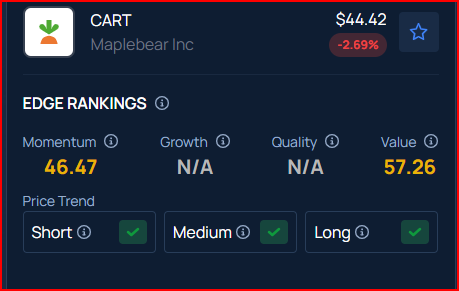
Benzinga’s Edge Rankings place Instacart in the 46th percentile for momentum and the 57th percentile for value, reflecting its average performance in both areas. Check the detailed report here.
Price Action: On a year-to-date basis, Instacart stock climbed 4.44% as per data from Benzinga Pro. On Thursday, it fell 1.53% to close at $44.95.
READ NEXT:
Image via Shutterstock
Disclaimer: This content was partially produced with the help of AI tools and was reviewed and published by Benzinga editors.
Recent Comments